Biography
Stephen the Younger
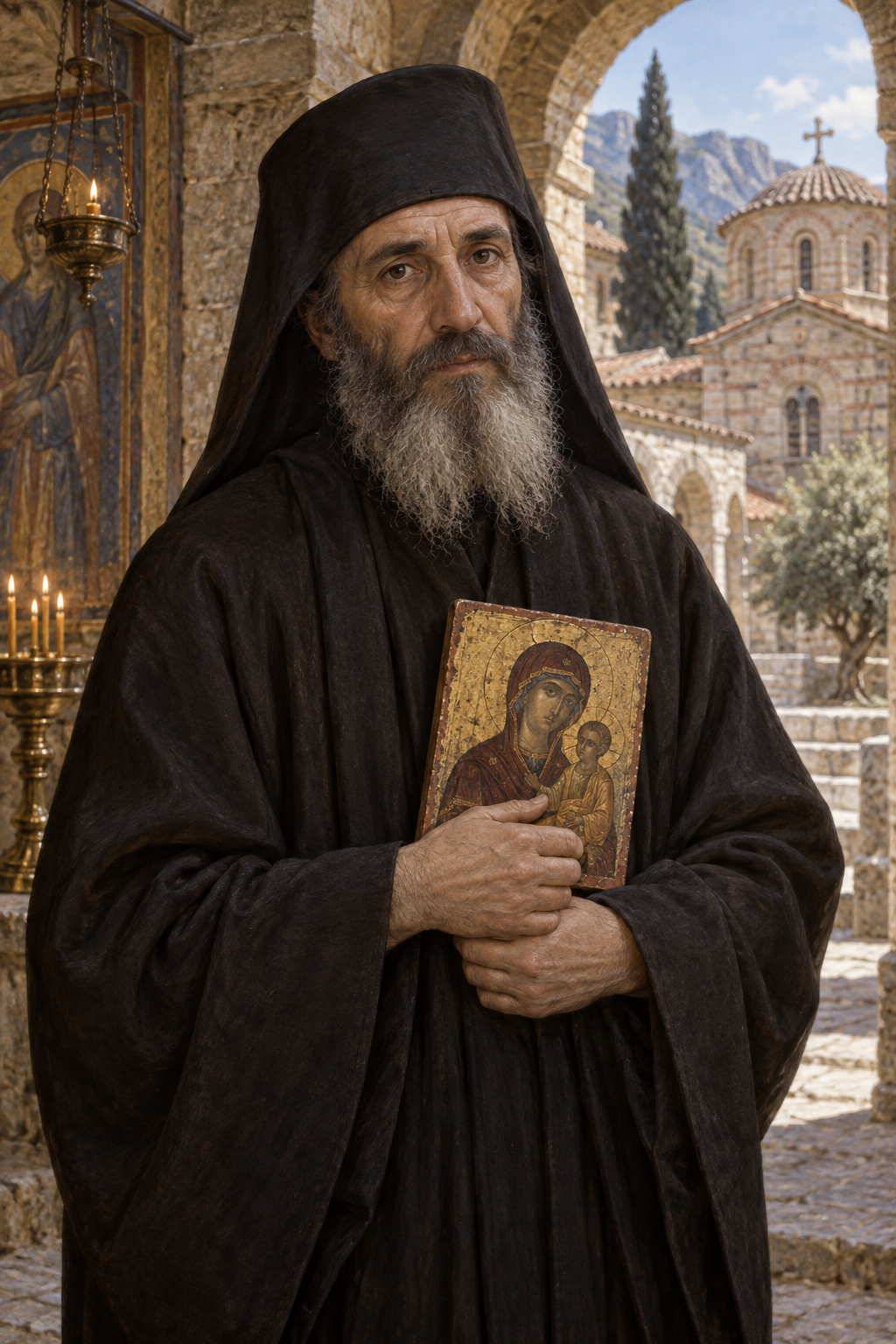
About Stephen the Younger
Stephen was born in Constantinople in 715 according to the Orthodox Church in America's account. It says he entered monastic life on Mount Auxentius and later became an abbot. His career unfolded during the reign of Constantine V, when disputes over the use of religious images became politically charged. The central source for the details is a Life written by Stephen the Deacon decades later, not a contemporary diary.Stephen became a prominent monastic opponent of Constantine V's iconoclast policy. The narrative reports that he refused pressure to condemn the veneration of icons and was subjected to confinement and exile. Marie-France Auzépy's study stresses that the Life is not a transparent record: it arranges events to advance an iconophile argument and requires comparison with other evidence. For that reason this biography summarizes the conflict without repeating dramatic speeches or miraculous episodes as established fact.The tradition says Stephen was killed by a mob in Constantinople on November 28, in 764 or 765 depending on chronology. The OCA commemorates him on November 28. Because the chronology of his Life has been critically questioned, the feast date is not used here as proof of a precise death date; no structured day or year is assigned. The enduring historical significance of Stephen lies in the way his Life became a major source for the study of eighth-century Byzantine monasticism and the icon controversy, as well as a witness to the later memory of those conflicts.The OCA account traces Stephen's early formation through successive stages. His family moved from Constantinople to Bithynia during the controversy over icons, and at sixteen he was entrusted to the monk John on Mount Auxentius. Stephen remained with John for more than fifteen years, learning monastic discipline. After John's death, he continued in a cave and gradually attracted disciples. The account says a monastery formed around him, where he served as abbot, before he withdrew to another mountain. These details provide a picture of a monastic leader whose reputation developed within communities of ascetics, though the account's exact chronology comes from the later Life rather than independent records.The icon dispute became sharper under Constantine V. According to the OCA's received Life, Stephen refused attempts to draw him into the imperial iconoclast position and faced accusations, imprisonment, and the destruction of his monastery. The narrative also relates a public trial in which he defended the veneration of icons. Auzépy's study warns that the Life crafts its presentation to vindicate iconophile teaching; its dialogue and sequence cannot be accepted uncritically. It remains useful evidence for how later iconophile writers remembered imperial power and monastic resistance, but it should not be used alone to reconstruct every policy or political event.After imprisonment, the Life says Stephen was exiled to an island in the Sea of Marmara, where disciples again gathered around him. It further describes a period of life atop a pillar, a form of ascetic practice that gave him the name stylite in the narrative. Such episodes belong to the saint's literary portrait of endurance and spiritual authority. Auzépy's methodological study asks readers to separate narrative shaping from recoverable history; the profile therefore attributes these details to the hagiography instead of presenting them as independently corroborated facts.The narrative's account of death is similarly polemical. It says Stephen was returned to prison and killed after soldiers dragged him through Constantinople. The OCA commemorates him on November 28, but the chronology attached to the Life has been debated. The draft retains the feast as an Orthodox liturgical fact and does not convert it into an independently established date of death. The distinction protects the historical profile from false precision while acknowledging the central place martyrdom occupies in the Orthodox memory of Stephen.Stephen the Younger's later importance is inseparable from the preservation of that Life. It provides detailed descriptions of monastic life, imperial pressure, imprisonment, and the arguments used by iconophile writers. Auzépy's critical work demonstrates that the text must be read both as hagiography and as a participant in the political theology it describes. Its claims are not all equal: broad evidence for Stephen's monastic identity and cult is distinct from speeches and miraculous episodes preserved by a partisan author. The profile therefore keeps the story's religious significance while avoiding the assumption that every narrative detail is a transparent record.The public trial in the Life turns an abstract dispute into a comparison between an emperor's portrait on a coin and an image of Christ. Stephen's argument, as the hagiographer frames it, is that respect for an image is directed toward the person represented; to dishonor the image of Christ is therefore an offense against Christ. This is a theological argument preserved by an iconophile writer, not a verbatim transcript of proceedings. Auzépy's analysis is essential here because it shows how the Life presents a carefully organized defense of icon-veneration. The episode illuminates the rhetoric of the conflict even where its exact wording cannot be recovered. The story then places Stephen among imprisoned monks who maintained prayer and communal worship. Those scenes express the Life's central account of monastic endurance under imperial pressure.
Wondering how to weigh the stories and sources? Learn how to read a saint biography.