Biography
Susan Kang Gyeong-bok
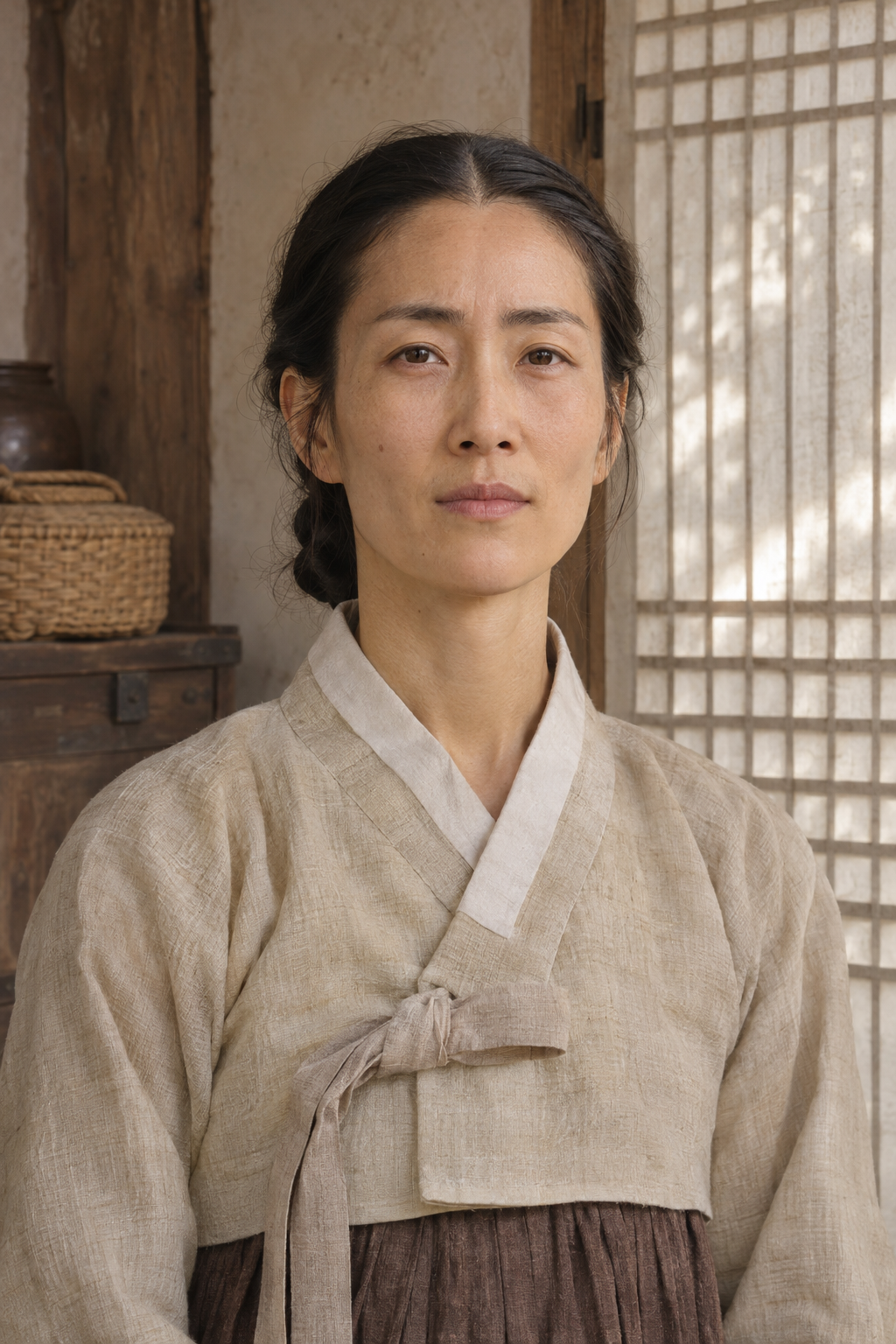
About Susan Kang Gyeong-bok
Susan Kang Gyeong-bok was born in Seoul in 1762, into a family of commoners. She became a palace attendant and lived unmarried. She served at Yangjegung, known in Seoul as the abandoned palace.
The residence had been home to the mother of Prince Euneon, a half-brother of King Jeongjo. In 1786 the prince’s eldest son was accused of treason and died; the prince went into exile on Ganghwa. His wife and his son’s widow remained in Seoul. These were the women Susan served. Both took the baptismal name Mary: the elder was from the Song family and her daughter-in-law from the Sin family.
Members of the royal family could not simply go where they pleased. The lives of the two Marys describe them studying Catholic teaching and praying in their own home. Columba Kang Wan-suk, a lay teacher, and Juliana Kim Yeon-i visited them there. The women also went to Columba’s house to hear the priest James Zhou Wen-mo. Mary Song and Mary Sin encouraged Susan and another attendant, Seo Gyeong-ui, to take up the faith. The same teaching passed from visitors to the household and from its mistresses to their attendants.
Historian Kim Gil-su gives Susan an active part in these visits. He describes her obtaining religious books through Philip Hong Pil-ju’s mother, Columba, and going between the two houses to make arrangements. At Columba’s she was familiar enough to call herself a relative. In Kim’s account it was Susan who accompanied the two royal women to hear the priest preach. He places her early study of Catholicism around August 1797.
The bishops’ account places Mary Song’s invitation to learn about the faith around 1798. Columba instructed her, and she received baptism from Zhou. These visits meant that when the authorities began searching for Catholics in 1801, the priest who needed shelter was someone she already knew. A servant named Nam Gu-wol guided him to Yangjegung.
Susan had a connection to the neighbourhood where Columba lived: her mother rented rooms in the house behind Columba’s home. Jeong Min describes two wells there, where women from the neighbouring household came to wash clothes. In his reconstruction, a passage in the wall of another neighbour’s property allowed Susan to go between the houses. The homes that figure in the story of the search for Zhou were familiar to her through family visits as well as religious gatherings.
Jeong Min describes a back door opened between Columba’s house and the house where Susan’s mother lodged. It offered a route out if the priest needed to escape. Religious books were kept there. The women washing clothes at its wells were servants from Columba’s household.
Kim Gil-su associates her visit to the neighbourhood with the end of the mourning period for her father. He says Susan did not take part in the ancestral rite and instead stayed in the household of Philip Hong Pil-ju. While she was visiting her mother, Susan heard that officers were looking for Catholics. She went back to Yangjegung to give the warning. Zhou got out and found another refuge. Susan then slipped away herself. Her warning had given someone else time to leave, but she did not remain at liberty for long.
Officers took Susan near Changui Gate and brought her to the police bureau. Under questioning she held to her faith. When she was transferred to the royal tribunal, the questioning and punishment were harsher. There she said that she would give up Catholicism. The answer she gave under that pressure did not prove to be her last. In the custody of the Ministry of Justice she withdrew it.
The secret of the priest’s stay at Yangjegung became known through Seo Gyeong-ui, the other palace attendant who had studied with Susan. The two Marys lost their lives on April 29, 1801, before Susan’s own case ended. For the royal women, the decision came from Queen Dowager Jeongsun. Officers brought poison to their residence the day after she ordered their deaths. The proceedings against the attendant who had helped the priest took a different course. They died by royal order; Susan would be taken to a public execution ground with other Catholics. Her companions there included Columba, in whose home she had learned, and Vivian Mun Yeong-in, who had also served as a palace attendant.
The account of her final questioning recalls that she identified Catholicism as the teaching she believed to be right and acknowledged having sought baptism while living at Yangjegung. She knew that holding to that answer might cost her life. The bishops’ current biography says that on July 2, 1801, Susan was beheaded outside Seoul’s Small West Gate. Jeong Min’s 2022 account instead describes Susan receiving poison separately in a small house outside the gate because her case involved the royal household. In 2014 Pope Francis beatified her.
Wondering how to weigh the stories and sources? Learn how to read a saint biography.