Biography
Sylvester Gozzolini
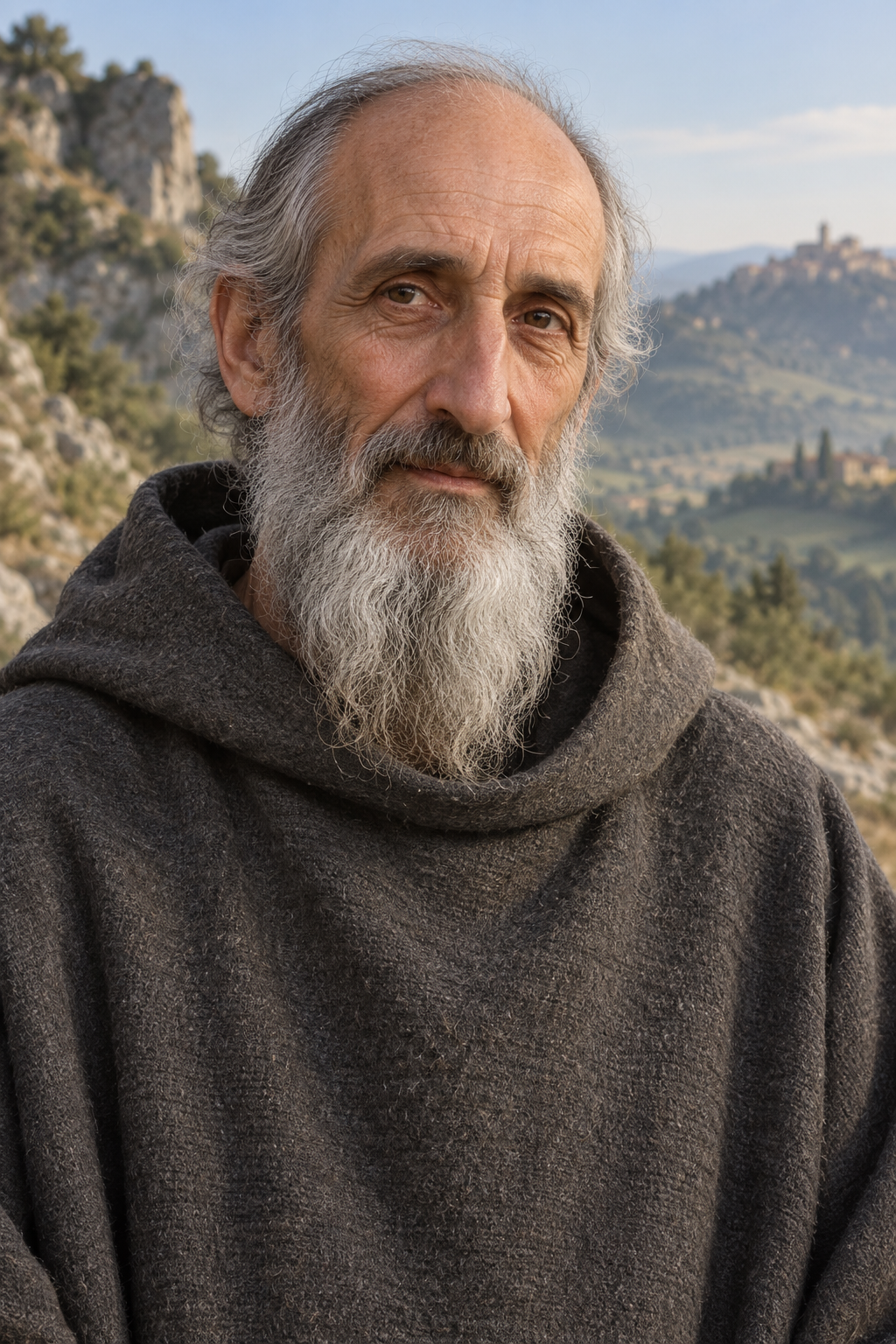
About Sylvester Gozzolini
Sylvester Gozzolini came from Osimo in the Marche. The account preserved by Vatican News remembers a young man sent to study law whose interests turned instead toward theology and Scripture. That change disappointed his father and disrupted the future planned for him. Back in Osimo, Sylvester joined the cathedral’s canons, devoting himself to prayer and preaching.
His move into a hermit’s life is remembered through a stark devotional story. At a funeral, he saw the remains of someone whose former appearance he remembered. The contrast prompted him to consider his own mortality and to seek a different way of life. The story presents his retreat as a response to the Gospel’s call to self-denial, rather than merely an escape from disappointment.
The historical evidence becomes firmer with the contemporary documents that begin in 1231. Ugo Paoli distinguishes these records from the later Life of Sylvester, written by Andrew of James of Fabriano using testimony about the founder. Paoli also cautions that Sylvester’s priesthood, often assumed in later accounts, lacks documentary support. His role as a cathedral canon should not by itself settle that question.
At Grottafucile, the solitary attracted visitors and prospective companions. Two papal visitors urged him not to remain alone; their identification with the Dominicans Riccardo and Bonaparte is probable rather than explicit in the earliest narrative.
The same Life describes a vision in which Benedict offered Sylvester his rule and habit. Sena treats that episode as a hagiographic account requiring interpretation, not a straightforward record of how every decision was made. He places the choice within a practical constraint: the Fourth Lateran Council had required new foundations to adopt an established religious rule.
Sylvester established Montefano near Fabriano in 1231. Local clergy and citizens supported the community with land and other gifts. Its life combined an attraction to solitude with ties to people outside the hermitage; the canons of San Venanzo invited Sylvester to preach in their church.
Mariano Dell’Omo situates the movement within the wider renewal of thirteenth-century religious life. The emergence of Franciscans and Dominicans did not end attempts to renew Benedictine monasticism. Innocent IV’s confirmation, issued on June 27, 1248, recognized the community’s observance of Benedict’s rule and provided for the monks to choose a successor after Sylvester’s death.
Lorenzo Sena’s study of the surviving documents makes Sylvester’s responsibilities more concrete. A record from December 1240 names him as prior not only at Montefano but also over the communities at Ripalta and Grottafucile. Other transactions require his consent, showing that his leadership involved decisions affecting several houses. Yet this growing responsibility did not erase the movement’s identity as a gathering of hermits. Sena finds that description in donations, bequests, and a bishop’s address to Sylvester in 1258. The documents therefore preserve both sides of his work: responsibility for an expanding religious family and continued identification with the solitary vocation from which it began.
The Life remembers a leader whose solitude included practical care for others: hospitality, material help, visits to the sick, and consolation for people in distress. Its account of his reading offers a more personal example. Unable to understand a passage of Jeremiah, Sylvester goes to Ripalta to consult his disciple Simon, whom the writer describes as unable to read. Simon initially protests, then explains the passage to his teacher’s satisfaction. The biographer presents this reversal of teacher and pupil as evidence of humility and divinely given wisdom.
Paoli describes small communities with limited resources, whose monks worked the land and begged for support; most were not ordained priests.
The papal confirmation shows the practical arrangements supporting this religious life. It protects the community’s possessions and names Grottafucile, San Bonfilio, and Ripalta among its churches. The monks may admit free clerics and laymen, while members need permission to leave. They are to obtain holy oils, church consecrations, and clerical ordinations from the diocesan bishop under the conditions specified in the privilege. The document also forbids theft, arson, bloodshed, and violence within their monasteries and estates. Its protections place the hermitage within a network of property, episcopal responsibilities, and communal obligations.
Sylvester died on November 26, 1267. The diocesan account records twelve monasteries in the Marche, Umbria and Lazio by the end of his life. It also notes that Leo XIII placed his commemoration in the Church’s universal calendar in 1890.
Recognition had developed over centuries. Paoli records the use of Saint Sylvester in a notarized document as early as 1272, his inclusion in the Roman Martyrology in 1598, and a papal text honoring him as a saint in 1617.
In his presentation to a modern volume of studies, Cardinal Pietro Parolin connects the founder’s legacy with common life across differences of language, nationality and culture. He points to Sylvestrine schools in Asia serving students of several religions as a setting where mutual respect can be practiced.
Wondering how to weigh the stories and sources? Learn how to read a saint biography.