Biography
Symeon the New Theologian
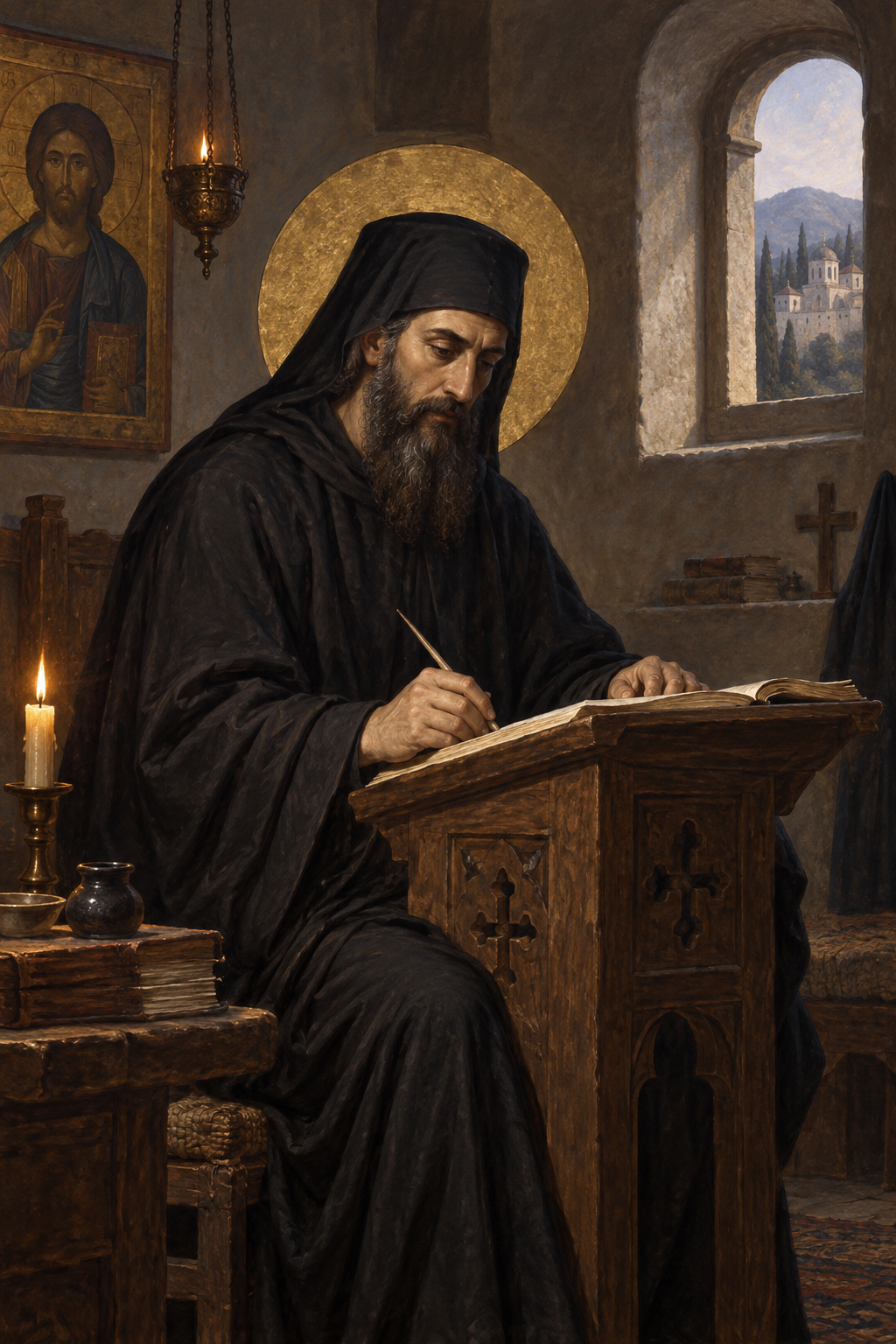
About Symeon the New Theologian
Symeon was born around 949 and died in 1022, according to modern scholarly reference sources. He came from a family in the Byzantine world and pursued a career that led him into monastic life at Constantinople. Because the fullest narrative is Niketas Stethatos's Life, written decades later by a disciple, specific family anecdotes should be treated as hagiographic testimony rather than contemporary documentation.Symeon became a monk at the Stoudios monastery and later led the monastery of Saint Mamas near Constantinople. His teaching stressed repentance, prayer, and the possibility of conscious experience of divine presence. Those emphases drew both followers and resistance. The Oxford edition of Niketas's Life describes it as a source shaped by the controversy around Symeon and by the author's defense of his spiritual authority. This allows historians to study both Symeon's memory and the debates surrounding religious experience in Byzantine monastic life.Symeon wrote theological discourses, hymns, and letters. Modern scholarship treats him as an influential Byzantine spiritual author, while the exact chronology and detail of his early life depend heavily on Niketas's later narrative. The Life is valuable precisely because it provides information unavailable elsewhere, but its apologetic purpose must remain visible. This profile therefore avoids treating visions, predictions, or miracle episodes as historical facts unless independently corroborated.Symeon's memory continued in Eastern Orthodox liturgical life, where the Orthodox Church in America lists his commemoration on March 12. This corrects the inherited July 14 date, which appears to derive from a different calendar entry and is not supported for the New Theologian by the OCA observance. No feast date is used to infer a day of death. His lasting importance rests on a substantial body of spiritual writing and the long discussion it inspired about experience, authority, and monastic teaching.Wiley's scholarly biography places Symeon in a noble family in Galatia of Paphlagonia and says he was educated in Constantinople. It describes him as having been prepared for political life before he entered the monastic world. At about twenty-seven, he became a novice at the Monastery of Stoudios under Symeon the Pious, also called Eulabes. This path helps explain the importance of spiritual fatherhood in Symeon's later teaching: his account of religious formation took place within a tradition of guidance rather than as an independent intellectual project. The details are known chiefly through Niketas Stethatos's later Life, which remains the main source and was written by a committed disciple.Symeon later moved to the monastery of Saint Mamas, where he was tonsured, ordained a priest, and elected abbot. This progression made him responsible for a community as well as a body of spiritual teaching. The Oxford edition of Niketas's Life describes him as a monastic founder and writer, while Wiley's reference account places his leadership at Saint Mamas near Constantinople. The sources do not justify turning the monastery into a detailed portrait of daily routine, but they show that Symeon's influence came through a recognizable institution and the disciples gathered around him.Around 996–998, according to Wiley, a serious rebellion at the monastery led ecclesiastical authorities to require Symeon's departure. He was exiled to Paloukiton, near Chrysoupolis, where he founded the monastery of Saint Marina. A few years later Patriarch Sergios recalled him to Constantinople and offered him a bishop's see, which Symeon refused. The sequence conveys a complicated relationship with church authority: his spiritual reputation did not prevent conflict, and his later life was not a simple rise through ecclesiastical offices. The date range is retained as approximate because the reference gives a span rather than a single year.Niketas's Life offers information but also an argument. Dumbarton Oaks notes that Niketas wrote more than thirty years after Symeon's death, edited his writings, and defended a figure whose reputation had been clouded by controversy. The book's description highlights the conflicts of monastic politics and the construction of sanctity and orthodoxy. The Medieval Review likewise warns that Niketas was personally invested in his subject. Historians therefore use the Life as a valuable witness to the way Symeon was remembered, while checking its chronology and interpretation against other writings and scholarly research. This biography attributes claims from the Life to its source rather than presenting them as direct observation.Symeon's works survived through a textual tradition that includes discourses, hymns, and letters. Wiley notes that Niketas preserved most of them, and the Oxford edition of the Epistles identifies a modern scholarly effort to establish and translate the texts from manuscript evidence. The works present a writer concerned with the experience of divine grace, repentance, and spiritual guidance. They should be read within Byzantine monastic theology rather than reduced to private autobiography. The breadth of the corpus helps explain why Symeon's influence outlasted the disputes of his own monastery and why later Orthodox writers treated him as a major theological voice.
Wondering how to weigh the stories and sources? Learn how to read a saint biography.