Biography
Teilo of Llandaff
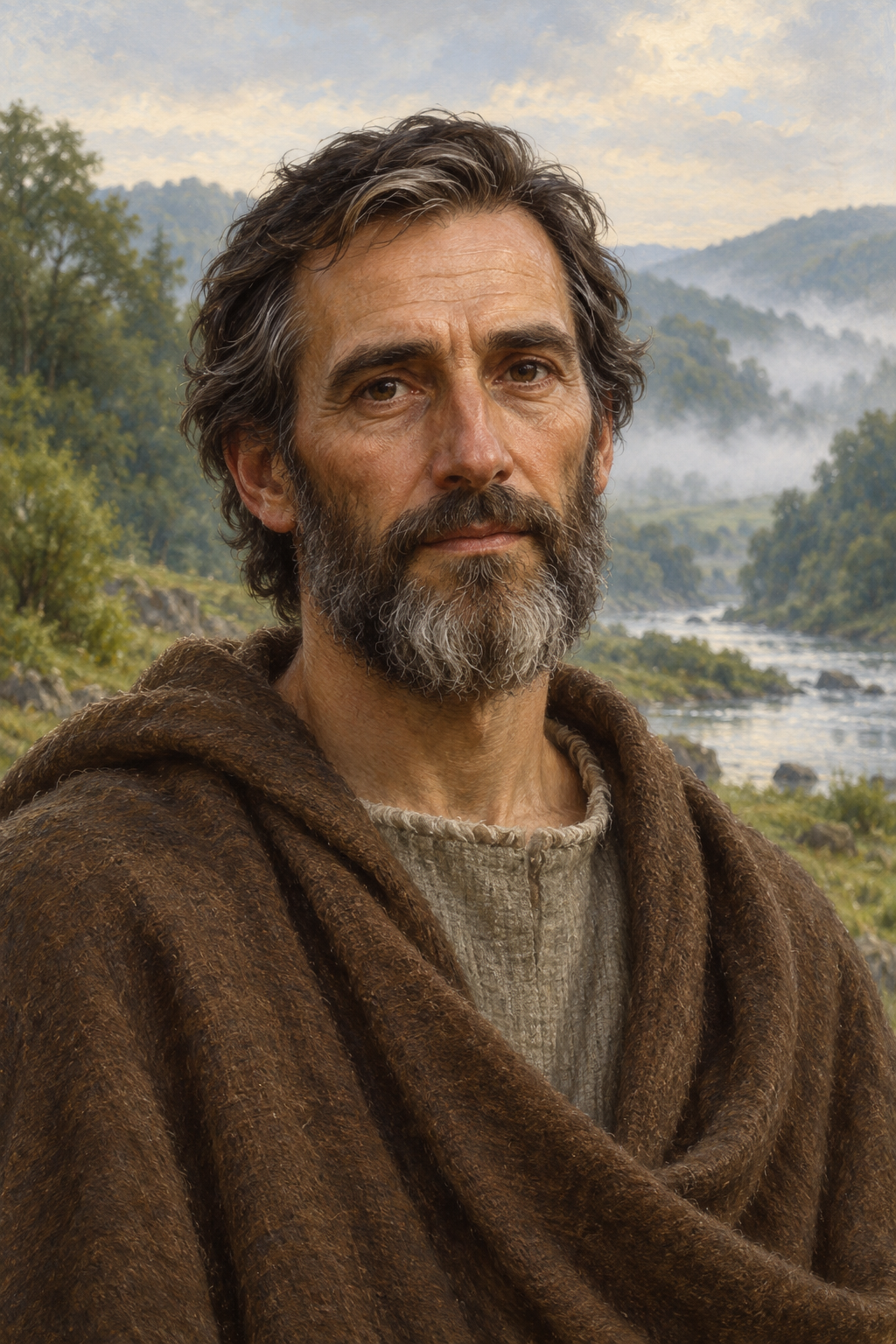
About Teilo of Llandaff
Teilo is remembered as a bishop and saint of sixth-century Wales. Llandaff Cathedral counts him among its first bishops, but its present building began around 1120, long after his lifetime.
The earliest evidence gives a clearer picture of his veneration than of his personal life. Ben Guy’s critical edition points to early medieval memoranda in the Lichfield Gospels, a manuscript probably kept at Llandeilo Fawr in the ninth century. Several entries record gifts to God and Teilo. Another names Teilo as a witness, expressing the saint’s continuing presence in the community rather than recording a living participant. Guy explains that Llandaff later appropriated this cult and incorporated a much-expanded Life into its own collection in the twelfth century. The additions promoted Llandaff’s authority and claims to property. Its detailed accounts of Teilo’s offices and travels therefore cannot be treated as a contemporary record of his career.
The Dictionary of Welsh Biography likewise separates the remembered saint from his medieval biographies. Emrys George Bowen identifies Llandeilo Fawr as the probable early monastery associated with him. He also draws attention to churches, chapels and wells bearing Teilo’s name, particularly in southwestern Wales. These dedications help establish the reach of his cult, even where a secure itinerary cannot be reconstructed. In Brittany, Bowen considers two possibilities: Teilo may have worked there himself, or communities connected with his Welsh foundations may have carried his name and devotion across the sea later. The existence of Breton dedications does not, by itself, decide between those explanations.
The details of his life come through much later accounts. The Catholic Encyclopedia explicitly warns that the surviving biographies are late and uncritical. It associates him with a monastic school at Llandaff and preserves traditions of his education under Dyfrig and Paulinus. It also recounts his flight to Brittany with members of his community during a plague. These stories preserve tradition, with uncertain chronology. The same reference questions both a supposed journey to Jerusalem and the idea that he held an archbishopric organized like a later territorial diocese.
Later generations gave that remembrance a visible place in the cathedral. A thirteenth-century episcopal effigy traditionally identified as Teilo now rests at the site associated with his tomb, on the south side of the sanctuary. The cathedral explains that the original locations of this and the related figures of Dyfrig and Euddogwy are uncertain. Victorian restoration shaped the arrangement now seen by visitors. Below Teilo’s effigy, scenes made by Frank Roper in 1973 recount his life. The monument brings together medieval devotion and modern interpretation; it does not provide a contemporary portrait of the saint.
Teilo’s remembrance also belongs to everyday rural life. Museum Wales identifies him as a patron of apples and horses in its account of his feast. These are traditional devotional associations, rather than evidence of a formal patronage decree. The museum marked his day on February 9, a date also recorded for Wales in the older Catholic reference.
Wondering how to weigh the stories and sources? Learn how to read a saint biography.