Biography
Teresa Jornet Ibars
About Teresa Jornet Ibars
Teresa Jornet Ibars was born at Aitona near Lleida in Catalonia on January 9, 1843. The existing catalog fields for birth date and place are supported by the reviewed source profile and should be preserved in this draft.
Her early life should be written with restraint. Teresa's later work with elderly people did not appear as a sentimental preference, but as a religious vocation shaped through teaching, discernment, and concrete encounters with need.
The Aitona and Lleida setting can be named without overloading the page with local detail. The important movement is from a Catalan young woman seeking a religious path to a foundress who recognized Christ in older people without secure family or social support.
The page should not overstate institutional details before they are needed. It is enough to show that Teresa passed through earlier forms of service and religious searching before finding the work that became her life's mission.
This also keeps the biography from making founding sound automatic. Teresa's vocation involved testing, waiting, and responding to need. That makes the later foundation more credible and more human.
That mission centered on older people who were poor, alone, or abandoned. The phrase abandoned elderly should be used with care: it names the congregation's charism and the social wound Teresa addressed, not a label for the person's worth.
The page should use person-first language whenever possible. Teresa served elderly people who had been abandoned; she did not build a reputation from their abandonment. The distinction protects the dignity of the people at the heart of the story.
Teresa became foundress of the Little Sisters of the Abandoned Elderly. The community's work should be described as household, nursing, prayer, welcome, and personal dignity rather than as an abstract institution.
Foundress language should be balanced by service language. The order matters because it made the work durable, but the charism is concrete: a bed, food, companionship, prayer, and a home where old age was not hidden away.
The final biography should avoid treating the elderly poor as background figures for Teresa's sanctity. They are neighbors received in Christ. Her holiness is visible in the reverence with which the community served them.
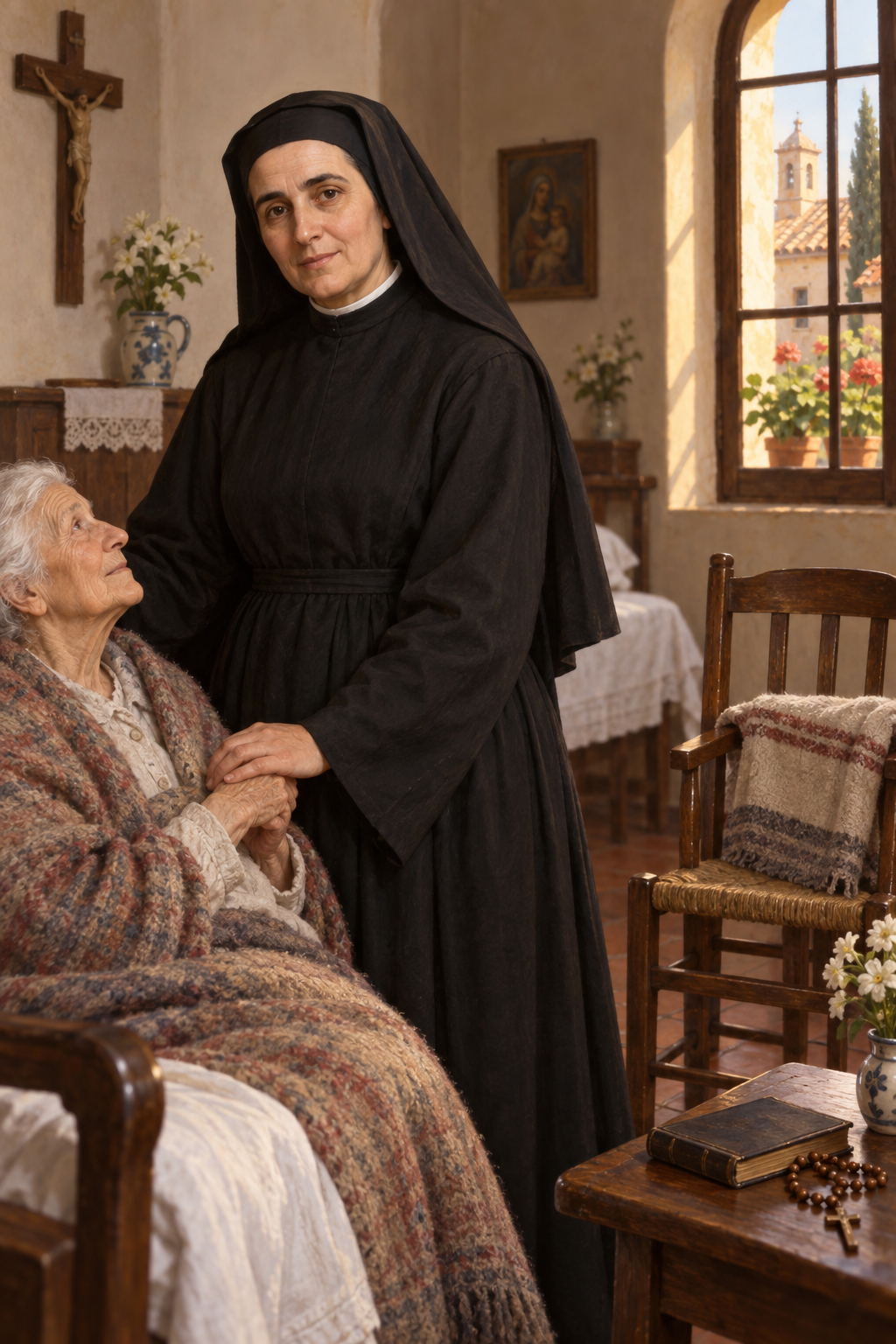
That same principle guides the art. A single elderly person, blanket, chair, or rosary can suggest care without making suffering visually consumable. The badge should keep Teresa's face and habit readable rather than use a crowded scene.
Paul VI's canonization homily supports the public church recognition of this charity. This packet avoids long quotation from the homily and uses it as a source for the spiritual importance of her mission.
Pius XII's beatification address gives another ecclesial witness to the same charitable work. It helps keep the page from depending on a single cause profile while still staying inside official church sources.
These papal sources should be used as recognition and interpretation, not as a reason for ornate rhetoric. The page can say the church recognized her mission without copying ceremonial language into the reader-facing biography.
The homes associated with Teresa's congregation expanded from Spain, but this draft should not make unsourced statistical claims. It can say that the work grew and became widely recognized, while leaving exact counts or countries out unless a later source supports them.
This omission is deliberate. Numbers can make charitable work sound impressive, but unsupported numbers weaken trust. The slow-vetted page should prefer fewer claims that are fully cited.
Her care for abandoned elderly people also needs a visual boundary. Artwork may show a quiet care-house interior, an empty chair, blanket, rosary, and rule book, but should not turn old age into spectacle or use modern medical props.
Modern medical equipment would also confuse the period. Teresa's world was nineteenth-century Spain, so domestic and convent-house cues better serve the historical setting.
Teresa died at Llíria near Valencia on August 26, 1897. The existing catalog death date, death place, and feast day align with the reviewed source profile and are preserved in this deferred packet.
The death field does not need normalization in this draft because it already uses a full signed date. If later sources refine the place hierarchy, that should be handled in the consolidated approval rather than as a silent edit.
She was canonized in 1974. The public page can mention that recognition, but the center should remain her daily charity: receiving people who might otherwise have been unseen, and building religious life around their care.
Her canonization also provides a natural end marker for the page, not the center of the page. The center is the long work of welcome, carried out in homes where age and dependence were met with religious tenderness.
Her witness is especially timely wherever age, dependence, or frailty becomes socially inconvenient. Teresa's life insists that Christian service begins by making room for people whose needs cannot be made efficient.
That sentence should stay sharp but not accusatory. It names a spiritual challenge for readers while keeping Teresa's example practical: make room, stay near, serve with patience, and defend dignity.
The final page should close with dignity rather than pity. Teresa Jornet Ibars is best presented as a foundress whose holiness made a home for Christ in the elderly poor, and whose community carried that welcome into durable service.
The conclusion can connect founding, care, and prayer in one movement. Teresa's gift was not only organizing help, but making a religious household where frail people could be honored as members of Christ's own household.
Artwork should show a nineteenth-century Spanish religious sister in sober black habit, in a quiet elderly-care house or convent infirmary, with chair, blanket, rosary, and rule book as restrained attributes. Avoid modern medical equipment, melodramatic suffering, institutional logos, halos, exact-likeness claims, and rendered text.
Wondering how to weigh the stories and sources? Learn how to read a saint biography.