Biography
Teresa Kwon Cheon-rye
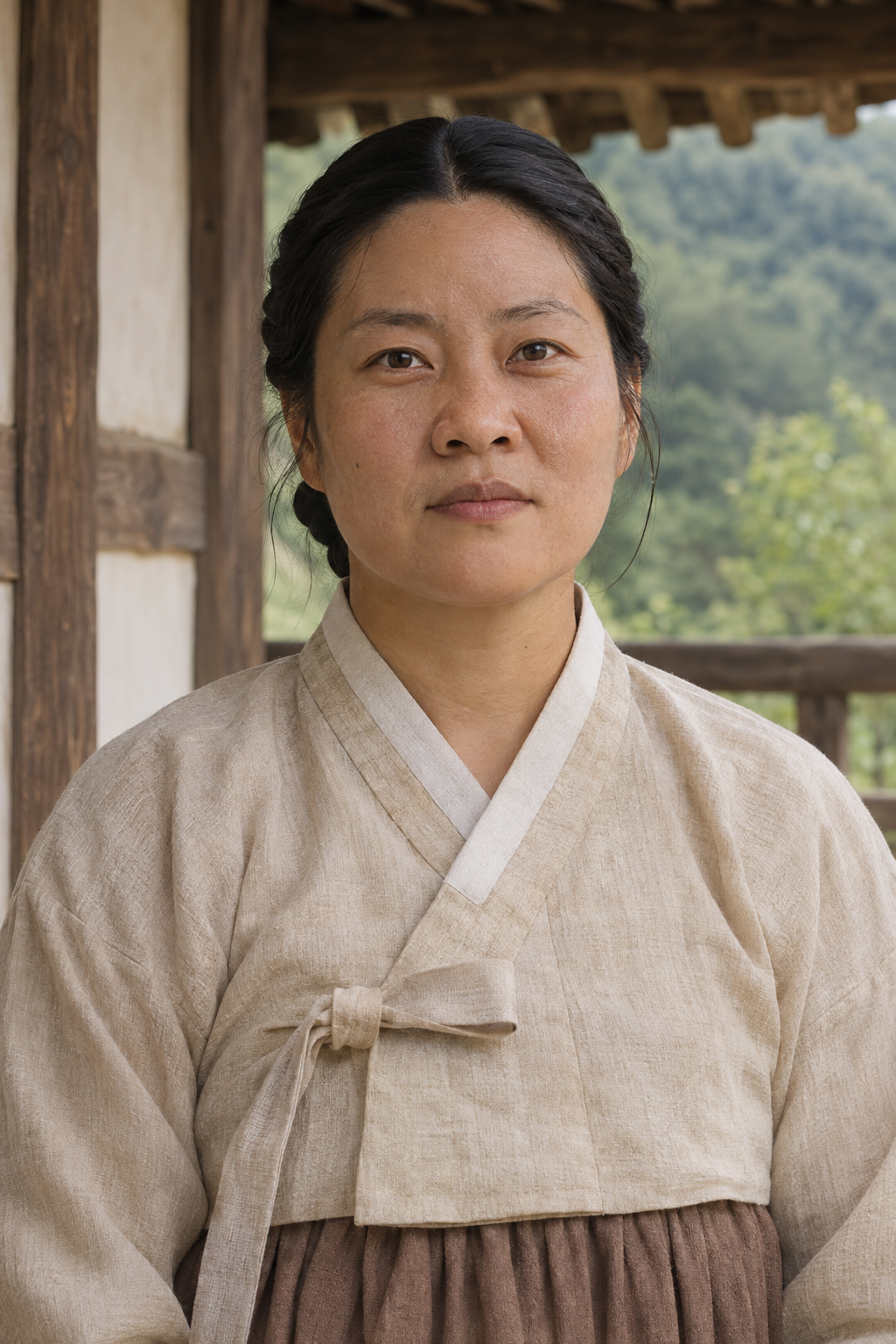
About Teresa Kwon Cheon-rye
The Korean bishops place Teresa Kwon Cheon-rye’s birth in 1783 at Yanggeun, east of Seoul. Her father, Francis Xavier Kwon Il-sin, had helped establish the Catholic Church in Korea. Her mother died when Teresa was still a little girl, and she lost her father in the persecution that began in 1791. She was the only daughter among four children. One of her cousins on her mother’s side was Lutgarda Yi Sun-i. Both women would eventually marry, and both would ask to remain celibate within marriage, but they came to that choice by different routes.
The arrests of 1801 broke up what remained of Teresa’s family. One of her brothers, Sebastian Kwon Sang-mun, was among those who died in the persecution. Teresa went to Seoul with a nephew. She intended to remain unmarried, but her relatives knew how difficult it would be for a woman in her circumstances to live alone. They pressed her to marry. She had already received the sacraments from the Chinese priest James Zhou Wen-mo. In the early Catholic accounts, her decision to devote herself to God through a single life belonged to that earlier period, before a marriage was arranged. The man she married, Peter Jo Suk, also came from Yanggeun. His own family had suffered in the arrests. He had taken refuge with his mother’s relatives in Gangwon, where he had grown up at a distance from many of his fellow believers.
On her wedding night Teresa gave Peter a letter. Kim Jeong-suk, a historian of Korean Catholic women, explains why a letter mattered: contemporary custom discouraged a bride from opening a conversation with the groom that night. By writing, Teresa could put to Peter a proposal he had not been expecting. She wished them to live together as brother and sister. He agreed. Unlike the marriage of her cousin Lutgarda, theirs began without an agreement worked out beforehand by their families and a priest.
The courtroom record complicates the wedding story. Catholic writers remembered Teresa as the person who renewed her husband’s faith. Historian Bang Sang-geun found that Peter and Teresa described him as her teacher when questioned by officials. Bang cautions against taking either account as a complete explanation of their life together. Their answers under interrogation describe the transmission of religious teaching; the wedding story concerns a commitment Teresa herself proposed.
In Seoul the couple’s house became a place where people came to hear about Christianity. Some were already believers who needed encouragement; others had come to learn about the faith for the first time. The couple had little money of their own, but they still set something aside to help people in need. The people who visited did not come only to see Peter. Teresa spoke about the faith herself. The account of these gatherings remembers her listeners as well as her husband. Teresa also observed a fast twice a week. Kim Jeong-suk describes this as one of the ways early Catholic women ordered their lives around prayer.
Teresa and Peter gave emergency baptism to children believed to be dying. Their home also served Catholics whose work took them far from Seoul. One such visitor was Paul Jeong Ha-sang, who stayed with them when he was in the capital. He traveled to Beijing to seek priests for the Korean Church; the couple supported him from home. When Jeong was expected back from one of those journeys, he was to go to their house. The horse carrying his baggage injured a leg and delayed his arrival. By the time he approached the city, fellow Catholics were waiting outside the gate to warn him that it was no longer safe to go there.
The city authorities reported seizing books in two scripts, letters and miscellaneous writings. Bang identifies their neighbourhood from the arrest report. They lived in the northern part of the city near the office that supplied the palace with provisions. By the twenty-second day of the third lunar month of 1817, officials were already transferring the case to the Ministry of Justice.
Barbara Ko Dong-i told officials that Teresa had taught her from Catholic books. Teresa said that punishment could not make her abandon God. The three prisoners remained in custody for more than two years. When Peter grew discouraged, Teresa urged him to give thanks to God with her. The Church places their execution by beheading in Seoul after August 10, 1819; the exact day is not known. The dated royal order authorizes the executions; it does not record the moment they took place.
For many years Catholic accounts identified her simply by her family name and her baptismal name, Teresa. The very records drawn up to condemn her preserve something that those accounts had lost: her Korean given name, Cheon-rye. At Yanggeun, where both Teresa and Peter were born, a sculpture by Sister Yi Suk-ja commemorates them together.
Wondering how to weigh the stories and sources? Learn how to read a saint biography.