Saint profile
Teresa Margaret of the Sacred Heart
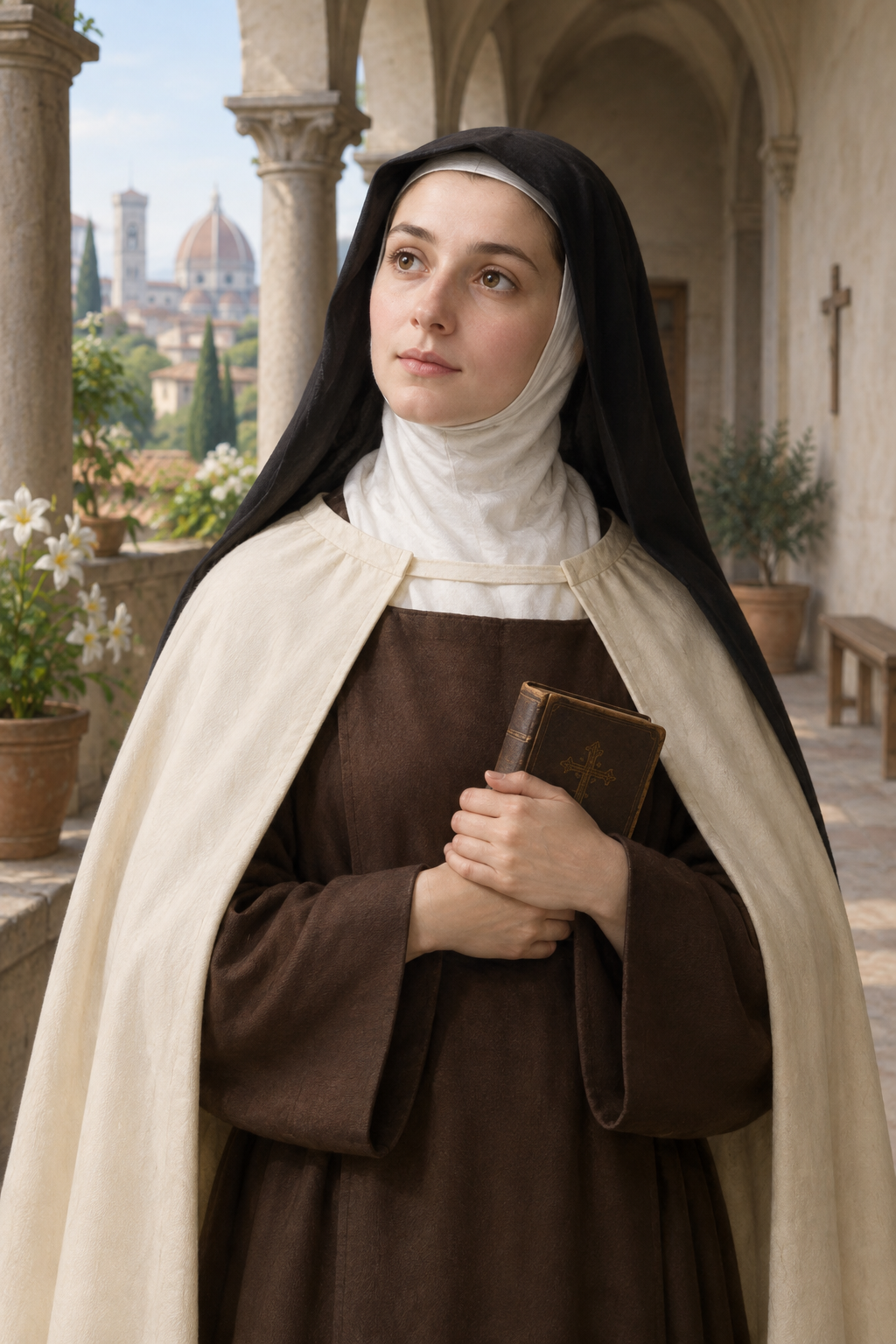
About Teresa Margaret of the Sacred Heart
Teresa Margaret of the Sacred Heart was born Anna Maria Redi in Arezzo in 1747. Treccani places her in a family closely connected with religious communities. She attended the Benedictine school of Saint Apollonia in Florence. Much of her correspondence with her father was later lost, limiting direct access to her early voice.
The Discalced Carmelites say she considered entering the Benedictines before a conversation turned her attention toward Carmel. She entered the Florentine Carmelite community in September 1764. Following an interruption around a knee operation, she returned and received the habit in 1765. She made religious profession on 12 March 1766, taking the name Teresa Margaret of the Heart of Jesus.
Treccani places her devotion to the Sacred Heart within the religious culture of her time. Her father had encouraged the devotion and given her a life of Margaret Mary Alacoque. The scholarly biography connects this reading to her developing Carmelite spirituality. It also shows how family, books, and convent practice shaped a young woman whose surviving writings are few.
In the convent, she returned often to biblical and liturgical texts. The Carmelite biography notes her knowledge of Latin and her affection for the writings of Saint Paul. It also remembers practical service: she assisted the infirmarian and cared for sick sisters, including difficult cases. Such work was quiet and routine, yet it gives a concrete account of the charity that her community later recalled.
The Diocese of Arezzo preserves a few writings that show her dissatisfaction with her own spiritual progress. It recounts her care for sick sisters and says she continued thinking of them even during her final illness. She died on 7 March 1770. Her profession had lasted less than four years. The order identifies appendicitis, while the diocesan page describes peritonitis; this disagreement does not justify a specific diagnosis in the structured record.
Treccani traces how family members, fellow nuns, and clergy developed her cause after death. Reports about the condition of her body and claimed healings circulated. Some contemporary observers disputed particular cures, and the scholarly account describes the institutional and political setting of the cause. These details are part of the history of devotion, but they should be identified as reports rather than presented as independently established miracles.
Pius XI canonized Teresa Margaret in 1934. The diocesan account continues to remember her in connection with Arezzo and devotion to the Sacred Heart. For a general reader, her documented schooling, profession, prayer, and care for the sick provide the clearest path through the much later language surrounding her reputation.
Wondering how to weigh the stories and sources? Learn how to read a saint biography.