Biography
Teresa of the Andes
About Teresa of the Andes
Teresa of the Andes was born Juana Fernández Solar in Santiago, Chile, on July 13, 1900. The public page should keep her baptismal name because it helps readers see the young Chilean woman before the Carmelite religious name.
Her story should not be written as if she were formed only by the cloister. The sources remember family life, friendships, schooling, sport, affection, and ordinary youth as the setting in which her desire for Christ grew.
That ordinary setting matters because it keeps Teresa from becoming a flat symbol of youthful piety. She was young, affectionate, and energetic, and the sources make her holiness credible inside those human realities rather than apart from them.
Teresa's diary and letters are important, but this draft avoids quoting them. They can support the shape of her spirituality without exhausting the source budget or turning a short page into an anthology of private texts.
The page may mention her writing as evidence of interior life. It should not mine the diary for isolated phrases or make the public biography depend on private words that require careful quotation control.
The page should show a maturing vocation rather than instant perfection. Her holiness was young, but not shallow. It included temperament, love for family, attraction to prayer, and a growing desire to give herself wholly to God.
That maturing vocation also helps explain the shortness of her Carmelite life. The monastery did not create a vocation from nothing; it received a desire that had already been forming in school, family, prayer, and correspondence.
In 1919 Juana entered the Discalced Carmelite monastery of the Holy Spirit at Los Andes. There she received the name Teresa of Jesus. The existing catalog death place names that monastery, and this draft preserves the field.
Los Andes should be more than a scenic cue. It was the concrete Carmelite house where her last year was lived, where she was formed in enclosure, prayer, and community life, and where her final illness unfolded.
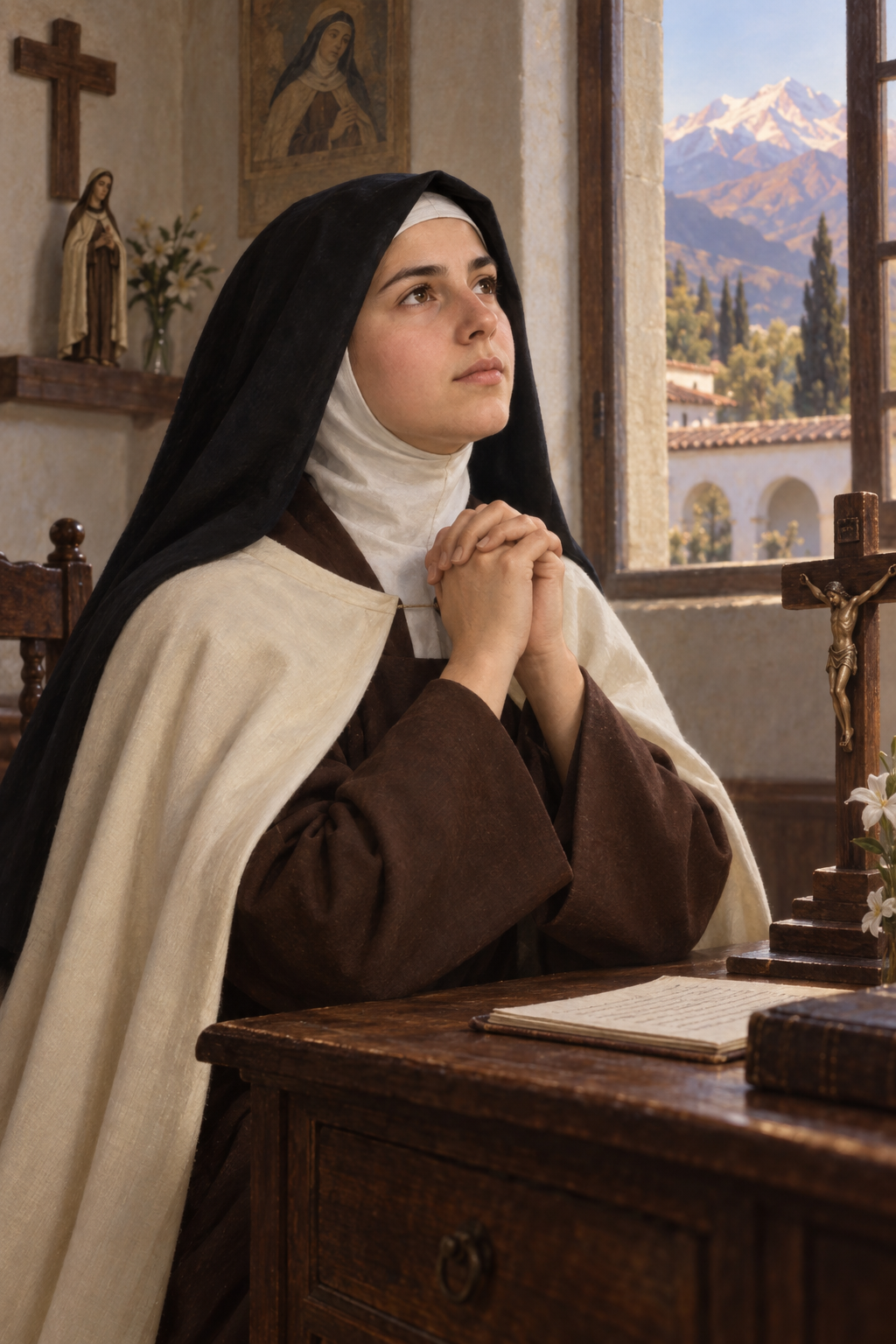
The existing place field names the Monastery of the Holy Spirit at Los Andes. This draft keeps that specificity and lets the visual setting suggest cloister, Andes light, and simple prayer rather than a generic convent interior.
The biography should explain Carmelite identity simply. Teresa was a Discalced Carmelite nun, so the artwork can show the brown habit, white mantle, black veil, crucifix, and a small diary or letter as devotional attributes.
The Carmelite details should be accurate but not costume-driven. Habit, prayer, enclosure, and desire for union with Christ belong together; the page should not reduce the tradition to garments and scenery.
Her life in Carmel was brief. That brevity should not be used for sentimental effect. The better emphasis is intensity: a young religious sister trying to live prayer, sacrifice, charity, and joy with the time given to her.
Teresa became seriously ill with typhus. During the illness she made religious profession in danger of death. This point should be stated plainly and not turned into a hospital scene or a dramatic deathbed tableau.
The illness paragraph should stay sober. Typhus explains the rapid turn toward death, but the center of the episode is her profession, community, and final offering, not medical description.
Profession in danger of death matters because it joins her desire for Carmel with the church's recognition of her final condition. It is a sacramental and communal moment, not simply a private emotional climax.
That is why the artwork avoids a hospital scene. A quiet crucifix, desk, and monastery room can honor the same truth without making physical decline the visual focus.
She died on April 12, 1920, before her twentieth birthday. The page should not let the young age do all the work. Her youth is meaningful because the sources show real spiritual maturity inside it.
Teresa was canonized in 1993 and is remembered as the first Chilean saint. That fact can be included, but the page should avoid national display shortcuts. Her Chilean identity belongs in the narrative, not as flag imagery.
This distinction matters for visual review. Andes landscape and the Los Andes monastery are enough to place her; flags and patriotic color schemes would pull attention away from prayer and vocation.
The final page should present Teresa as a joyful Carmelite witness whose path ran through ordinary family affection, letters and diary, the Los Andes monastery, profession in danger of death, and a brief life wholly offered.
Readers should be invited to see holiness as possible in youth without reducing it to youthfulness. Teresa's witness is not that she died young; it is that she learned to love deeply, pray steadily, and give herself without waiting for a long life.
The final page should therefore end with hope rather than tragedy. Teresa's brief life can encourage young readers, families, and religious communities to take ordinary growth in holiness seriously.
Artwork should show a young Chilean Discalced Carmelite in brown habit, white mantle, and black veil, in a quiet Los Andes cloister or monastery room with Andes light, diary or letter, and crucifix. Avoid flags, modern props, hospital imagery, halos, exact-likeness claims, and readable text.
Wondering how to weigh the stories and sources? Learn how to read a saint biography.