Biography
Thaddeus Jeong In-hyeok
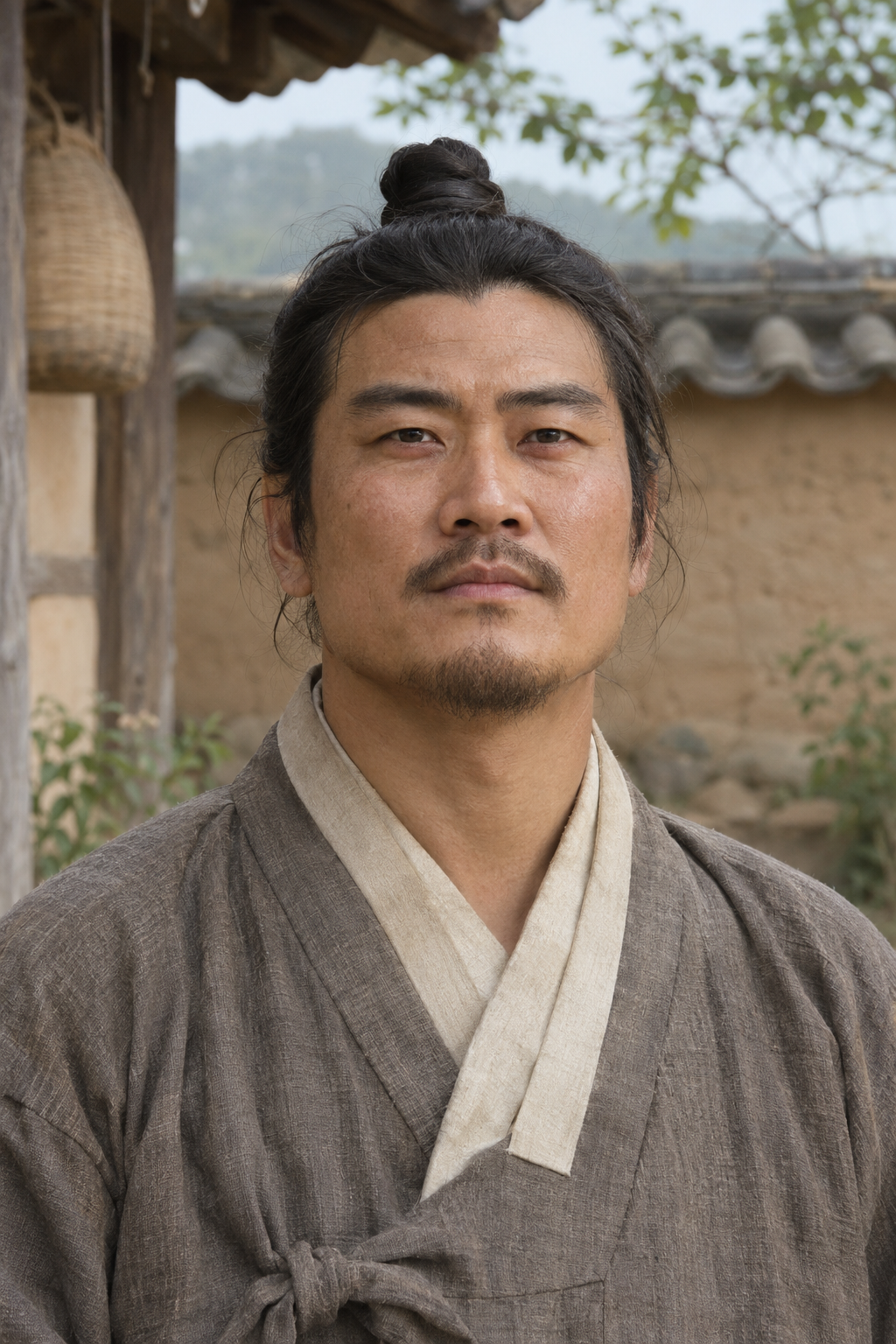
About Thaddeus Jeong In-hyeok
Thaddeus Jeong In-hyeok earned his living by running a pharmacy in Hanyang and came from a family of the intermediate social rank known as jungin. Around 1790 he learned Catholic doctrine from Peter Choe Pil-je and joined the Church. He began teaching his brothers and stopped taking part in ancestor rites. The change brought religious disagreement into the family whose members would later be questioned together by the authorities. His birth year is unknown.
Ri Gil-jae places the pharmacy at Gwangtonggyo and names Baek Sang-ok alongside Peter among his teachers. He also describes Thaddeus borrowing five Korean religious books from John Choe Chang-hyeon. The books and the shop linked him to Catholics outside his own household, while his relatives became involved in the teaching he had received.
A ministry report from 1791 records the testimony of Jo Ji-hwa, a student interpreter who identified the Jeong brothers as his maternal uncles. Jo said that he had learned their religion while visiting his mother’s family, over six or seven months. According to his statement, his parents’ objections led him to stop in March. The report records an admission made to officials seeking renunciations; it does not give an independent account of every lesson or distinguish which brother taught each point. Jo said that he had no religious books of his own, but had sometimes looked at books read by the brothers.
Another family connection carried books out of the capital. Jeong Do-eung, an uncle living in Yeongdong, told officials that he had heard the Jeong brothers and Thomas Choe Pil-gong discuss religion during a stay in Seoul. He borrowed Chinese religious books and a Korean prayer text when he returned home. Unable to understand the Chinese books easily, he concentrated on the Korean prayers, copied a short daily selection and recited it morning and evening. His later statement describes burning the books after hearing the official prohibition and the Jinsan case. The ministry reported his words and released him after warning him. The loan included two volumes of Shiyi, four of Zizheng, a pocket prayer book and a Korean prayer selection. Do-eung said that people he asked to examine the Chinese books had never encountered them before. When his brother Do-hong and nephews later came to ask for the books, he told them that he had burned them.
In the persecution of 1791, Thaddeus and his brothers were arrested and taken to the Ministry of Punishments. The current Church biography says that he initially held firm when other prisoners gave way. Officials sent him home for three days so that his family could persuade him to abandon Catholicism. His eldest brother then assured the ministry that no one in their household would continue the religion, and Thaddeus was not recalled.
The contemporary official record presents the release differently. A ministry submission on the twelfth day of the eleventh lunar month lists Thaddeus among those released after statements of renunciation. Its surrounding discussion concerns officials’ attempts to secure inward conviction as well as outward agreement. The ministry attributed a renunciation to Thaddeus, whereas the Church biography emphasizes the assurance given by his family. The later account nevertheless agrees that he regretted not having witnessed more courageously and resumed Catholic practice.
His family continued trying to stop him. He instead joined Thomas Choe, Peter Choe and Barnabas Kim I-u in a community devoted to studying doctrine. After James Zhou Wen-mo entered Korea at the end of 1794, Thaddeus attended the priest’s Masses and received the sacraments. The Catholic Encyclopedia also credits him with teaching Gervase Son Gyeong-yun and Florus Hyeon Gye-heum.
He became a member of the Myeongdo association. Hong Yeon-ju describes meetings at Barnabas Kim’s home with Yi Hap-gyu, Son Deok-jang and other believers. The same account credits Thaddeus with translating Chinese Catholic books into Korean and passing them to fellow Catholics. The present Church biography describes his distribution of Korean translations, without specifying his personal authorship of every translated text.
His pharmacy also supplied reading material to someone newly arrived in Seoul. Kim Il-ho, who had studied medicine in Yanggeun, moved to the capital in 1799. Hearing that Catholic teaching was good, he borrowed Tianzhushiyi from Thaddeus and came to accept the religion. Kim’s official biography connects that reading with his baptism and subsequent association with Augustine Jeong Yak-jong, Alexius Hwang Sa-yeong and Peter Choe. Kim also became a member of the association and attended the priest’s Sunday and feast-day Masses.
When persecution began again in 1801, Thaddeus was arrested with other Catholics. He was questioned and punished at the police bureau and the Ministry of Punishments. According to the current Church account, he acknowledged his faith without saying anything that would harm the community. He was beheaded outside Seoul’s Small West Gate on May 14, 1801, together with Peter Choe and other prisoners.
Wondering how to weigh the stories and sources? Learn how to read a saint biography.