Biography
Theobald of Marly
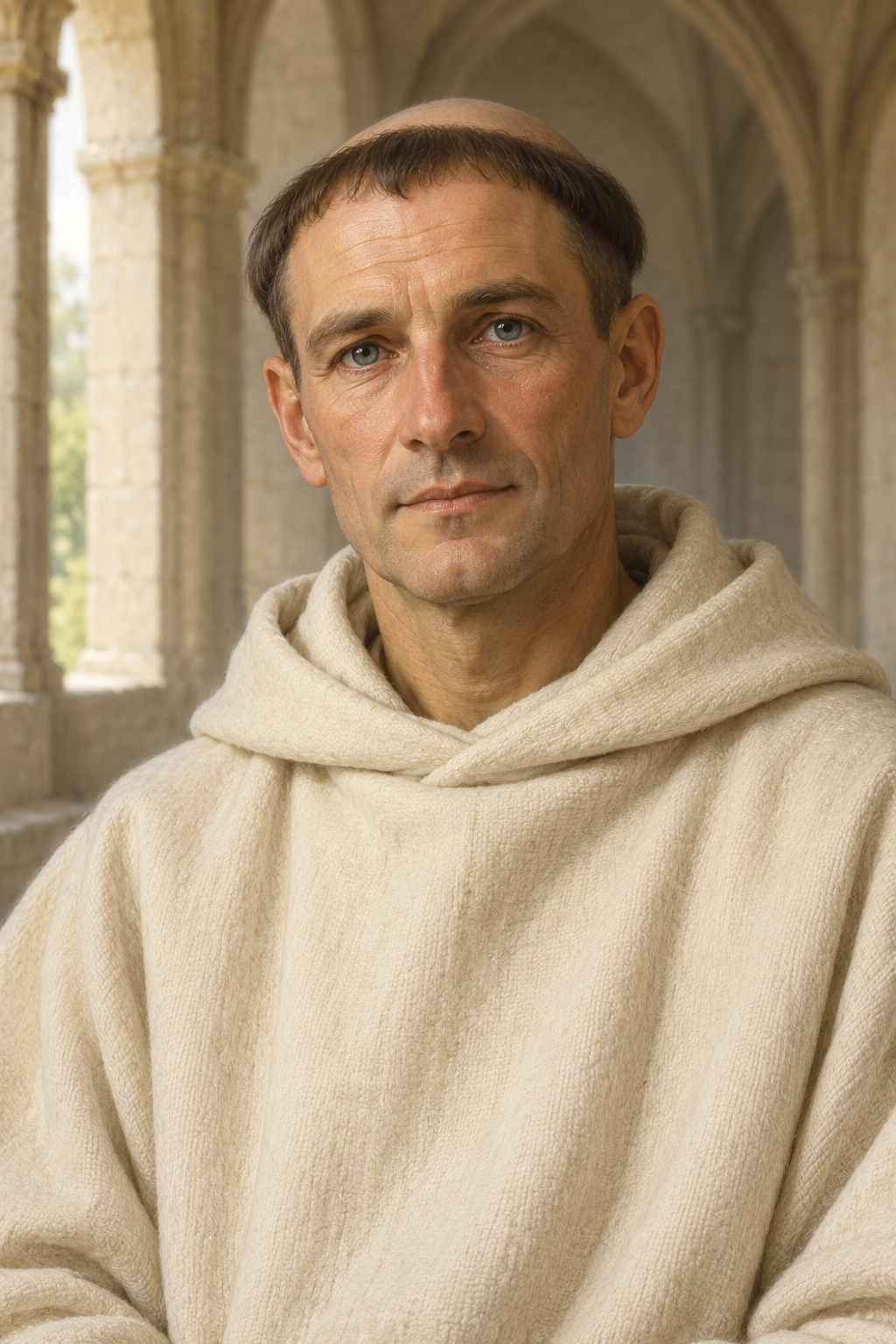
About Theobald of Marly
Theobald of Marly, also known as Thibaud or Thibaut, led the Cistercian abbey of Vaux-de-Cernay from 1235 until his death in 1247. Nominis remembers an abbot who shared the ordinary work of his community. Its account describes him sweeping corridors, cleaning sanitary facilities and carrying stone for the builders. These traditional details portray leadership exercised through service rather than exemption from the least attractive tasks.
A later biography published by the Catholic Church in Norway places his birth at Marly Castle and identifies his family with the Montmorencys. It describes the education expected for his position: his father prepared him for military life and sent him for a time to the court of Philip Augustus. The same account remembers his attraction to prayer and his visits to the church at Port-Royal. These details come through a later saint’s life, credited to Butler, rather than a personal account by Theobald. They describe the social world he left when he joined the Cistercians.
The abbey had a substantial history before his election. In his study of the site, Marcel Aubert records its foundation in 1118 by monks from Savigny. The community grew and established another house at Breuil-Benoît in 1137. Savigny’s union with Cîteaux in 1147 brought Vaux-de-Cernay into the Cistercian order. Aubert places Theobald’s election in 1235, when the abbey had already reached much of its mature development. His tenure belonged to an established and expanding monastic community, not a new foundation.
Nominis also preserves a tradition that Louis IX credited Theobald’s prayers with helping him and his wife have a large family. This is a tradition of royal devotion. The same source lists July 8 as his commemoration and December 8 as a local observance.
His connection with Marly remains visible in the parish’s public life. In 2025 the parish of Saint-Vigor and Saint-Thibaut explained the design of its new seal. Three crescents on a blue field recall the arms of Vaux-de-Cernay and Theobald’s years as its abbot. The black and white colors of another part of the design refer to the Cistercian habit. These symbols place his monastic identity within the memory of the modern parish.
Wondering how to weigh the stories and sources? Learn how to read a saint biography.