Biography
Theodora of Thessalonica
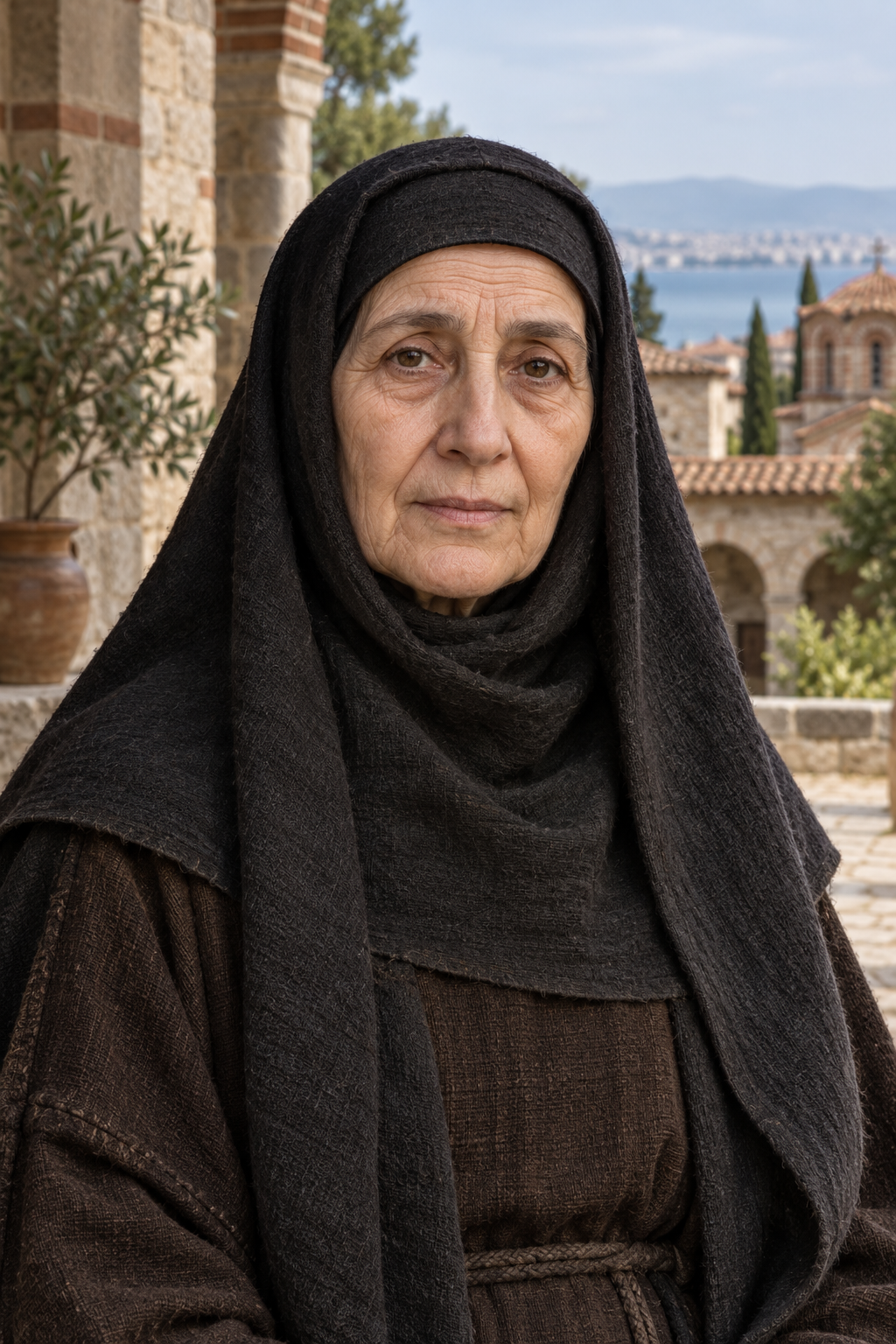
About Theodora of Thessalonica
Theodora came from Aegina and moved with her family to Thessalonica after an Arab attack. The scholarly chronology places her birth in 812. Her medieval Life describes marriage, the deaths of two children, and the dedication of her surviving daughter Theopiste to monastic life. Widowed at twenty-five, she entered the convent of Saint Stephen.
Her life there involved severe demands. The abbess forbade mother and daughter to speak to one another for fifteen years, although they shared work and a cell. Another punishment required Theodora to spend a freezing night outside after moving wet bedding without permission. The author praises her endurance. Later she cared for the incapacitated former abbess Anna, feeding, bathing, and moving her despite harsh treatment. In old age she continued spinning discarded fibers when heavier work became impossible.
These episodes require their historical setting. Talbot’s scholarly introduction emphasizes that Theodora’s reputation arose from obedience, work, frugality, and humility rather than spectacular public achievements or miracles during her lifetime. Her long residence in an urban convent also challenged doubts about whether a formerly married woman could become a saint. Family relationships remained central: her daughter became abbess, while relatives and supporters helped establish devotion at her tomb.
Theodora died in 892. Gregory, who wrote shortly afterward, describes posthumous healings and fragrant oil associated with her remains and image. Talbot notes that his own family participated in the cult and that he attended the translation of the relics. His testimony is close to the events, but also deliberately promotes her sanctity. Later manuscripts transmitted different versions of his work; critical scholarship distinguishes that transmission from the underlying ninth-century account.
Material evidence shows the wider reach of her veneration. A thirteenth-century lead flask in Thessalonica’s Museum of Byzantine Culture depicts Theodora in monastic dress on one side and Demetrios on the other. Such vessels carried aromatic oil from saints’ shrines. The object preserves a tangible link with pilgrimage and devotional practice, without independently proving the miraculous origin attributed to that oil.
Wondering how to weigh the stories and sources? Learn how to read a saint biography.