Biography
Theodore of Edessa
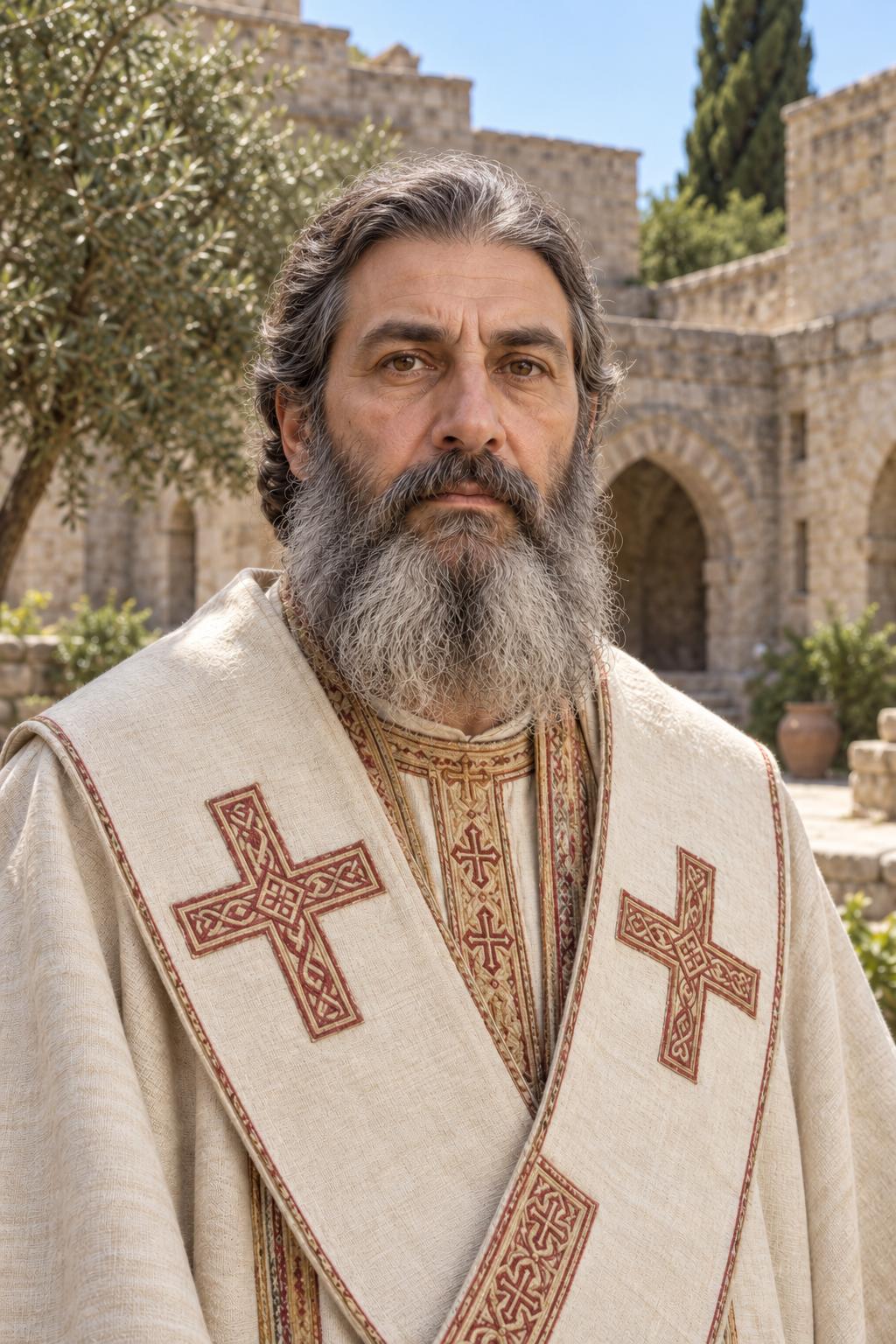
About Theodore of Edessa
Theodore of Edessa is venerated as a monk and bishop, but the familiar account of his life is a literary saint’s Life whose historical claims require unusual caution. The church notice presents him as an orphan who distributed his possessions, entered the monastery of Mar Saba near Jerusalem, and later became bishop of Edessa. It describes him teaching against religious error, healing a foreign ruler, and returning to Mar Saba before his death. These episodes belong to the received narrative; they do not establish a securely documented episcopal career.
Modern research identifies the Life as a fictional biography. The Retracing Connections programme describes its Theodore as a literary double of the ninth-century theologian Theodore Abu Qurra. The story moves from Mar Saba to Edessa and Baghdad, where the hero befriends and converts a caliph who subsequently suffers martyrdom. That narrative imagines the transformation of a powerful religious opponent into a Christian brother. Its plot should not be reported as an independently verified conversion of an identifiable Muslim ruler.
A 2026 critical study by Stratis Papaioannou and Charis Messis attributes the composition to Euthymios the Iberian, the Georgian abbot active around the turn of the eleventh century. The work circulated under the names of Basil of Emesa for the Life and Theodore for its accompanying hundred spiritual chapters. The study examines translation, rewriting, and the appropriation of earlier texts, as well as the work’s reception in Greek, Georgian, Arabic, and Slavic settings. Theodore’s enduring place in Christian devotional literature is therefore clearer than the precise life dates traditionally assigned to him.
Wondering how to weigh the stories and sources? Learn how to read a saint biography.