Biography
Theodosius of Chernihiv
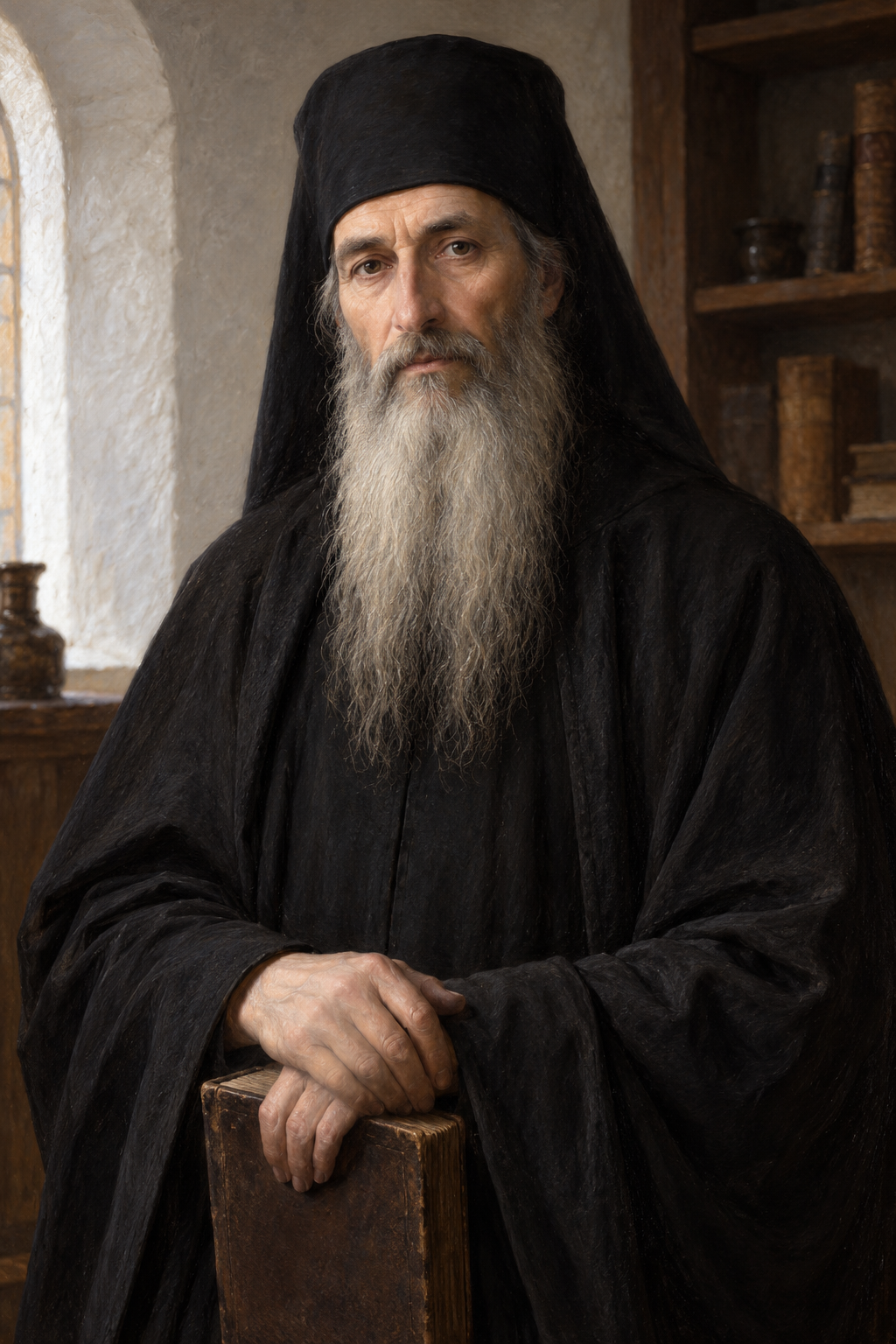
About Theodosius of Chernihiv
Theodosius of Chernihiv was an Orthodox monk and bishop whose work joined monastic leadership, education, and church administration. Born in the early 1630s, he studied at the Kyiv Brotherhood school before entering the Caves monastery. His monastic name honored the earlier Theodosius of the Caves. As abbot of Vydubychi, he helped restore the community, developed its choir, and provided a separate retreat for monks seeking greater solitude.
His parents were Mykyta, a priest, and Maria of the Uhlytsky family. The Encyclopedia of Ukraine identifies his birthplace as Ulaniv in Podilia. Before becoming an abbot, he served as a deacon at Saint Sophia Cathedral and lived at a monastery near Baturyn. His first abbacy was at the Saint Onuphrius monastery near Korsun, from 1662 to 1664. He then led Vydubychi until his move to Chernihiv.
His ministry unfolded amid divisions between Orthodox and Catholic Christians. Writing for the Ukrainian Orthodox Church of Canada, Ihor Kutash describes the pressure on Orthodox leaders to strengthen their communities during these conflicts. Kutash also acknowledges that the earlier Union of Berestya brought contacts with Western thought and experience of unity amid differences. This setting helps explain the importance attached to learning and worship in Theodosius’s church life.
In 1688 he moved to Chernihiv to lead the Yeletskyi Dormition monastery and assist Archbishop Lazar Baranovych. He became a bishop in 1692. The Encyclopedia of Ukraine notes that his consecration by Patriarch Adrian in Moscow strengthened Moscow’s authority at the expense of Chernihiv’s ties to Kyiv. Theodosius also maintained good relations with Hetman Ivan Mazepa, who supported church and monastery building.
After Baranovych’s death in 1693, Theodosius took full responsibility for the diocese. The Chernihiv Historical Museum’s account distinguishes this period of independent leadership from his earlier service as the aging archbishop’s assistant. His tenure was brief: he died in February 1696. The museum records his burial in the cathedral of Saints Boris and Gleb and the growth of veneration around his tomb.
He encouraged the training of clergy and brought learned monks from Kyiv to Chernihiv. Among them was John Maksymovych, who later succeeded him. His care for monastic communities included new churches and foundations as well as the repair of existing buildings. These activities formed a substantial part of his short episcopate.
Theodosius supported the Chernihiv Press.
That institution had been established by Baranovych in Novhorod-Siverskyi around 1675 and moved to Chernihiv in 1679. It produced books for worship alongside theological works, translations, poetry, and polemical writings. Its output involved both writers and engravers. The press’s history continued beyond Theodosius’s lifetime, so its later achievements should not all be credited to him. It remained an important part of the region’s religious and literary culture. The press published in Ukrainian, Polish, Latin and Church Slavonic, serving readers across several language traditions.
Surviving documents give a more concrete view of the administrative world around him. The historian Ihor Sytyi lists a 1691 letter to Ivan Zabila, a grant concerning land in Novhorod-Siverskyi, and a document concerning craft guilds and a church brotherhood. He also identifies a facsimile of a 1695 letter about building and renting a mill on monastery land. These are records of practical affairs, alongside the devotional accounts more often associated with the saint.
Sytyi also examines a file concerning Pelageya Arestova, who reported recovering her speech after visiting the tomb. The file includes her testimony, questioning of clergy and neighbors, an oath, and an order concerning preservation of the papers. These documents show how a reported healing was recorded and investigated. They preserve witnesses’ religious testimony; they do not independently establish a supernatural cause.
Theodosius was formally canonized in 1896. For its 125th anniversary in 2021, the historical museum exhibited documents issued by him, a handwritten letter, and a late-seventeenth-century episcopal vestment associated with him. The exhibition also considered the city’s preparations for the original canonization celebrations. Such objects connect the later public commemoration with the bishop’s own working life.
The museum traces these collections through earlier local institutions, including the provincial archival commission’s museum and the bishop’s residence. Some objects later entered the diocesan antiquities collection before reaching the historical museum. The 2021 display brought together personal material and evidence of public remembrance. Its account describes the 1896 celebrations lasting several days, with clergy, pilgrims, and public figures arriving in Chernihiv for the event.
Cleveland’s Orthodox cathedral was built and named in his honor fifteen years after his canonization.
In Ukrainian Orthodox devotion, he is invoked by people with cancer and, following the Chornobyl disaster, radiation sickness. Kutash records these associations as part of the saint’s continuing intercessory role. They describe a practice of prayer, not a substitute for medical care or evidence that prayer cures disease. His remembrance thus includes both the institutions he helped sustain and the needs people bring to prayer in his name.
Wondering how to weigh the stories and sources? Learn how to read a saint biography.