Biography
Theodosius of Kyiv
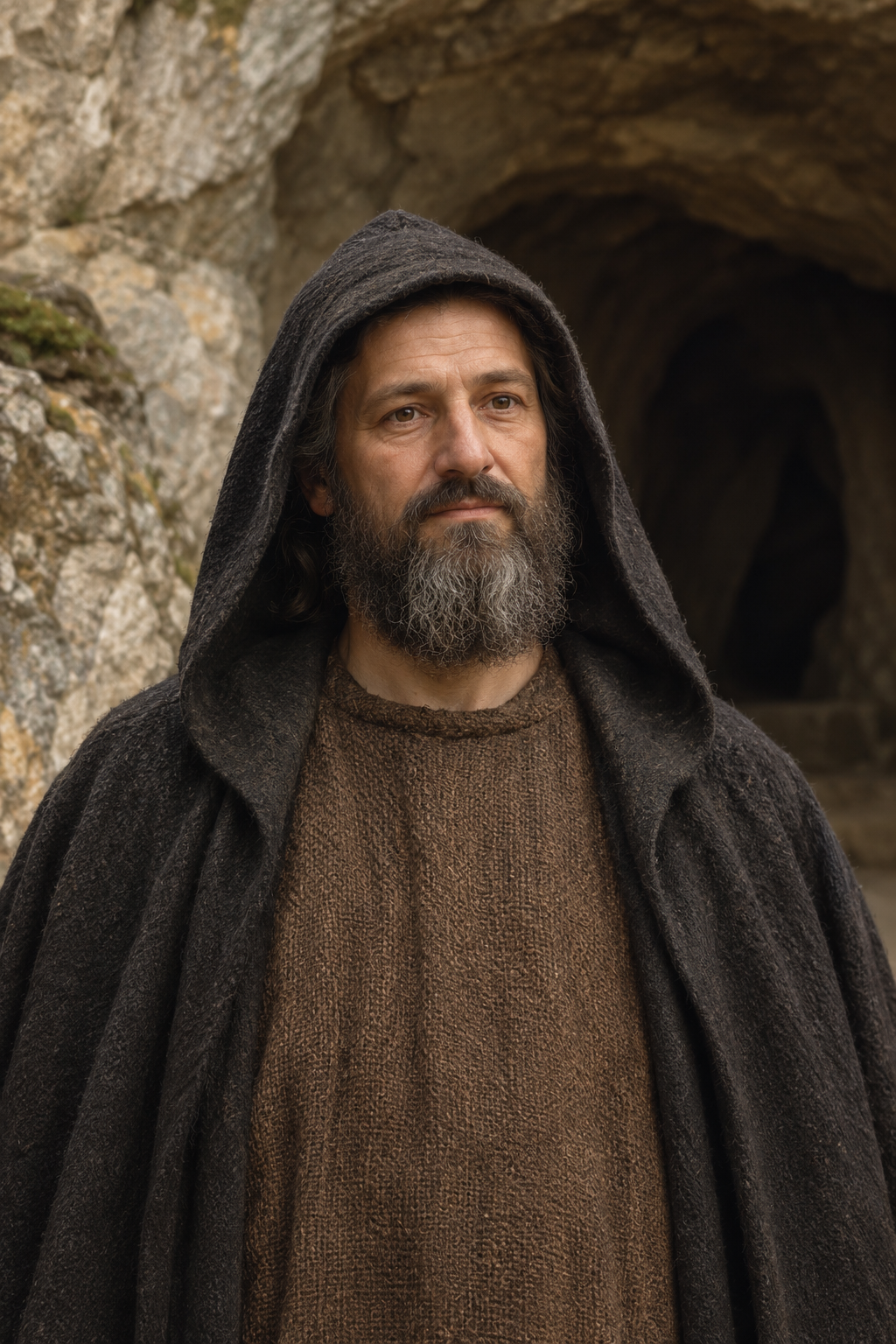
About Theodosius of Kyiv
Theodosius led the Caves Monastery at Kyiv during the eleventh century. After joining Anthony and the first monks of the community, he became its abbot and helped it grow beyond its beginnings in the caves. He introduced the Studite rule, which ordered the monks’ common life, and began the construction of the Dormition Cathedral in 1073. The building was completed after his death.
His birth year is disputed. The Encyclopedia of Ukraine places it around 1036. A modern convent account explicitly records competing dates of 1008 and 1036. These estimates do not support a precise age for the events of his youth.
Much of the story of his early life comes through Nestor’s account. In her study of this work, Dariya Syroyid explains that Nestor drew on memories preserved by the monks. For the childhood narrative, he reported information that Theodosius’s mother had given to a member of the community. Nestor also used the familiar patterns of earlier saints’ lives. His account was intended to establish Theodosius’s holiness, rather than to record every aspect of his life.
The Orthodox Church in America’s devotional account describes a young man drawn to prayer and study despite his mother’s opposition. It recounts his departure from home and his reception into the community under Anthony. The same account emphasizes the ordinary work that accompanied his prayer: carrying water, cutting wood and grinding grain. It portrays an abbot who continued to share the monks’ demanding daily tasks after becoming their leader.
A Ukrainian Catholic account from St. Michael’s parish in New Haven emphasizes the communal character of this vocation. It remembers Theodosius’s rule as encouraging obedience, mutual love, gentleness and simplicity. Its stories of visitors mistaking him for a cook or gardener express the ideal of a superior who shared the work of his community. The account also describes support from princes and nobles being used to feed and clothe people in need and to care for prisoners.
The Encyclopedia of Ukraine records his opposition to Sviatoslav’s seizure of the throne and his defense of Iziaslav. Sermons attributed to him also challenged the monks’ indifference and concern for personal comfort.
The Primary Chronicle preserves an account of his instructions before Lent. It presents him encouraging younger monks to respect their elders, while asking older monks to guide and console the young. The narrative places mutual care alongside prayer, reading and restraint. It also describes his custom of withdrawing into a cave during Lent and returning to celebrate with the community.
Its account of his final illness shows the community taking part in choosing its next leader. After Easter, the sick abbot asked the monks whom they wanted to succeed him. When they initially returned the choice to him, he proposed James. The monks objected because James had entered from another monastery and asked instead for Stephen, who had trained under Theodosius. He accepted their preference and entrusted the monastery to Stephen, urging him to preserve its rule. The narrative also describes Prince Sviatoslav visiting during the illness and agreeing to protect the monastery after Theodosius entrusted it to him. The chronicle records his death on May 3, 1074, and describes a nighttime burial in the cave, following his instructions. This narrative preserves a remembered transition of leadership, not a verbatim transcript of the conversations.
The OCA life likewise remembers him speaking for people unjustly condemned and providing a place where those in poverty could obtain food and drink. It presents his confidence in divine help through stories of supplies arriving when the monks lacked necessities. These are accounts of providence in the devotional tradition, not independently established miraculous events. Theodosius died in 1074 and was glorified as a saint in 1108.
Syroyid’s analysis helps explain why such stories occupy so much of the surviving life. Nestor connected holiness with the needs of daily monastic life, including food and wine for worship, while identifying people who had passed stories on to him. He joined the monastery after Theodosius’s death and understood himself as a spiritual disciple. The portrait he preserved therefore combines the community’s memory with a carefully formed account of sanctity.
Theodosius was buried in the monastery’s caves, and his relics were transferred to the Dormition Cathedral in 1091.
Wondering how to weigh the stories and sources? Learn how to read a saint biography.