Biography
Théophane Vénard
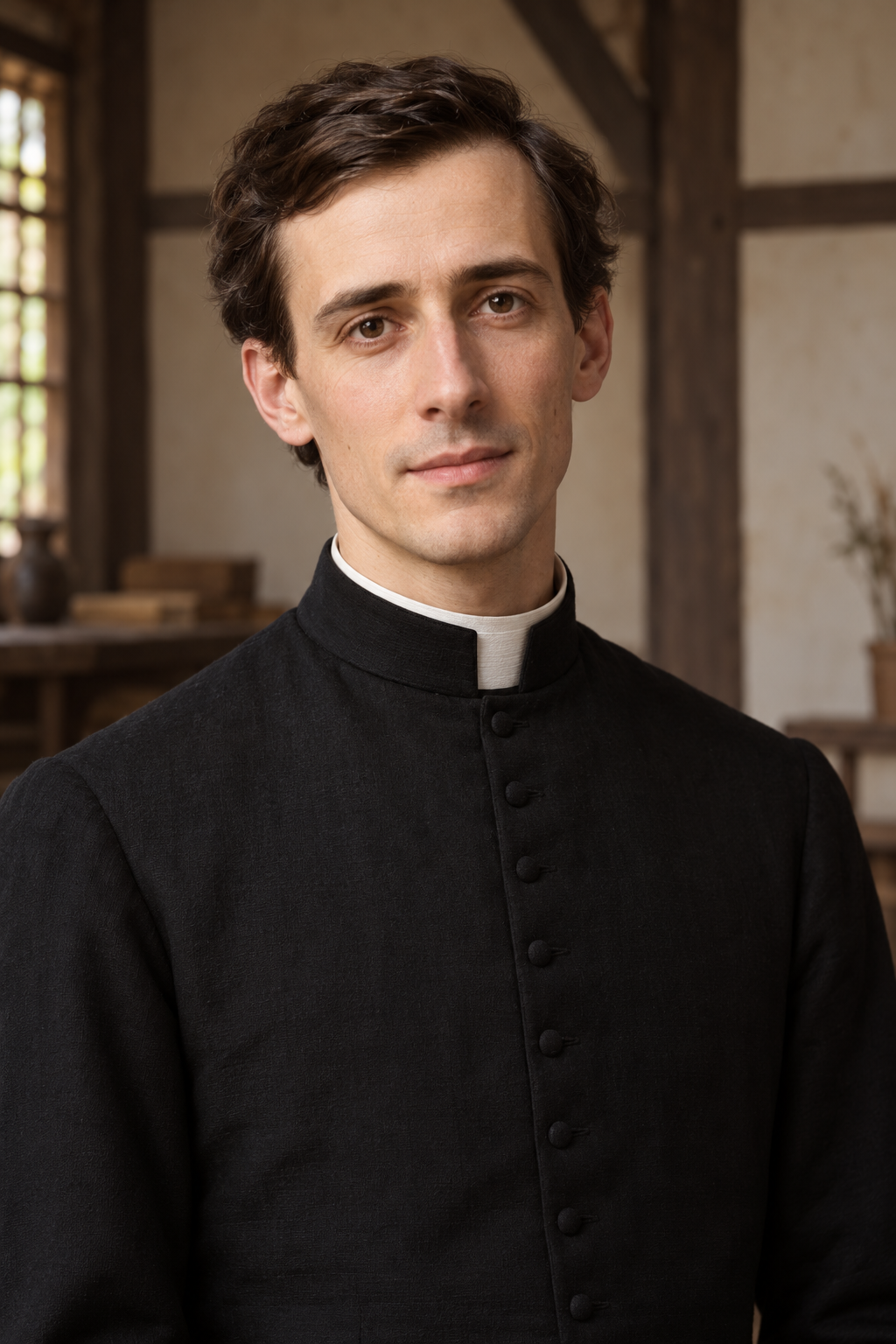
About Théophane Vénard
Théophane Vénard was born on November 21, 1829, at Saint-Loup-sur-Thouet in France. He studied at Doué-la-Fontaine, Montmorillon and Poitiers before entering the Paris Foreign Missions seminary in 1851. Ordained on June 5, 1852, he left for Asia that September without yet knowing his precise destination. After fifteen months in Hong Kong, he was sent to western Tonkin.
Vénard grew up in a farming family in Saint-Loup-sur-Thouet. The Nominis account identifies him as the family’s second child. His childhood reading included the missionary journal Annals of the Propagation of the Faith.
The French bishops’ saint calendar connects his missionary vocation with childhood reading about Charles Cornay, another missionary from Poitou who had been killed in Tonkin. It also records the loss of his mother during his school years and the care his sister Mélanie gave him afterward. The family remained important to him: in 1851 he asked his father’s permission to become a missionary. The choice to leave home did not end those close ties, which remained visible in his correspondence.
Vénard learned the language at Ke-doan and Hoang-nguyen. Persecution repeatedly displaced him, while illness made his work harder. In 1857 he took responsibility for the Hoang-nguyen district, but later found shelter with the Lovers of the Cross sisters at But-dong. With Vietnamese catechists, he translated biblical material, including a Gospel concordance. Some manuscripts were destroyed by Christians frightened by the persecution. His ministry depended on local collaborators and people willing to shelter him.
He was arrested on November 30, 1860. James Anthony Walsh’s account describes his refusal to abandon his faith during interrogation and the resulting sentence of death by beheading. While awaiting execution, he was confined in a cage. Letters written there reached his family and became an important part of the record of his final weeks. The imprisonment was real, but his own words offer a more particular account of it than a general description of the persecution can provide.
In a letter to his father dated January 20, 1861, Vénard said that he had not undergone the tortures suffered by some other prisoners. He described respectful and even affectionate treatment from people around him, despite the law that condemned him. He compared different human lives to different flowers gathered by God, and wished his father a peaceful old age. This account preserves his view of the people guarding him as well as his acceptance of approaching death.
Writing to Mélanie that same day, he remembered her help during his school years and her support for his missionary calling. He described the scene around his cage at night: guards played games nearby, watches were sounded, and a lamp gave him light to write. Alongside these ordinary details, he expressed his hope of heaven and urged his sister to persevere in faith and good works. The affectionate farewell shows how strongly the separation from his family remained present even at the end.
His farewell to his brother Henri also carried a practical request: to care for their father. Vénard urged him to remain a good son and brother after his own death.
Vénard was executed in Hanoi on February 2, 1861. His individual commemoration falls on February 2; he is also remembered with the Vietnamese martyrs on November 24.
His remains were returned to the Paris Foreign Missions seminary in 1865, according to its archival biography.
His letters later mattered deeply to Thérèse of Lisieux. Her recorded remarks from May 1897 emphasize the ordinary quality of his life and the closeness she felt to his love for his family. She valued hearing his own voice through his letters, rather than knowing him only through someone else’s account. Her response helps explain why the personal correspondence remained central to his remembrance.
The May diary also records a more personal connection. When a possible move to Tonkin was being considered for Thérèse, her community prayed a novena to Vénard. Her cough worsened during that period. In recalling this, she interpreted her illness as his call to join him in heaven and asked for his portrait. This was her own religious interpretation of her approaching death, not a medical explanation.
The public celebration of his beatification took place in Rome on May 2, 1909. Walsh records that a large French delegation attended, including the bishop of Poitiers and Vénard’s surviving brother. His recognition thus brought his family and home diocese together again.
He was canonized on June 19, 1988.
At the canonization of the 117 martyrs, John Paul II addressed both the Vietnamese Church and Vietnamese people living abroad. He placed the missionaries alongside the much larger number of Vietnamese saints, including clergy and laypeople. The homily recognized religious, political, social and economic tensions in the history of persecution, while presenting the martyrs’ faith as a call to perseverance and concern for the common good.
Wondering how to weigh the stories and sources? Learn how to read a saint biography.