Biography
Theophylact of Nicomedia
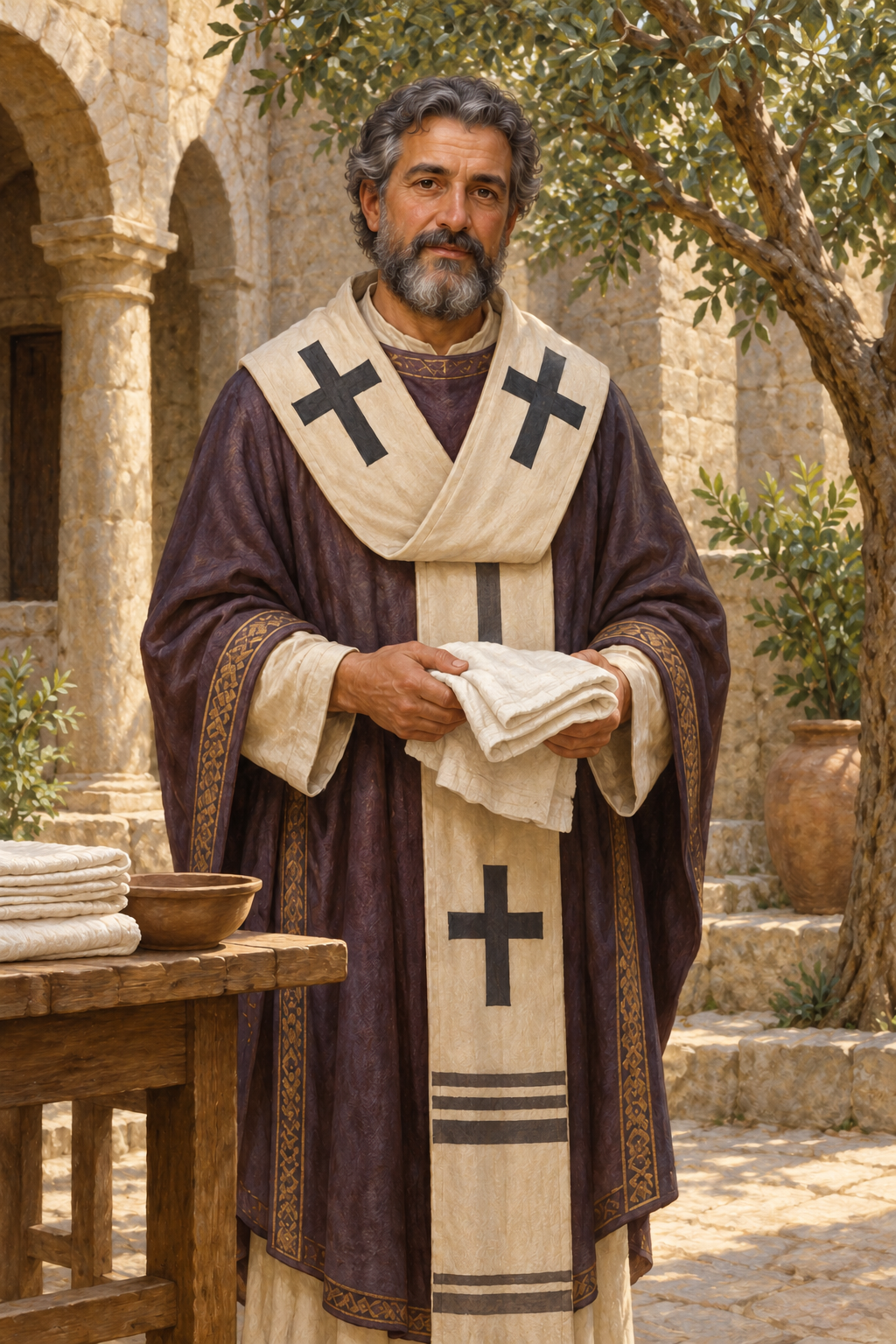
About Theophylact of Nicomedia
Theophylact of Nicomedia is remembered for the care he organized for people who were ill or in need. The Orthodox Church in America describes a bishop who built churches and hospices, supported widows and orphans, and personally washed the wounds of people suffering from leprosy. This practical service forms a substantial part of his remembered episcopate.
The scholarly prosopography places his birth around 765, somewhere in the eastern part of the empire. He came to Constantinople and entered the service of Tarasius before Tarasius became patriarch. Later he joined a monastery on the Bosporus with Michael, the future bishop of Synnada. His precise birthplace is not known.
According to the Life summarized in the Prosopography of the Byzantine Empire, Tarasius asked Theophylact what kind of life he wished to follow. He chose monastic life. Tarasius later ordained him and made him bishop of Nicomedia.
At Nicomedia he founded a church dedicated to Cosmas and Damian and a hospital supplied with doctors, attendants, and equipment. His Life also describes monthly food distributions. Widows and orphans were registered individually so that assistance could be organized. The registers recorded recipients’ names, origins, and identifying details. The writer says these arrangements continued under later bishops, making the account a record of institutions as well as personal generosity.
His episcopate included an earlier political disruption. The Life of Euthymius of Sardis places Theophylact among bishops exiled after the revolt of Bardanes in 803. The scholarly prosopography notes that his own Life omits this episode. His later presence as metropolitan shows that he had returned to office before the renewed conflict over icons.
The account published by the Metropolis of Nea Ionia describes Theophylact joining other bishops to oppose Emperor Leo V’s rejection of icons. It preserves a forceful warning addressed to the emperor and connects that confrontation with his banishment to Strobilos. The dramatic speech belongs to the received hagiographical narrative; it is not a surviving transcript of the meeting.
Theodore the Studite addressed two surviving letters to him in 817 or 818. As summarized by the Prosopography of the Byzantine Empire, they describe the difficulty of reaching him: Theodore had long wished to write and finally found a messenger.
The date of his death is less secure. The prosopography regards the frequently repeated thirty years of exile as chronologically problematic and places his death between 817–818 and 842. Strobilos is identified as his place of death, although the year remains unresolved.
The surviving Life is not a contemporary diary. Its author was a later namesake, and scholars disagree about when he wrote; the oldest manuscript identified in the prosopography dates from the thirteenth century.
The Orthodox Church in America gives about 845 and commemorates him on March 8. Its narrative remembers both the bishop who cared for people in need and the confessor who suffered exile for defending religious images.
The Greek diocesan account instead gives 840. It says that his remains were eventually brought back to Nicomedia and placed in the church of Cosmas and Damian that he had built. The return connected his later commemoration with the city and charitable foundation central to his work.
The diocesan account also records a small palace church dedicated to Theophylact in the tenth century, possibly under Romanos I. His commemoration thus extended beyond the charitable foundation at Nicomedia.
Wondering how to weigh the stories and sources? Learn how to read a saint biography.