Biography
Thomas Choe Pil-gong
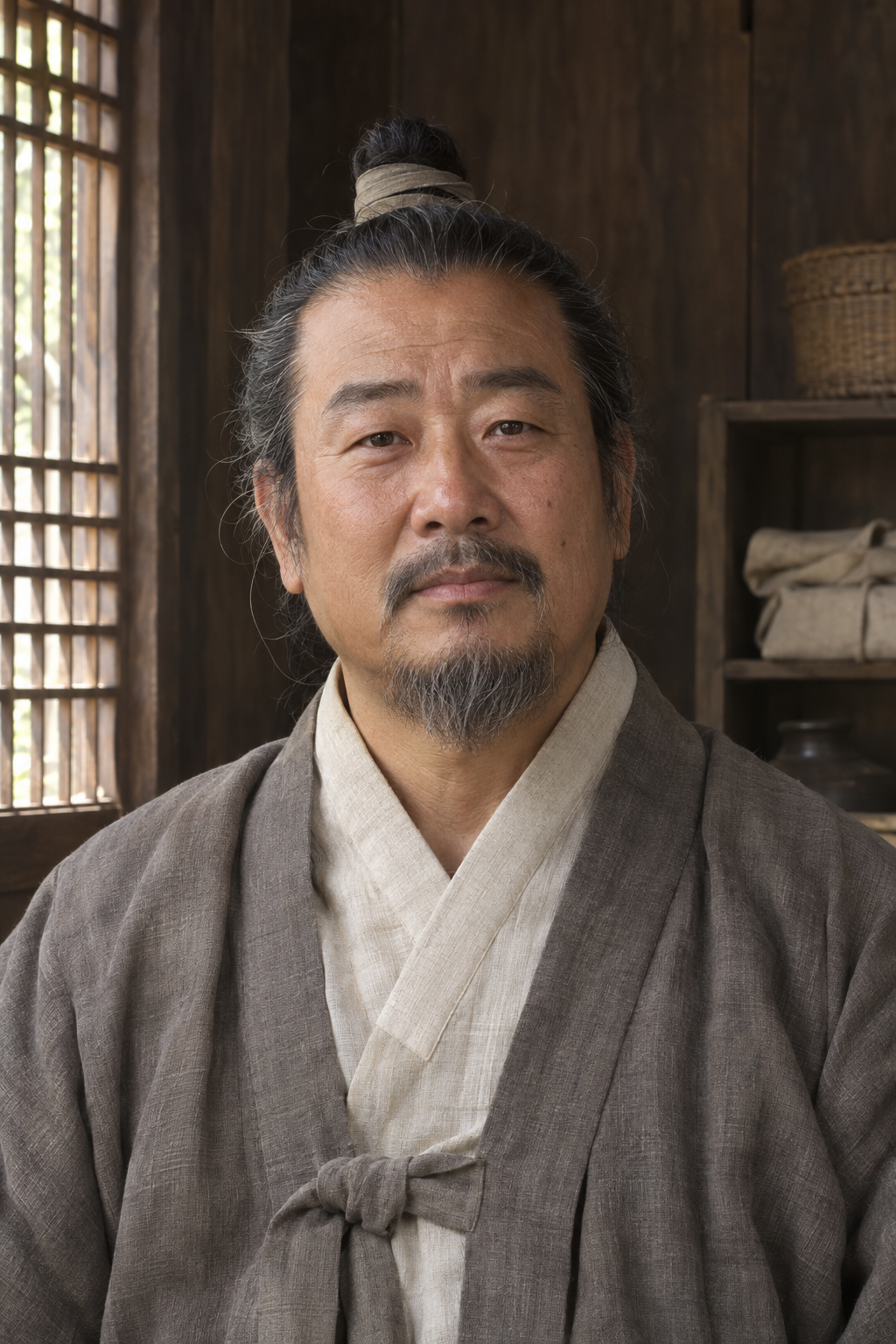
About Thomas Choe Pil-gong
Thomas Choe Pil-gong came from a Seoul family associated with medicine. Some of his ancestors had held medical appointments at court, but he initially had no official post of his own. Poverty had also kept him from marrying. The Catholic Encyclopedia describes him as frank and generous. In 1790 he and his younger cousin Peter Choe Pil-je became Catholics.
Thomas began teaching openly soon after his conversion. He lent Catholic books to Simon Kim Gye-wan and helped him learn the faith. These activities made him known to the authorities. When the persecution of 1791 brought several Catholic leaders into custody, Thomas at first refused to follow those who renounced their beliefs and obtained release. He continued explaining the religion to the officials who questioned him.
His persistence became a matter for King Jeongjo. The king wanted him persuaded to abandon Catholicism. The historical dictionary describes relatives entering the prison to plead with him: his uncle and younger family members wept as they tried to change his mind. Peter submitted a confession in Thomas’s name which the Church’s narrative describes as false. The official life records another measure: the king instructed the jailers to keep Thomas imprisoned while caring for him in a special way. Thomas eventually yielded. His release came with rewards intended to attach him to the life the king offered. He received a post in Pyeongan Province and help in arranging a marriage.
The post was that of simyak, an inspector of medicinal materials destined for the court. It gave him employment in the profession associated with his family. He did not remain in it. Three years later he resigned and returned to Seoul. He lived at Pyeonjadong and operated a pharmacy at Dojeodong. After James Zhou Wen-mo entered Korea, Thomas sought him out, received the sacraments and resumed active participation in the Catholic community.
The king also commissioned a written account of Thomas’s supposed transformation. Hong Yang-ho wrote Choe Pil-gong-jeon, making the conversion of a Catholic back to approved teaching an example of royal government. Literary scholar Oh Seongjun argues that its narrative shortened the interval between the king’s intervention and Thomas’s change of position. Rewards to the former prisoner helped advertise the effectiveness of royal persuasion. The writer even placed himself within the account to strengthen its appearance of reliable testimony. Thomas’s story was therefore being presented publicly as evidence that the king could overcome Catholic adherence through personal care and moral instruction.
Oh also notes that the biography frames its principal narrative with passages from Mencius, reinforcing its presentation of Thomas’s change as an achievement of Confucian kingship. Oh identifies another feature of the conclusion: it predicts the eventual collapse of Catholicism as a teaching introduced from China, rather than ending with an assessment of Thomas alone.
Thomas’s later conduct unsettled that account. He was arrested again in 1799. Yeo Jin-cheon’s life places this detention in August and describes him regretting his earlier renunciation. The king again tried to turn him away from Catholicism, but Thomas now refused. Officials asked for his execution; Jeongjo instead ordered his release. The man who had once accepted the benefits of recantation was allowed to leave custody while continuing to profess the faith.
His last arrest came before the general persecution of 1801 was fully under way. The Ministry of Justice detained him on the seventeenth day of the twelfth lunar month of 1800. Peter was arrested two days later. During this imprisonment Thomas underwent repeated punishment, but did not identify other Catholics. He was condemned to death.
On April 8, 1801, he was taken outside Seoul’s Small West Gate and beheaded. The Church’s received account describes him as nearly unconscious when lifted onto the cart, then joyful at the execution ground. It preserves his exclamation over the blood flowing from his wounded neck. This is how that later account remembers his final profession.
The written royal biography survived Thomas’s return to Catholicism. Seo Shinhye notes that Hong did not destroy it after Thomas’s death, but added an account of his renewed allegiance and execution to its preface. The addition changed the meaning of a story intended to celebrate successful royal persuasion. A prisoner held up as a demonstration of the king’s moral authority had ultimately died for the religion he had supposedly left behind.
Son Na-young’s later study distinguishes the literary portrait from the course of Thomas’s life. It argues that Hong shortened the period of persuasion and omitted the surveillance that continued after the recantation. Son further argues that Thomas’s earlier renunciation was expressed within a Christian understanding of obligation. In this reading, he acknowledged conduct contrary to Catholic teaching while praising Jeongjo’s kindness. Son describes a compromised form of apostasy, contrasting it with the stronger rejection later demanded under Sunjo. A declaration accepted during one reign could cease to protect the same man under another.
Wondering how to weigh the stories and sources? Learn how to read a saint biography.