Biography
Thomas de Cantilupe
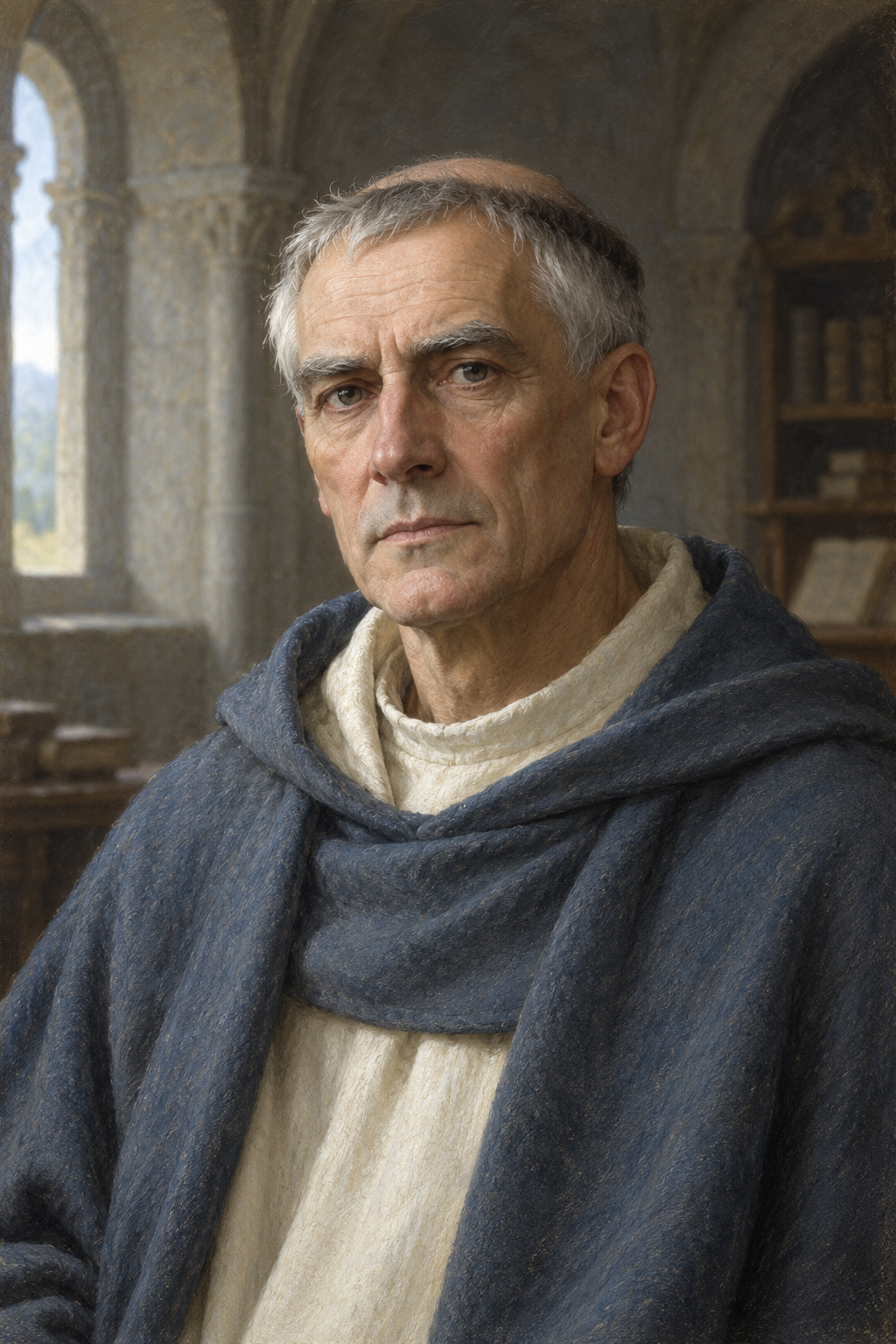
About Thomas de Cantilupe
Thomas de Cantilupe, also called Thomas of Hereford, served as a scholar, royal official and bishop in thirteenth-century England. He is distinct from Thomas Becket, whose death and shrine became far better known. Catherine Clarke’s account for Hereford Cathedral places Cantilupe’s episcopate from 1275 to 1282 and describes the considerable body of testimony associated with his later cult. His reputation developed through remembered public service, disputes within the church, and the experiences of people who believed that he had helped them after his death.
Resnick places his birth around 1218 at Hambleden in Buckinghamshire, an estimate also given by the Catholic Encyclopedia.
He came from the Cantilupe family and was educated under the care of his uncle Walter, bishop of Worcester. Studies took him to Oxford and Paris, and he attended the Council of Lyons in 1245. He subsequently taught canon law at Oxford. During the conflict between Henry III and the barons, he supported the baronial cause and presented its arguments to Louis IX of France. He briefly became chancellor of England in 1265. After Simon de Montfort’s defeat and death, Thomas returned to France and continued his academic life before resuming work in England. He was consecrated bishop of Hereford on September 8, 1275. His episcopate included determined efforts to defend the property and rights of his diocese, as well as disputes about the limits of ecclesiastical authority.
That exercise of power also had a troubling dimension. Historian Irven Michael Resnick examines evidence of Thomas’s hostility toward Jewish people. Testimony collected during the canonization inquiry described anti-Jewish preaching and pressure for conversion or departure from England. Resnick stresses that much of this evidence was recorded decades after Thomas’s death and requires criticism; he also questions an implausible number attached to one reported encounter. These limitations do not justify omitting the hostility from his biography. The evidence belongs to a wider history of coercion and exclusion, rather than being treated as an example of charity.
A dispute with Archbishop John Peckham led to Thomas’s excommunication and his journey to seek papal intervention. Modern accounts differ over its resolution: Clarke says he died while still excommunicated, while Resnick reports that Pope Martin IV lifted the sentence.
He died on August 25, 1282. Sally Badham’s study places his death at Ferento, near Orvieto, rather than in Orvieto itself.
The burial dispute continued after his death. Badham describes Peckham withholding permission to bury the bones at Hereford, despite news of Thomas’s final confession and absolution. Permission followed negotiations in January 1283. The bones were first buried near the altar in the cathedral’s Lady Chapel and moved to the north transept in 1287. The growing pilgrimage also affected the building: new approaches and a ceremonial route helped visitors reach the shrine. Badham examines the surviving stonework and the recess left by its lost brass figure. She compares this material evidence with testimony about pilgrims approaching the tomb. Her study shows that the shrine was a physical place shaped by worship, movement and commemoration, as well as a setting for reported miracles.
His successor Richard Swinfield worked for his recognition as a saint, with support from church leaders and the crown. Pope Clement V authorized an inquiry in 1306, and investigators heard evidence in London and Hereford during 1307. They collected accounts from people who had known Thomas and from those who attributed help to his intercession. The investigation also preserved lists of reported miracles and offerings made at the shrine. Recognition did not follow immediately: Swinfield died in 1317, and Adam de Orleton continued the campaign. On April 17, 1320, Pope John XXII canonized Thomas at Avignon. Hereford Cathedral preserves a notarial record, HCA1445, that recites the papal proclamation. It provides a documentary anchor for the formal recognition, distinct from the developing local devotion that preceded it.
The surviving material also brings less ceremonial aspects of his life into view. Hereford Cathedral’s 2020 exhibition brought together an account roll of expenditure during his final journey, episcopal registers, the canonization proclamation, and reliquaries associated with him. The registers were lent by the Herefordshire Archives and Records Centre, while the reliquaries came from Downside Abbey and Stonyhurst College. These objects connect the work of administration and travel with the later preservation of his memory. They also make clear why his life can be studied through documents as well as through devotional narratives.
Thomas is identified as one of Hereford Cathedral’s patron saints in Scala’s description of its cathedral guide.
His remembrance also continues in worship shared across Christian traditions. In 2024 the Belmont monastic community sang Vespers at Hereford Cathedral for his feast on October 2. The accompanying homily emphasized pastoral care, charity and the willingness of Christians to pray together. That modern observance is evidence of continuing local devotion; it does not erase the conflicts and prejudices that a responsible account of his medieval life must also acknowledge.
Wondering how to weigh the stories and sources? Learn how to read a saint biography.