Biography
Thomas Han Deok-un
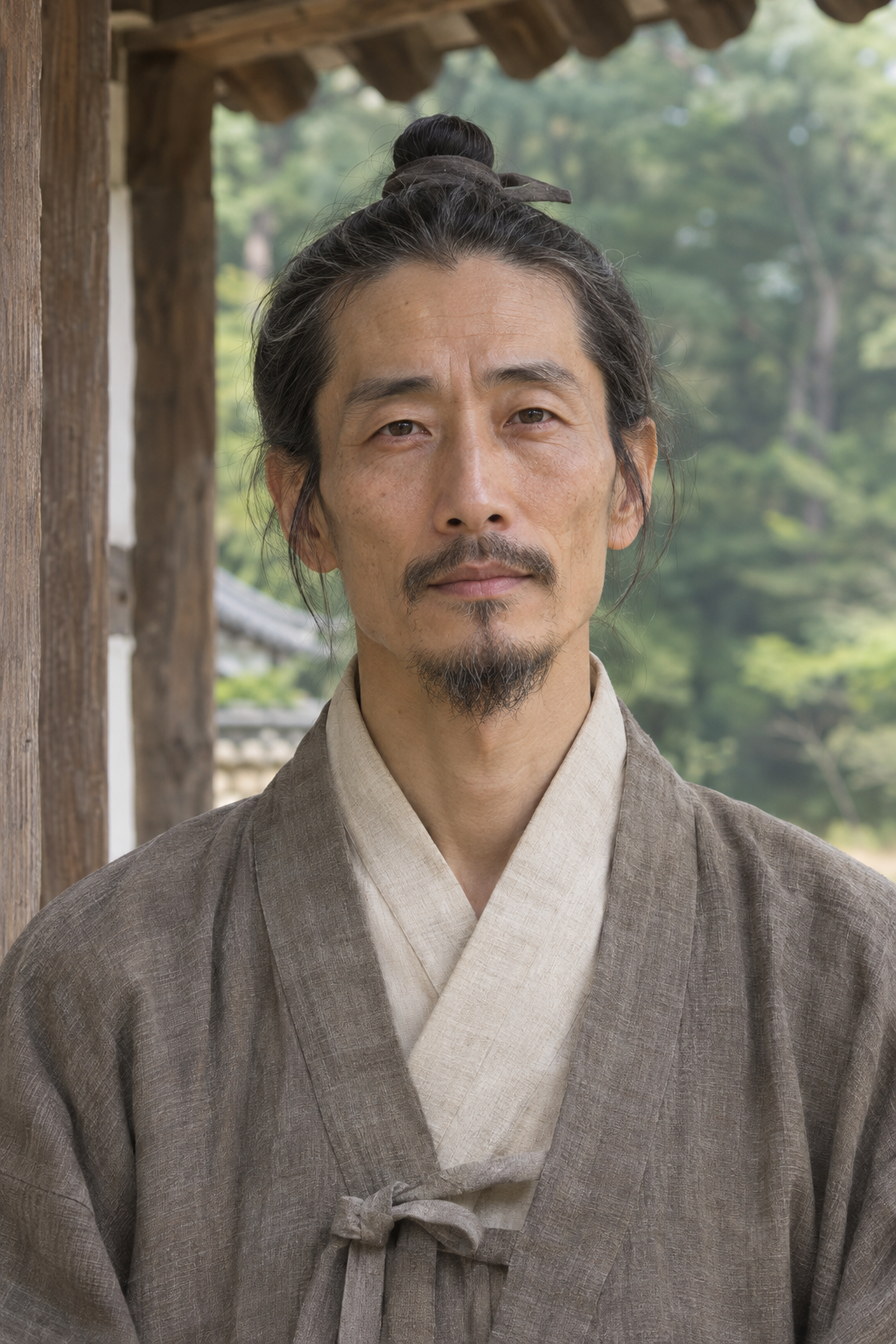
About Thomas Han Deok-un
Thomas Han Deok-un learned his faith from a man he would soon lose. He came from Hongju in the Korean province of Chungcheong. In 1790 he sought instruction from Paul Yun Ji-chung and became a Catholic. The following year the authorities arrested Yun. When they executed him at Jeonju, Han continued to practice privately. Little more than a year separated the beginning of his instruction from the loss of the man who had taught him.
A chance to meet a priest mattered to Han. He heard that James Zhou Wen-mo had come from China to minister in Korea and wanted to receive the sacraments from him. He tried to see Zhou, but the meeting never took place. In 1800 Han left his home region for Uilli, a village in the district of Gwangju, where he hoped to be able to practice his religion more freely.
In Uilli he read and prayed, and he brought other Catholics together. He liked to teach the group and to encourage its members. People remembered a certain edge to his speech: when he believed something mattered, he could speak about it very directly. He had once sought someone to instruct him. Now people could come together to learn in the village where he had settled.
News of the persecution of 1801 reached the village. Rather than wait there for someone to tell him what had become of the Catholics in the capital, Han set out for Seoul. He traveled in the guise of a seller of glazed earthenware. On the way, at Cheongpa-dong, he saw a body covered with a straw mat. The dead man was Luke Hong Nak-min. Han stopped to mourn him.
There was a painful encounter with the living as well. Hong’s son, Protasius Hong Jae-yeong, had survived the persecution that killed his father. According to the Korean Catholic Encyclopedia, Han reprimanded him severely for not standing by his faith as his father had done. The story preserves something harder than a conventional word of comfort to a bereaved family: the man who stopped to mourn the father also confronted the son.
Outside Seoul’s Small West Gate, Han undertook a different task. The man executed there was Peter Choe Pil-je, a pharmacist from Seoul. Choe himself had obtained permission to leave prison to bury his father, then had returned to custody. When the authorities executed Choe, it was Han who tended to his body. Choe’s Catholic biography remembers Han preparing it for burial, a service the dead man could no longer perform for anyone else.
The royal annals name Han’s teacher and distinguish his two acts: he mourned Hong and collected Choe’s body.
For Han, attending to the dead carried a risk quite apart from traveling to the capital. He had disguised himself on the road, but to claim the body of a man executed as a Catholic was to make his association with other believers visible. Officers arrested him and took him to the police headquarters. Under repeated questioning and punishment, the Church’s account says, he refused to identify other Christians.
Historian Cha Gi-jin draws particular attention to Han’s last declaration before sentence. Han explained his refusal in terms of what he believed to be right. The prospect of punishment, even punishment ending in his death, did not give him a reason to say that his faith was false.
After the sentence in Seoul, officials sent him back to Gwangju for execution. His village of Uilli belonged to that jurisdiction. The district extended over a much larger area than the modern city that carries its name, and the fortress of Namhansanseong served as its administrative center. Returning a condemned prisoner to the district made the execution a public warning to the people among whom he had lived.
Han was beheaded at the fortress on January 30, 1802, at the age of fifty. He is the first Catholic martyr there whom the surviving records identify. A local tradition places Catholic prisoners at the site a decade earlier, but the shrine distinguishes that tradition from the evidence for Han’s death.
Researcher Seo Jong-tae places the probable execution ground outside the eastern gate, on level ground below a watermill. He distinguishes that area from the site of the prison inside the fortress. The general location is better established than the spot where Han stood.
The eastern gate opened onto a route that connected markets on the road from Seoul toward Chungju. Oh Se-taek points to the traffic passing that way as one reason for identifying the area as a place where an execution would command public attention.
When the priest Kim Yu-sin wrote about the shrine two centuries later, he singled out Han’s care for the dead. Kim compared him with the volunteers in Korean Catholic parishes who help families with funerals. He proposed that people doing that quiet work should have a place to learn and pray at the fortress where Han died.
Wondering how to weigh the stories and sources? Learn how to read a saint biography.