Biography
Titus of Bostra
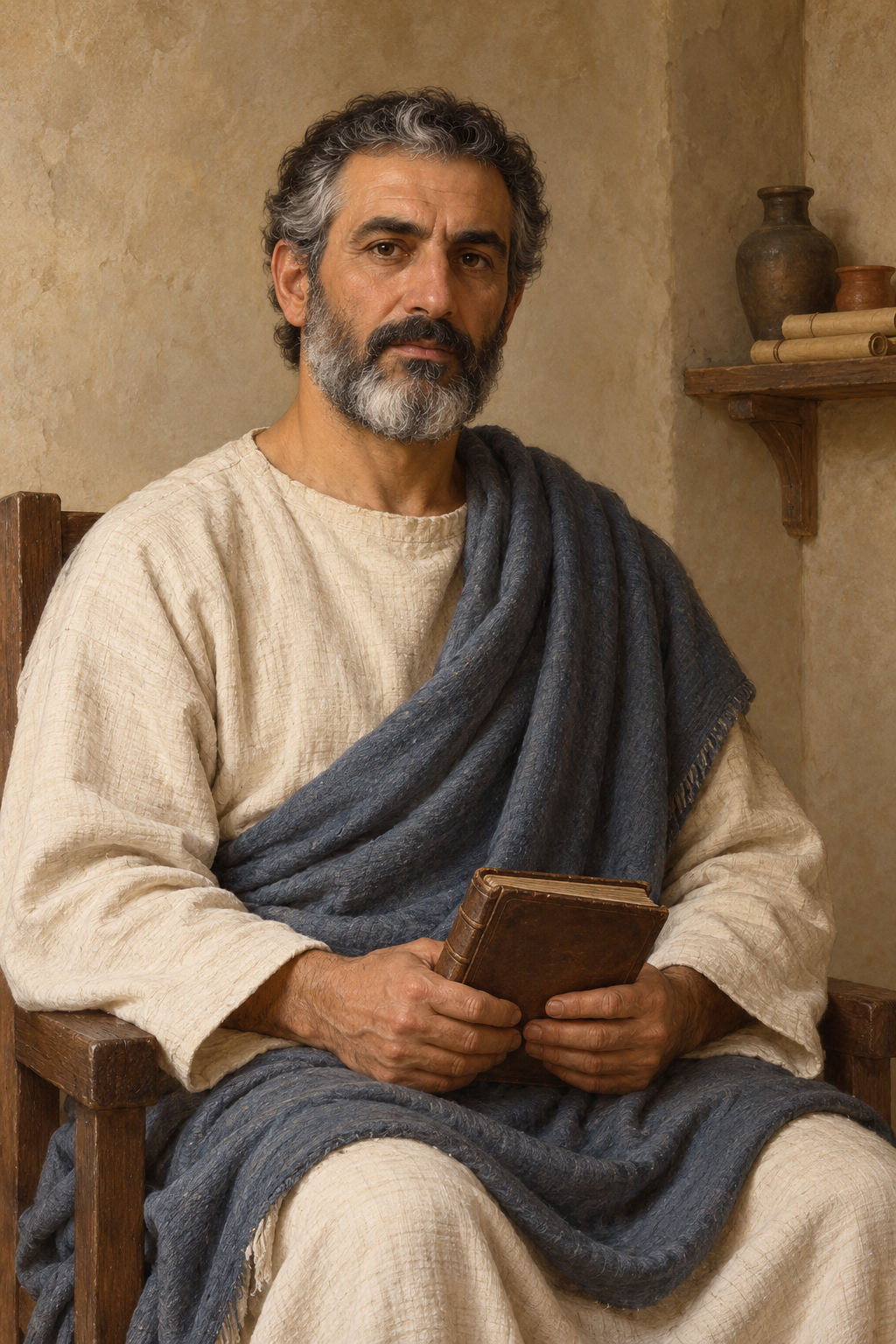
About Titus of Bostra
Titus of Bostra led a Christian community in the Roman province of Arabia during the fourth century. Aimé Solignac identifies two dated documents as the firm anchors of his life: an imperial letter of 362 and a synodal declaration of 363.
His precise origins are unknown. He served at Bostra, the provincial capital, during the reigns of Julian, Jovian and Valens. His best-known work, Against the Manichaeans, belongs to 363–364 and places him among the Christian authors who confronted Mani’s religious teaching through sustained philosophical argument.
On 1 August 362, Emperor Julian addressed the people of Bostra about their bishop. The letter quotes a report in which Titus said that the Christians were comparable in number to their pagan neighbors and had been urged by their clergy to preserve peace. Julian turned that claim against him: he told the townspeople that their bishop had insulted them by taking credit for their restraint. He urged them to seize Titus and expel him from the city.
The same letter forbade violence between religious groups.
Titus remained identifiable as bishop in the following year. Socrates preserves the declaration of a gathering at Antioch addressed to Emperor Jovian, with Titus of Bostra among its signatories. The document endorsed the Nicene faith and discussed the language used to describe the Son’s relation to the Father. Socrates explains that he found this declaration in Sabinus’s collection of synodal acts.
Solignac explains the declaration as an attempt at reconciliation after the divisions of the Arian controversy. It accepted the Nicene term homoousios while explaining it through language of likeness in substance.
Titus’s anti-Manichaean treatise was organized in four books. The opening pair argued against the idea of two opposed principles, good and evil, or light and darkness. The later books challenged Manichaean readings of the Old and New Testaments. Jean-Michel Roessli describes a technically demanding work whose method moves between philosophical reasoning and the interpretation of Scripture.
The Coptic priest Tadros Yacoub Malaty also remembers Titus as a defender of divine providence and human freedom in addressing the problem of evil. His account includes Titus’s preaching on Luke. This church tradition recognizes him as a saint, alongside its account of his responsibilities as a bishop and writer.
Titus wrote in Greek and drew on Greek philosophy and earlier Christian authors. Nils Arne Pedersen cautions against assuming that his position in a largely Semitic-speaking region proves that he knew Syriac or Nabataean. Bostra also had a substantial Graeco-Roman population.
Pedersen identifies a passage in which Titus uses Mani’s Syriac language as part of an attack on his opponent’s cultural standing and rationality.
A manuscript completed at Edessa in 411 preserves its translation; the remaining Greek manuscripts transmit only part of the work.
Francis Joseph Bacchus notes that earlier Greek editions included material from Serapion because a manuscript leaf had been misplaced. He distinguishes the genuine surviving fragments of Titus’s biblical interpretation from writings merely transmitted under his name.
Jerome’s brief notice praises Titus’s forceful writing against the Manichaeans and mentions other works without describing them. It places his death in the reign of Valens, rather than supplying a precise date.
Their biblical quotations provide evidence for the history of Scripture in Greek and Syriac, while their excerpts from Manichaean sources preserve information about the religion Titus opposed.
Wondering how to weigh the stories and sources? Learn how to read a saint biography.