Biography
Urban of Langres
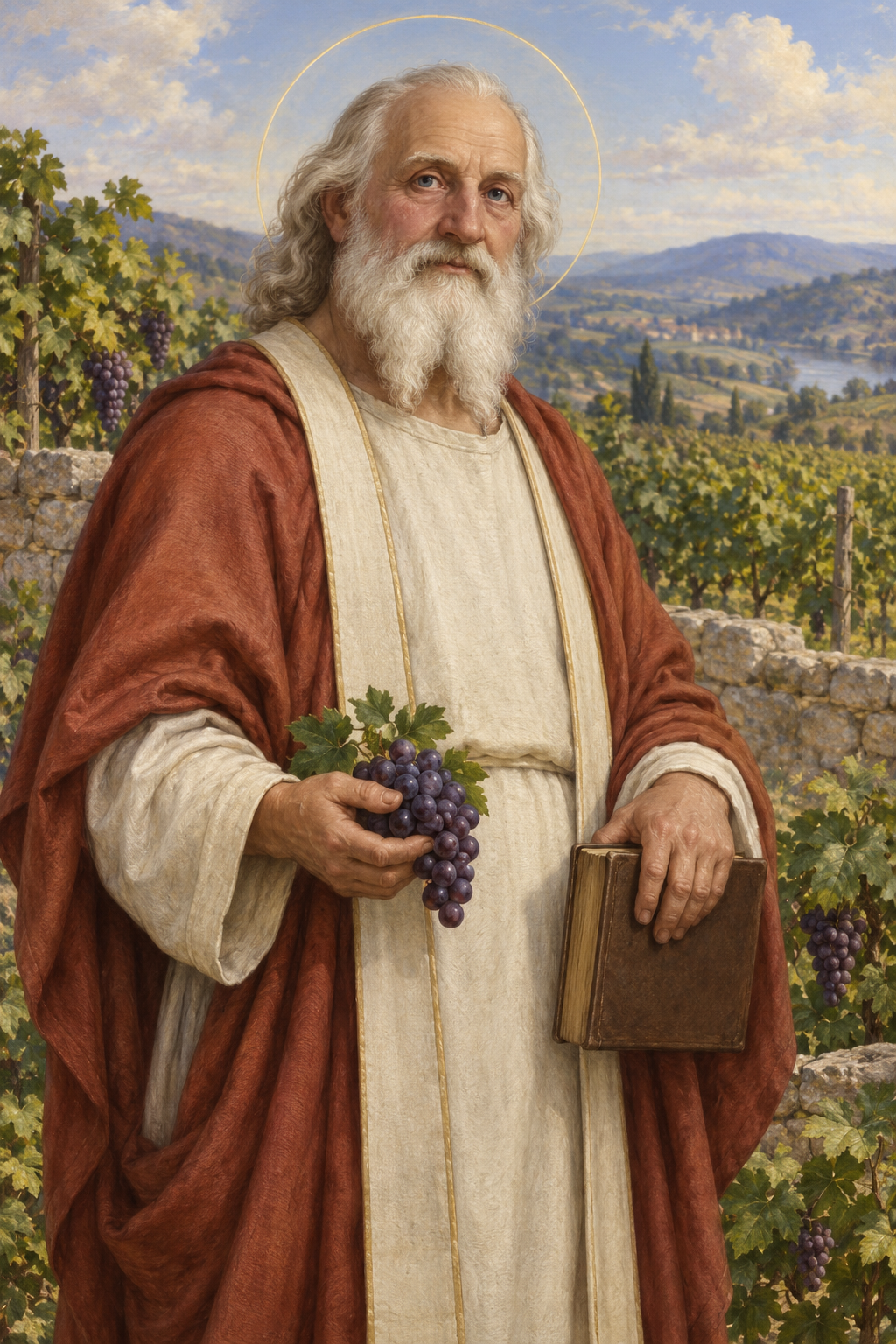
About Urban of Langres
Urban is remembered as the sixth bishop of Langres, succeeding Honorat. A diocesan list places him at 430 and gives Paulin as the next bishop. This sequence supports a fifth-century setting for his ministry, although popular accounts also assign him to the fourth century. The chronology of his life remains uncertain.
The medieval Life gives him a local family and a childhood marked by piety. It names his parents as Senator and Gisliardis and connects him with Colmier-le-Bas near Grancey-le-Château. The story says that the faithful chose him unanimously as bishop and that he renewed the clergy’s religious life, encouraged devotion among the people and restored neglected churches. Johannes Hofmann’s historical entry identifies this account as a late legendary work from Saint-Bénigne at Dijon, rather than a contemporary biography.
The Life also associates Urban with power over rain and storms. Those stories helped shape his remembrance among people whose livelihood depended on their vines. Hofmann connects the bunch of grapes in his later images with the hope for suitable weather and a good harvest. The priority of this winegrowers’ patronage between Urban of Langres and the pope of the same name is disputed. The bishop is a distinct figure from Pope Urban I.
The French Catholic notice identifies him as a patron of winegrowers in parts of Burgundy, Champagne and Lorraine. This is a regional devotion associated with his memory as a holy bishop. Nominis lists a local feast on 2 April.
His burial tradition connects him with Saint-Jean at Dijon. His relics were later transferred to Saint-Bénigne. Research on the church’s furnishings records that translation on 1 May 1524. Stone pillars behind the high altar supported the reliquaries of Urban and All Saints on either side of Saint Benignus’s shrine. The objects could be taken down for processions. Their prominent position made the saints’ memory part of the church’s worship and public ceremonial life.
The same study finds Urban’s 23 January feast among the occasions when the shrine of Saint Benignus was specially displayed. The bishop’s remembrance thus belonged to the calendar and material life of the Dijon community long after the period assigned to his episcopate.
Wondering how to weigh the stories and sources? Learn how to read a saint biography.