Biography
Ursula Ledóchowska
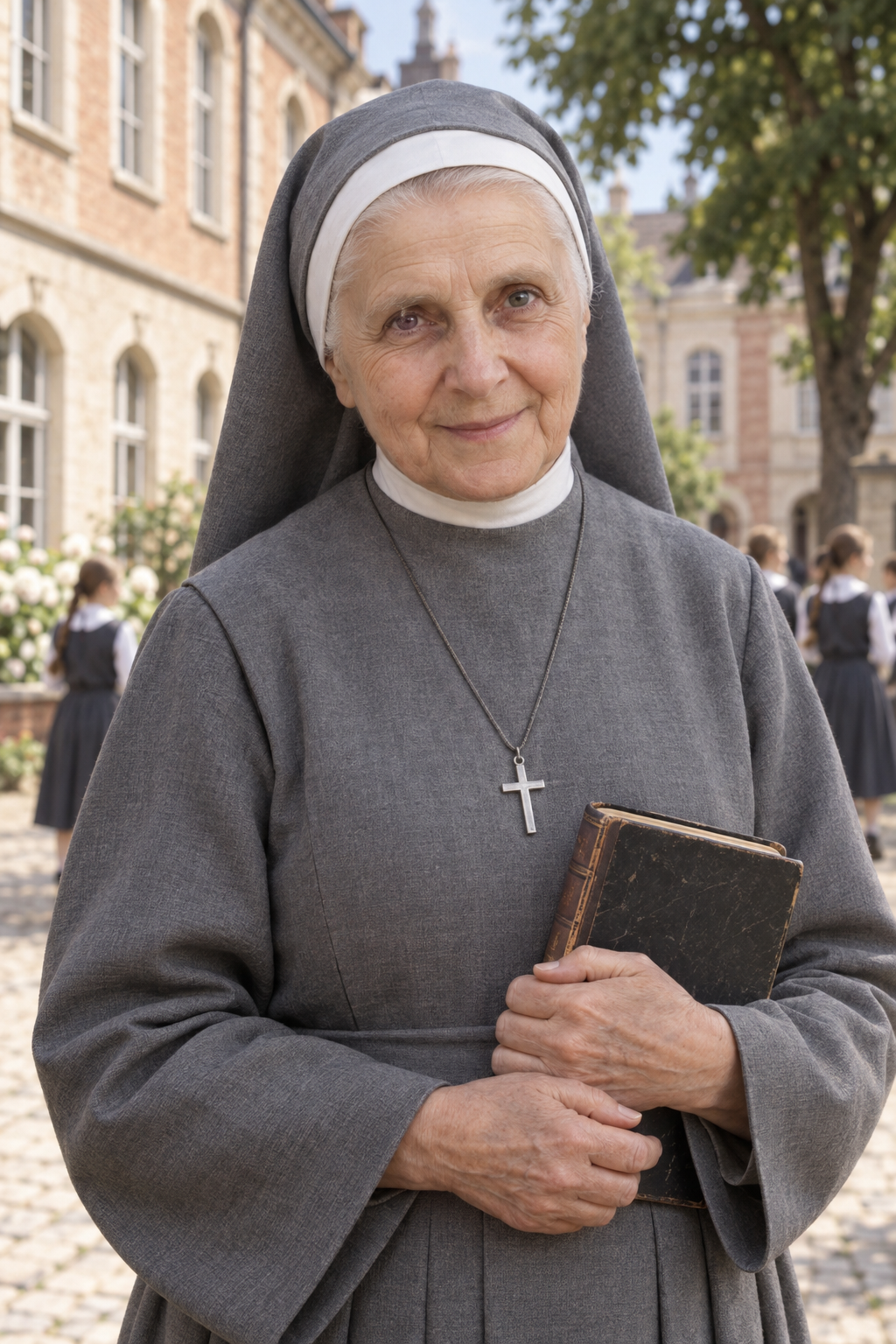
About Ursula Ledóchowska
Ursula Ledóchowska began life as Julia, born at Loosdorf in Austria on April 17, 1865. Her family later settled at Lipnica Murowana, where she lived before entering the Ursuline convent in Kraków. The move into religious life brought her into a community devoted to education, the work that would occupy her across several countries. She entered the convent in 1886, leaving her family home to become a sister and teacher.
In Kraków she worked with girls whose education included more than the lessons of a classroom. She wanted pupils to grow in faith and character as well as acquire practical skills. The school’s account of her work recalls her close contact with teachers and students, and her concern for the atmosphere in which they lived together. She made room for music, drama, walks and shared recreation. These activities belonged alongside study: a school was also a household in which young people learned how to treat one another.
Ursula taught mathematics, natural sciences, German and French. She pursued further preparation in France and obtained qualifications for teaching French in 1897. In language lessons she used dramatic performances, giving pupils a reason to speak and listen rather than only memorize. Her own willingness to study remained important when her work later carried her into unfamiliar languages and societies.
In 1907 she went to St Petersburg to care for a boarding house for Polish girls. Because religious life there had to remain concealed, the sisters wore ordinary clothes. Ursula and her companions nevertheless continued their community life while working under police surveillance. She also developed relationships beyond the Polish Catholic circle, meeting Russians and people of other Christian traditions.
She also established a school at Merentähti on the Finnish coast. There her work brought her into contact with local Protestant people, and the Catholic chapel welcomed Finns praying in their own language.
Expelled from Russia in 1914, she continued her work in Scandinavia rather than returning immediately to a settled convent life. During the war she combined apostolic work with efforts to help Poland. Her brother Włodzimierz, who became superior general of the Jesuits, later advised her in dealings with the Holy See. When she sought approval for the congregation that had developed through these changing circumstances, Benedict XV gave his consent.
In Sweden she turned her ability with languages into a means of helping others. In April 1915 she gave public lectures in French and German about Poland’s situation. Further appearances brought her before audiences in Uppsala and Stockholm, and she helped organize a committee for Polish relief. Speaking to people outside her own country allowed her to explain the needs of those suffering from the war and to seek practical support for them.
The return to Poland required a home for the sisters and the children in their care. In February 1920 a property at Pniewy was acquired with the help of the Norwegian benefactor B. A. Stolt-Nielsen. The foundation took the name St Olaf. A chapel opened that August, followed in September by the school and children’s home. Ursula’s community now had a place where prayer, teaching and the care of children could share a daily rhythm. The papal nuncio Achille Ratti visited later that year, and a larger chapel followed in 1922.
The congregation became known as the Grey Ursulines. In 1928 its generalate was established in Rome with a boarding house for girls of limited means. The sisters also worked in the city’s poorer outskirts. Two years later they accompanied young women seeking employment in France. Ursula wrote for children and young people, encouraged religious associations and sent sisters to teach the faith where help was needed. Her responsibilities extended from organizing houses to sustaining the women who carried out their daily work.
Ursula also expressed her faith through painting and writing. The Pniewy sanctuary preserves her copy of a Crucifixion by Velázquez and a painting of the Sacred Heart. In her spiritual Testament she urged the sisters to trust God amid difficult circumstances. She described a cheerful presence as a form of love: a person might offer comfort and restore another’s confidence without realizing the good being done. For her, serenity was not simply an agreeable temperament, but something rooted in accepting God’s will. The counsel joined the inner life of prayer to the small encounters through which a community could become more generous.
Ursula died in Rome on May 29, 1939. John Paul II beatified her at Poznań on June 20, 1983.
He canonized her on May 18, 2003. At that celebration he emphasized the connection between her Eucharistic devotion and her service to children, the poor and lonely people. He presented her practical creativity as an expression of Christian love. The work she left behind was not confined to one school or country: it was a religious community whose vocation joined education with attention to people in need.
Wondering how to weigh the stories and sources? Learn how to read a saint biography.
Explore similar vocations
Prayers for Ursula Ledóchowska
Invocation to Saint Ursula
Saint Ursula, pray for us!