Biography
Vasyl Velychkovsky
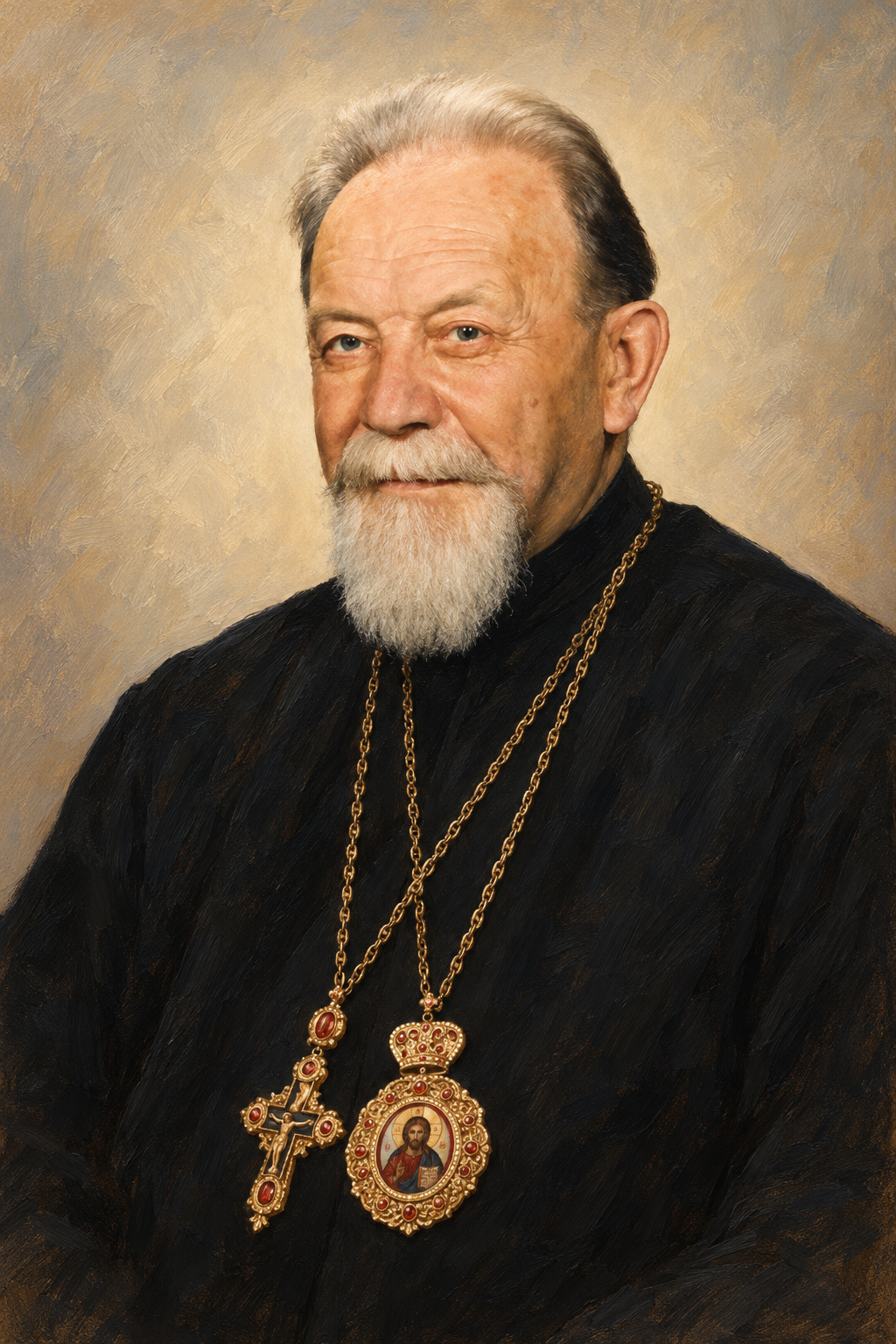
About Vasyl Velychkovsky
Vasyl Velychkovsky was born on June 1, 1903, in Stanyslaviv, the Galician city now called Ivano-Frankivsk.
In childhood recollections reproduced in a 2002 collection of Ukrainian Catholic martyrs’ lives, Velychkovsky remembered prayer as part of his family’s daily routine. His father heard confessions and celebrated the liturgy, and the family went to church together before nightfall. He also recalled his mother taking abandoned and orphaned children into their home and helping them establish families or enter religious life. Among those she cared for was a blind girl who remained with her until the girl’s death.
His father was a priest, and Vasyl studied at the seminary in Lviv. He became a Redemptorist and was ordained a priest in 1925. His work included missionary service in Volhynia and leadership of the Redemptorist community in Stanyslaviv. After teaching and preaching missions, he became a monastery superior at Ternopil.
Soviet authorities arrested him in 1945. A death sentence was commuted to imprisonment, during which he continued to minister to fellow prisoners. He was released in 1955.
Appointed a bishop in 1959, he was secretly consecrated by Josyf Slipyj in a Moscow hotel in 1963. He returned to Lviv to lead the underground church. He ordained priests and arranged for episcopal succession.
His release did not clear his name. Researcher Kseniya Kavats traced his efforts to overturn the conviction through complaints preserved in his case file. In July 1954, while still imprisoned, he wrote to Moscow challenging both his original conviction and a later accusation of political organizing in the camp. With his sentence nearly finished, he explained that his purpose was to establish the truth about the injustice. He renewed his requests after release. In 1965, he protested that officials had rejected his complaint without questioning him and had still not supplied the copy of his sentence he had requested.
The review also preserved testimony about his wartime service. Questioned in 1966, Anisiia Girniak described an orphanage sheltering nineteen children whose parents had been killed during the persecution of Jews in Ternopil. She testified that Velychkovsky knew about the children and brought food and financial help. His appeals nevertheless failed during his lifetime.
Authorities arrested him again in January 1969; his religious writing and ministry figured among the accusations. After imprisonment and exile, he arrived in Winnipeg in June 1972. He gave retreats to clergy across Canada and also visited Ukrainian Catholic communities in the United States.
John Sianchuk left a personal account of meeting Velychkovsky at the Redemptorist monastery in Yorkton, Saskatchewan, in July 1972. Then a theology student, he remembered a softly spoken bishop who wept as the seminarians sang and again during their evening gathering. Looking back, Sianchuk interpreted those tears in light of the contrast between the church’s freedom in Canada and the persecution continuing in Ukraine.
In a speech reproduced in the 2002 collection and dated June 16, 1973, at Utica, New York, Velychkovsky described believers in Ukraine praying secretly and passing on their faith by word of mouth. He emphasized the practical help they gave one another, including sharing the little food they had.
He died at Winnipeg on June 30, 1973.
In April 1994, the Ternopil regional prosecutor finally rehabilitated him as a victim of political repression, finding insufficient evidence to justify criminal responsibility.
Pope John Paul II beatified him with other Ukrainian Greek Catholic martyrs on June 27, 2001. In the beatification homily, the pope placed the group’s suffering within the wider persecution of Christians under totalitarian rule. He called for their memory to encourage reconciliation among Christians.
His shrine is at Saint Joseph’s Ukrainian Catholic Church in Winnipeg, Manitoba. An attached museum presents his life.
His former apartment in Lviv also became a museum. Reporting on a visit in 2023, Maria Tsiomyk described books bearing his signature, a prayer book with a commemorative card from his first liturgy, and small liturgical vessels. Museum worker Lidiia Hryvna explained that Anna Obach had made room for the religious community by moving her own sleeping place into the kitchen. Velychkovsky shared the apartment with the Redemptorist brother Irynei Manko. The preserved materials included handwritten and typed notes for seminarians and a photographic enlarger used to reproduce religious images, books and calendars. Photographs taken during searches of the apartment later helped reconstruct its interior. Hryvna also described the apartment’s library as a resource for men preparing for the priesthood.
They came to borrow books, some already married and studying for ministry in secret. The room served as a place for worship and ordinations as well as a home. The museum opened in 2007 through John Sianchuk’s research and efforts to preserve the apartment.
In 2014, Sviatoslav Shevchuk proclaimed him patron of prison ministry for the Ukrainian Greek Catholic Church. The shrine’s account connects this designation with his pastoral care for prisoners during his own captivity.
Wondering how to weigh the stories and sources? Learn how to read a saint biography.