Biography
Veronica Giuliani
About Veronica Giuliani
Veronica Giuliani was born Orsola Giuliani at Mercatello sul Metauro on December 27, 1660. The public page should name her birth identity once, then use the religious name by which she is known.
She entered the Capuchin Poor Clares at Città di Castello and received the name Veronica. The existing catalog dates and places are supported by the reviewed source family and are preserved in this deferred packet.
Her Capuchin Poor Clare identity should be central. The page can show poverty, enclosure, prayer, penance, sisterhood, and devotion to Christ without reducing the life to extraordinary phenomena.
That identity also places her in a community. Veronica's interior life mattered, but it was lived inside a rule, a monastery, shared prayer, daily obedience, and service to other sisters.
Veronica is remembered for a large spiritual diary. The diary can be mentioned as an important source for her interior life, but this draft avoids quotations and does not turn the biography into a chain of private revelations.
The diary should be treated as spiritual testimony, not as material to excerpt casually. A short public page should point to the seriousness of her written self-examination without overwhelming readers with specialized mystical language.
Benedict XVI's catechesis gives a helpful interpretive frame. It lets the page speak about Veronica's Christ-centered spirituality while avoiding sensational language or claims that outpace churchly interpretation.
Mystical traditions around Veronica should be clearly attributed. The page may say that she is remembered for mystical experience, but it should not present visions, wounds, or interior details as if they were ordinary civic facts.
This is not skepticism about sanctity. It is editorial discipline. The church's tradition includes mystical lives, but public biography still needs careful phrasing, source support, and respect for mystery.
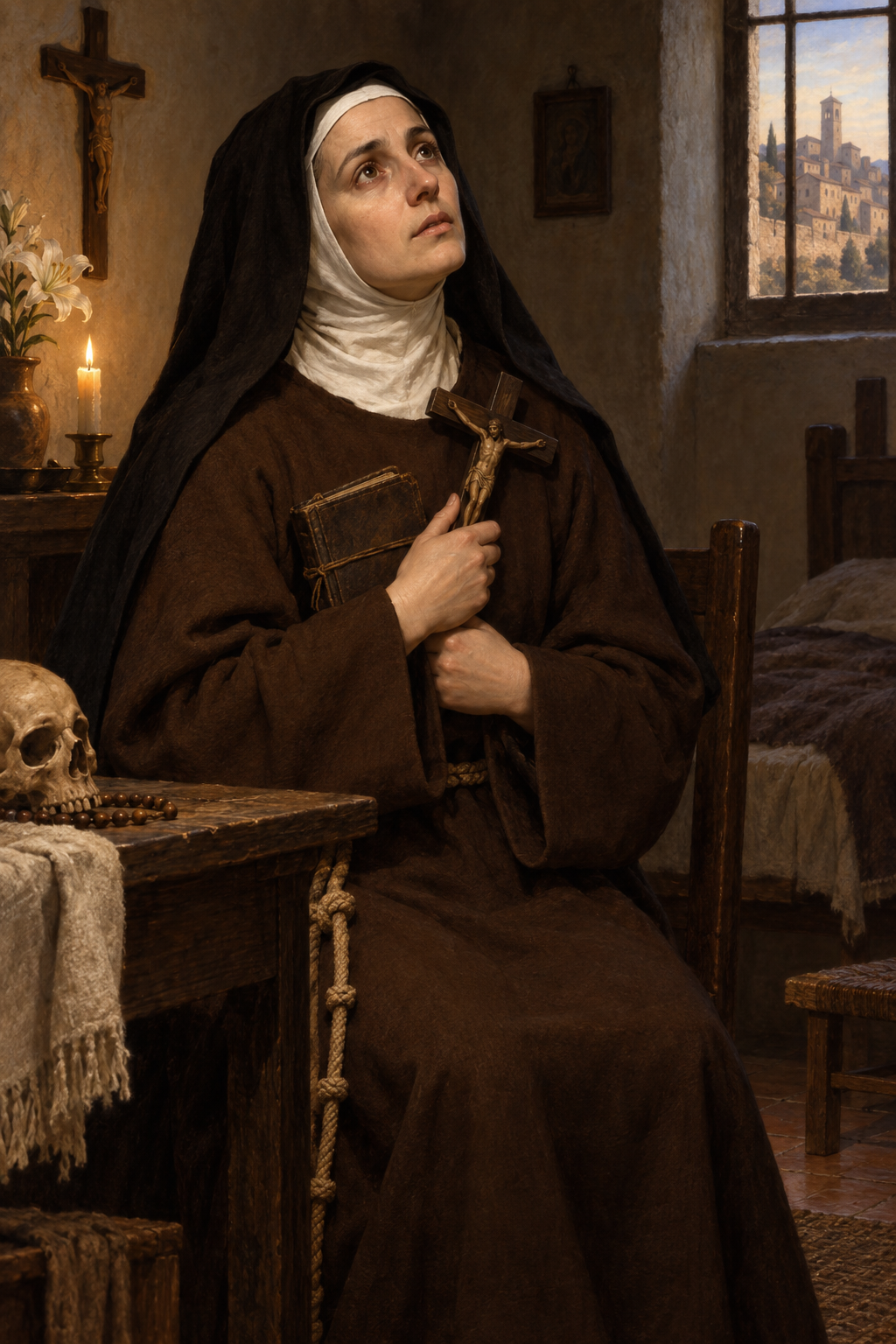
That boundary also protects the artwork. A crucifix, diary, candle, monastery cell, and contemplative expression are enough. The page should avoid visible stigmata, blood, dramatic visions, or theatrical light effects.
The full portrait's memento mori object should be treated as a restrained devotional cue, not a central attribute. The badge crop intentionally omits it so the small image remains gentle and focused.
Veronica also served her community in leadership. That detail matters because it keeps her from being portrayed only as an isolated mystic. She lived within a religious household and bore responsibility among her sisters.
Community leadership also gives balance to the diary material. The same woman who wrote intensely about the interior life also had to practice patience, prudence, and charity in ordinary governance.
Leadership in a cloister should be described modestly. The page can say she served as abbess or community leader where the sources support it, while avoiding invented administrative scenes or conflicts.
This modest approach prevents the biography from becoming either sensational or thin. It lets the cloistered setting carry real human texture without adding episodes the source base has not supplied.
The monastery source helps keep the local context visible. Città di Castello is not only a death place; it is the setting of Veronica's profession, prayer, writing, leadership, and memory.
That local context should remain concrete. The page can name the monastery without overbuilding a travel description, because the point is that one cloistered place became the arena for decades of conversion, service, and prayer.
Veronica died at Città di Castello on July 9, 1727. The existing catalog death date, death place, and feast day align with the reviewed sources and should be preserved in this draft.
Her death should not be separated from the long discipline that preceded it. The same community that witnessed her prayer and leadership also preserved her memory, making Città di Castello central to both biography and devotion.
Her canonized witness should be presented as Christ-centered contemplation inside Capuchin Poor Clare life. The page should not try to resolve every question about mystical theology, but should point readers toward prayer, humility, and faithful self-examination.
This keeps the page useful for readers who are not specialists. They can learn from Veronica without needing to parse every category of mystical theology or every debated detail of extraordinary experience.
That final emphasis is important for readers. Veronica's life can invite honest interior prayer without inviting curiosity about extraordinary signs as an end in itself.
The final page can invite readers to ask whether their inner life is being offered to God honestly. Veronica's diary and cloistered discipline make that question concrete without requiring the page to quote private texts.
The conclusion should be calm. It can honor mystical depth while saying plainly that sanctity is not display, and that hidden fidelity may be more important than dramatic religious feeling.
Veronica's page should therefore read as a cloistered life offered to Christ: birth, vocation, diary, community responsibility, death, and memory held together by prayer.
Artwork should show a Capuchin Poor Clare in dark habit and veil, with crucifix, diary or notebook, candle, and simple monastery cell at Città di Castello. Avoid visible stigmata, blood, dramatic visions, modern objects, logos, halos, exact-likeness claims, and rendered text.
Wondering how to weigh the stories and sources? Learn how to read a saint biography.