Biography
Vincenza Gerosa
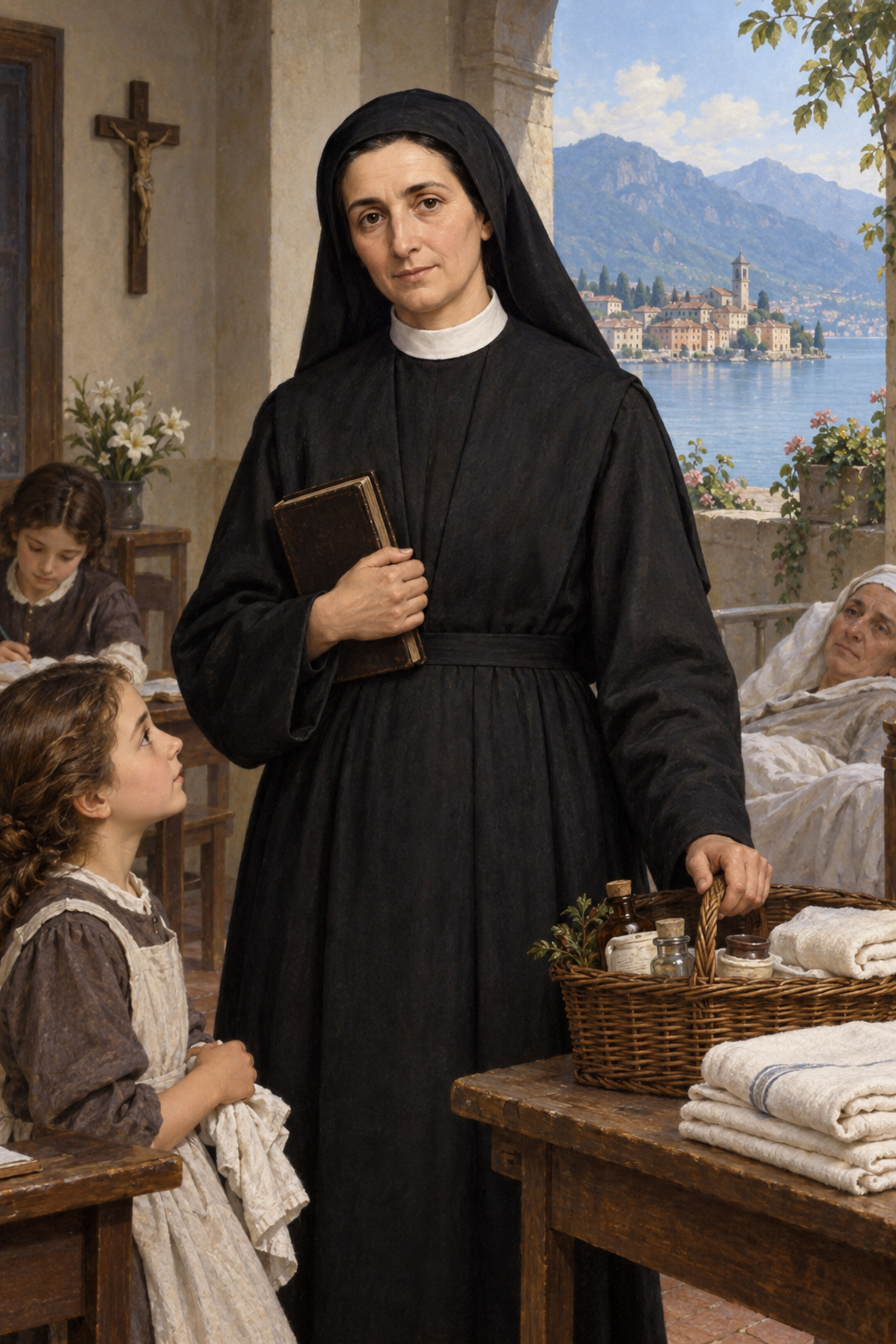
About Vincenza Gerosa
Vincenza Gerosa was born Caterina Gerosa at Lovere, Bergamo, on October 29, 1784. The public page should use her birth name once, then continue with the religious name by which she is remembered.
Lovere matters because it is not only a birthplace. It is the setting of her charitable work, her collaboration with Bartolomea Capitanio, and the memory of the congregation that grew from their mission.
The page should keep Lovere concrete but not decorative. Lake Iseo and local sanctuary memory can orient the reader, while the emphasis remains on charity, formation, and continuity.
The visual setting can therefore include lake and town cues, but the text should keep returning to people served: children learning, sick people cared for, poor neighbors received, and sisters formed for charity.
Vincenza's story should be kept distinct from Bartolomea's even though the two belong together. The page can name their collaboration while still showing Vincenza's own steadiness, leadership, and perseverance.
That distinction is important because the two saints often appear together in sources. Vincenza should not be treated as a footnote to Bartolomea, nor should Bartolomea disappear from a story that was genuinely shared.
The charitable work should be described concretely: service to poor people, sick people, and young people needing formation and care. The text should avoid turning poverty or illness into scenery for a saintly portrait.
Concrete details help without becoming sentimental. Books, linens, medicines, schoolrooms, and patient care are enough to show the work; the prose should not linger on suffering for emotional effect.
With Bartolomea Capitanio, Vincenza helped form the work that became the Sisters of Charity of Lovere. The Lovere sanctuary source is useful because it keeps the local origin and shared foundation visible.
Bartolomea died young. Vincenza's importance is seen partly in what happened afterward: she continued the charitable mission, helped it endure, and gave stability to a work that could otherwise have remained fragile.
The biography should name grief without dramatizing it. The real spiritual point is fidelity after loss: a shared mission had to become an enduring work.
That continuation should not be written as a rivalry or replacement. The point is friendship in mission and fidelity after loss. Vincenza's holiness appears in continuing a shared work with humility.
This is also a useful reader-facing theme. Many good works survive because someone stays, organizes, consoles, and continues when the first inspiration is no longer new.
Vincenza's page can make that hidden labor visible. Continuity is not merely administration; it is an act of love when the people served still depend on the work.
John Paul II's address to the Sisters of Charity provides a later ecclesial witness to the charism and its founders. This draft uses it as corroborating church recognition without long quotation.
That later address should not overwhelm the biography. It supports the enduring charism while the life section stays grounded in Lovere, charity, Bartolomea, and Vincenza's own perseverance.
The existing catalog records Vincenza's death date as June 20, 1847, but leaves the death place blank. Lovere is likely from context, yet this deferred packet preserves the blank field until final corroboration and approval.
This guard matches the batch method. It is better to leave the field blank for one more approval pass than to make a plausible but unreviewed place edit during packet drafting.
The biography can still mention Lovere throughout because the sources clearly place her life and work there. What remains deferred is the exact database death place, not the local shape of her vocation.
The feast day field remains June 28. If a later review changes death place or adds more local hierarchy, the importer test should change in the same approval step rather than silently drifting.
Artwork can show a simple dark habit, book, medicine basket, folded linens, school-hospital setting, and Lovere/Lake Iseo cue. These attributes support the charity theme without making illness graphic or sentimental.
The image should also avoid confusing her with Bartolomea. It can suggest a shared mission through the setting, but the portrait and badge remain centered on Vincenza.
The final page should emphasize faithful continuation. Vincenza Gerosa's sanctity was not only beginning a charitable work, but staying with it, shaping it, and carrying it forward after grief.
That emphasis gives the biography its own profile. Vincenza's holiness appears as durable charity: quiet, organized, compassionate, and persistent.
Her witness is helpful wherever good works depend on quiet people who remain after the first inspiration passes. The page can invite readers to honor collaboration, endurance, and humble service.
The conclusion should be hopeful rather than nostalgic. A shared work can continue when friendship, grief, responsibility, and prayer are held together.
That hope belongs in the final page. Vincenza's witness says that humble continuation can be as holy as the first beginning, especially when vulnerable people still need care.
The final tone should be steady and grateful. Vincenza does not need dramatic scenes to matter; the holiness is in durable mercy, ordinary organization, and the courage to keep serving after loss.
Artwork should show a nineteenth-century Italian religious foundress in simple dark habit near Lovere, with book, medicine basket, linens, and school-hospital charity setting. Avoid modern medical equipment, crowded suffering scenes, logos, halos, exact-likeness claims, and rendered text.
Wondering how to weigh the stories and sources? Learn how to read a saint biography.