Biography
Virgil of Salzburg
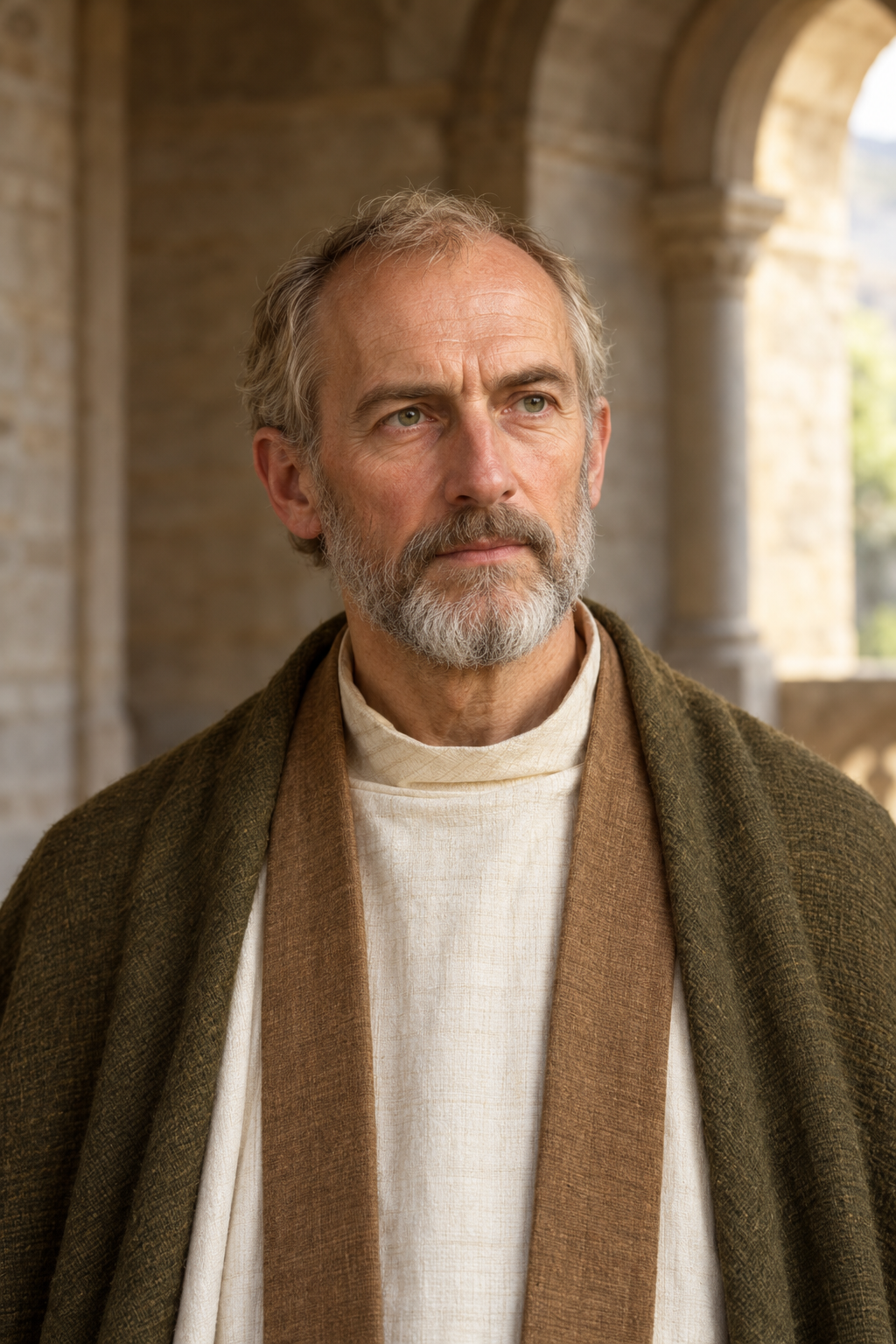
About Virgil of Salzburg
Virgil came from Ireland and became abbot of St. Peter’s and bishop of Salzburg in the eighth century. The Salzburg Institute for Folklore places his birth around 700; the exact year and settlement are not established. His Irish origin is attested in contemporary evidence, but little is known securely about his life before he left Ireland. Roman Deutinger’s modern biography treats his identification with Fergil of Aghaboe as a later hypothesis. Duke Odilo entrusted him with the Salzburg diocese and abbey in 747, and he received episcopal consecration in 749.
His journey from Ireland brought him into contact with powerful patrons on the Continent. Aidan Breen’s account places his departure around 742 or 743 and identifies Quierzy-sur-Oise as the first place where he is recorded. He was welcomed at Pippin’s court before moving to Bavaria. While Virgil administered Salzburg before his consecration, an Irish companion, Bishop Dub-dá-chrích, carried out the episcopal functions that Virgil could not yet perform.
One dispute with Boniface concerned the validity of baptisms administered by a priest whose Latin was faulty. Virgil maintained that these baptisms did not need to be repeated. Thomas Forstner’s diocesan account records that Pope Zacharias supported this position. The disagreement involved a practical question for the people who had already received the sacrament, as well as a conflict between church leaders.
Another controversy concerned ideas attributed to Virgil about a world and people beneath the earth. The surviving papal response, dated May 1, 748, made punishment conditional on establishing that he actually taught the condemned doctrine. James Loughlin’s discussion of the letter notes that it does not establish that Virgil was tried, condemned or required to retract. The concern involved the Christian belief in the unity of humanity and the universality of redemption. The letter alone cannot supply a complete account of what Virgil taught or how the dispute ended.
Becoming a bishop did not end his responsibilities as abbot. Breen describes a community of more than a hundred monks and fifty novices under his care. Virgil continued to hold the two offices together, linking the leadership of the diocese with the daily institutional life of St Peter’s monastery.
Protecting church property also brought disputes with local rulers. At Bischofshofen, Virgil reached a compromise over a church assigned to a ducal chaplain. He later secured the transfer of Count Gunther’s monastery at Otting to the bishopric.
His work in Salzburg included the growth of the bishopric’s estates and the organization of missionary activity among the Carantanians. Deutinger places this mission within the expansion of Bavarian power, including the suppression of a revolt in 772. Virgil sent a missionary bishop and priests rather than undertaking the work personally. He also initiated Salzburg’s confraternity book in 784.
Forstner connects Virgil’s episcopate with a renewed period of cultural activity in Salzburg. He commissioned a large cathedral, encouraged craftsmanship through church patronage and had Rupert’s relics brought from Worms. His support also extended to writing: Arbeo of Freising composed the life of Corbinian at his encouragement. These projects gave the developing church buildings, objects and texts through which its memory could be preserved.
The confraternity book gave written form to a community of prayer. Its oldest section, begun under Virgil in 784, recorded individuals and religious communities linked to Salzburg. The names were arranged as saints, living people and the dead, then divided into groups such as bishops, monks, nuns and rulers. Women appear among both religious communities and the families of rulers. The entries preserved people for remembrance in prayer, rather than simply recording administrative membership. Historian Gerald Hirtner also notes a revealing omission: Boniface was not included. The manuscript therefore records divisions as well as connections within the church Virgil led. Later generations continued this practice, adding an eleventh-century confraternity book that was eventually bound together with the older volume and records of property gifts.
The surviving accounts of Virgil are not all equally close to his lifetime. Breen identifies his epitaph and Alcuin’s poem about Salzburg’s relics and altars as important contemporary witnesses. The fuller Life written in the late twelfth century expanded an earlier account of the conversion of Bavaria and Carinthia.
Virgil died in Salzburg on November 27, 784, and was buried in the cathedral. The Salzburg Institute for Folklore records the rediscovery of his grave in 1181 and his canonization on June 18, 1233. It also makes a useful distinction in his patronage: together with Rupert he is a patron of the archdiocese, while Rupert is the patron of the state of Salzburg. This diocesan remembrance continues to link Virgil with the church he helped develop.
In the former Salzburg territories of the Archdiocese of Munich and Freising, he is commemorated on September 24. That diocesan account also records traditional invocation of Virgil for children and in difficult childbirth.
Wondering how to weigh the stories and sources? Learn how to read a saint biography.