Biography
Vitalis of Savigny
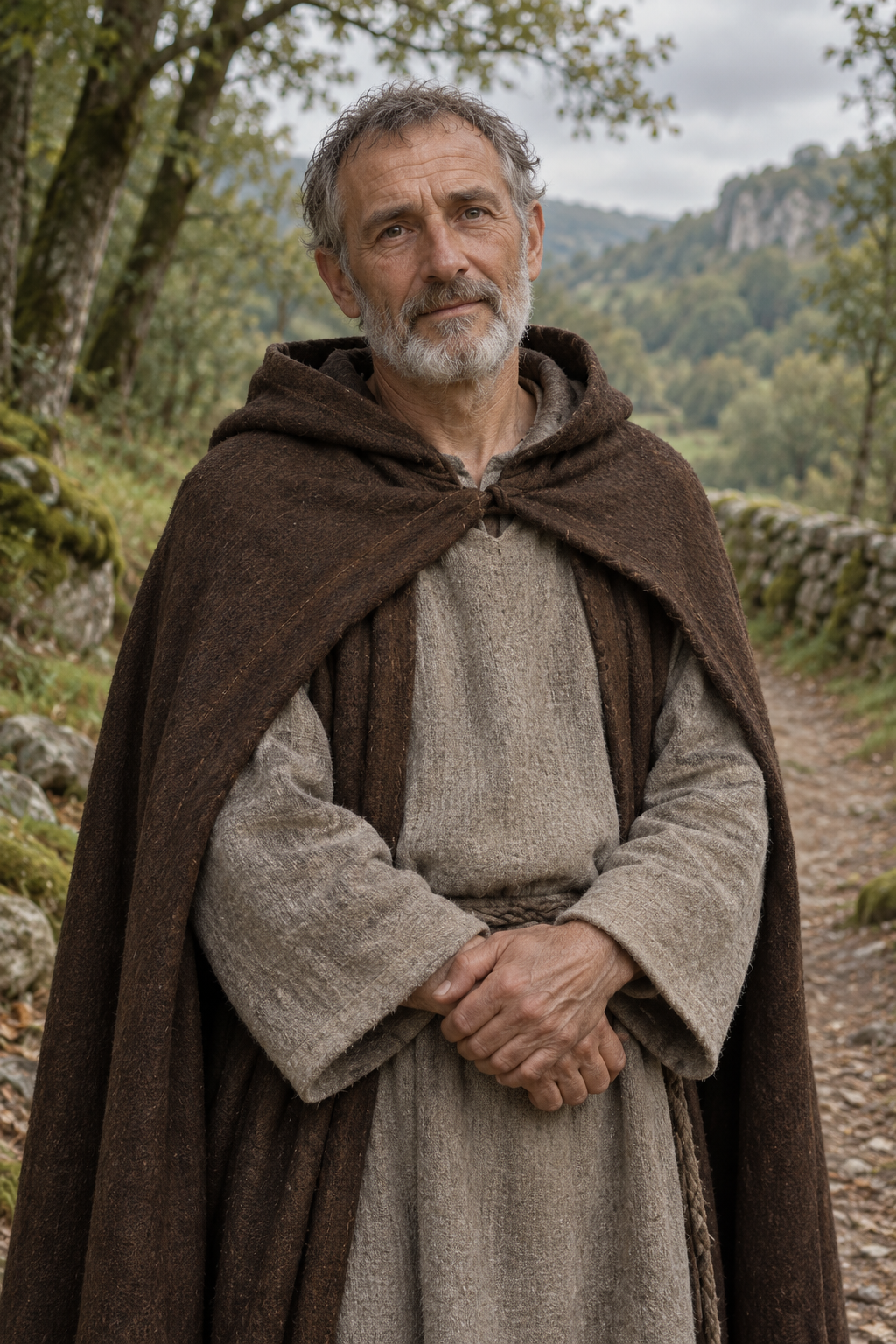
About Vitalis of Savigny
Vitalis came from Tierceville near Bayeux and entered the service of Robert, count of Mortain, as a priest. He held a canonry at Saint-Evroult in Mortain before leaving that position for a life of solitude. The older Catholic Encyclopedia places his withdrawal in 1095. Its account connects him with the hermits of the forest of Craon and describes practical assistance to people who gathered around them. Solitude did not prevent him from preaching. He travelled through western France, while Normandy remained the principal setting of his work.
His family provided for his education, although its location remains uncertain. Feiss identifies his parents as neither wealthy nor noble, challenging more embellished accounts.
Stephen’s Life presents preaching as a central part of Vitalis’s vocation. In one episode, he speaks at a church council in England despite the presence of men said to have plotted against him. The narrative ends with their confession and request for pardon. Historian Robyn Parker reads the episode through Stephen’s biblical language: the preacher scatters the word like seed, and the listeners change in response. This is evidence of how his biographer understood his work, rather than independent confirmation of the plot. Parker also notes that the Life repeatedly places Vitalis before an audience without recording the contents of his sermons. His reputation as a preacher is much clearer than the precise words he spoke. The mortuary roll adds another perspective, although many entries use conventional language. Parker identifies more personal tributes among them, including praise from the women of Sainte-Trinité at Caen and a poem by Hugh of Avranches, who wrote of knowing Vitalis.
As disciples joined him, the solitary life developed into an organized community. The French Catholic calendar Nominis identifies him as the founding abbot of Savigny and gives 1112 as the foundation year. It remembers the house as the origin of monasteries in France and England. Its account also preserves the tradition that Vitalis died while singing the office of the Virgin with his community.
The transition from hermitage to abbey is harder to date precisely than a single foundation year suggests. Historian Brigitte Galbrun reviews donations, confirmations and later copies of documents, noting the absence of the original foundation charter. Her account also separates three achievements often brought together under the founder’s name: Vitalis founded Savigny, his successor Geoffrey developed its congregation, and the fourth abbot, Serlo, brought that congregation into the Cistercian order in 1147.
A foundation near Mortain presents another difficulty. In his review of Jaap van Moolenbroek’s research, Ludo Milis explains that the supposed foundation charter of 1105 was produced around 1200. The earlier establishment near Mortain was for men and did not last. The women arrived between 1118 and 1122.
Vitalis died in 1122. His biography was written by Stephen of Fougères, probably in the 1170s, about half a century after the events it describes. Galbrun stresses the difficulty of recovering his motives from accounts composed by others, often to promote his veneration. Even estimates of his birth differ: Galbrun gives about 1050, while older reference works place it later.
One unusually tangible witness to his remembrance is his mortuary roll. Churches and monasteries in France and England added their responses to the document after his death. A scholarly notice of its publication describes more than two hundred different examples of handwriting gathered in this way.
His memory continued after Savigny became Cistercian. Hugh Feiss’s scholarly account describes local veneration without a formal canonization. The Cistercian general chapter recognized him as a saint in 1738. His relics had already been moved several times, including a transfer to the new abbey church in 1243. Their later history included destruction and dispersal during religious conflict, restoration, and rescue by local people during the French Revolution. They are still venerated at Savigny-le-Vieux. Feiss cautions that modern scientific study did not produce firm conclusions about the remains. He also describes Vitalis primarily as a preacher of repentance and peace, while acknowledging that the extent of his residence and leadership at Savigny is uncertain.
Wondering how to weigh the stories and sources? Learn how to read a saint biography.