Biography
Walter of Pontoise
About Walter of Pontoise
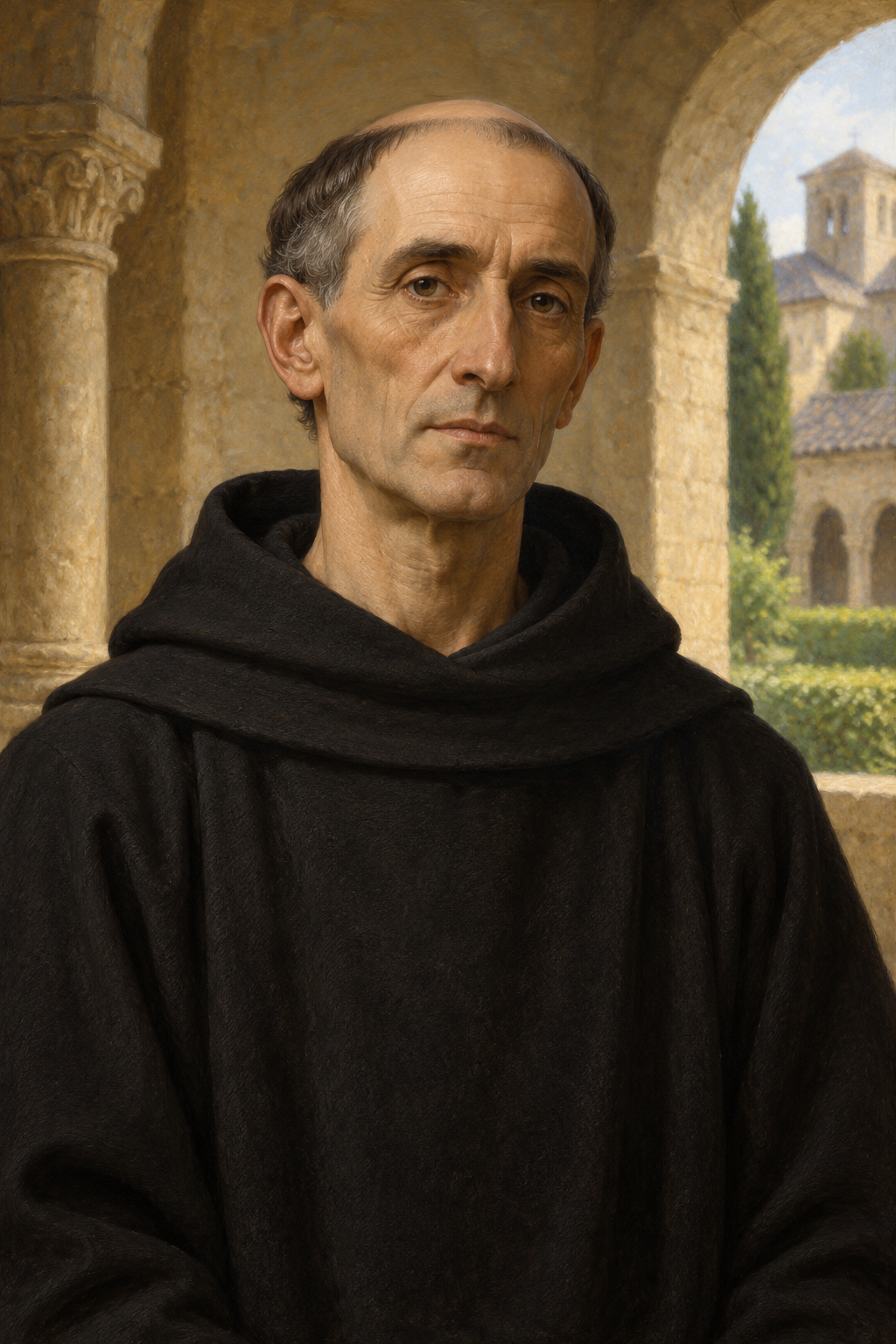
Walter of Pontoise, known in French as Gautier, was a Benedictine monk remembered for the tension between his desire for solitude and his responsibilities as an abbot. He entered the monastery at Rebais before leading the community at Pontoise. The diocesan account quoted by Nominis places that community first near the church of Saint-Germain within the fortified town. Walter obtained permission to build a new abbey beside Saint-Martin outside the walls, where the monks moved.
His birth is usually placed around 1030, although the New Catholic Encyclopedia estimates about 1025. The sources also differ over his death year: the city gives 1099, while the encyclopedia allows either 1095 or 1099. The editors of Acta Sanctorum found the transmitted death dates internally inconsistent and rejected one chronological addition to the medieval life.
A medieval life attributed to one of his monks describes an earlier career in teaching. It says that Walter traveled to study, learned grammar, rhetoric, and dialectic, and then taught pupils himself. This account presents his entry into Rebais as a change from a learned lay career to monastic life.
The New Catholic Encyclopedia records his attempts to leave the abbacy. He went quietly to Cluny, where he hoped to live without the prominence of his office. After being recognized and sent back, he sought seclusion on an island in the Loire near Tours. His monks again persuaded him to return. Finally he asked Pope Gregory VII to release him from his duties, but the pope required him to remain at Pontoise. These episodes belong to the biographical tradition of an abbot repeatedly drawn back into the community he wished to leave.
His remembered compassion also extended to a prisoner at Rebais. The New Catholic Encyclopedia recounts the story that, while still a novice, Walter fed an imprisoned man and helped him escape. It links his traditional patronage of prisoners to this episode. The story conveys his reputation for mercy, without supplying an independently verified account of the prisoner’s circumstances.
Pontoise’s heritage account recalls another side of his leadership: criticism of simony, the buying and selling of spiritual things, which brought him into conflict with the royal court. It also associates him with the foundation of a women’s community at Berteaucourt-les-Dames.
The monk’s account also places Walter in the ordinary work of the abbey: reading during meals, helping in the kitchen, preparing the bread oven, and joining manual labor. It describes him arranging gifts for poor people through a priest and a deacon while asking them to conceal his role. These details belong to a disciple’s portrait of his abbot, whose authority was accompanied by practical service.
His association with Berteaucourt needs a further distinction. The regional heritage inventory describes Walter withdrawing to a hermitage near the Nièvre before returning to Pontoise. It identifies Godelinde and Héléguide as the women who established Notre-Dame du Pré and received investiture from Bishop Gervais of Amiens on November 5, 1095. Godelinde became its first abbess. Walter therefore belongs to the foundation’s history, but its establishment also depended on these women. The inventory notes that the foundation charter appears to refer to an older church already on the site. It also records early donations from the lords of Saint-Valery. These details place the community within a local history of religious leadership and support, rather than presenting it simply as one man’s achievement. The abbey’s surviving remains include its former church and an eighteenth-century abbess’s residence; much of the convent was destroyed after the Revolution.
The published canonization charter records Archbishop Hugh of Rouen opening Walter’s tomb on May 3, 1153, in the presence of other bishops, clergy, and people. It orders an annual commemoration on the following day and grants indulgences to pilgrims. The document preserves the formal recognition of his cult; its references to miracles express the religious judgment of those involved.
The city’s account describes a stone tomb made for him at Saint-Martin and later moved to the church of Notre-Dame. Openings in its sides once allowed pilgrims to see the relics. During the French Revolution, his remains were moved to the cemetery for safekeeping, but their location was subsequently lost. The surviving monument preserves the memory of the abbey and its first known abbot, even though the relics it once housed are no longer there.
A separate chapel at Berteaucourt preserves another strand of his remembrance. The regional survey dates the surviving building to the sixteenth century and describes a stone stair leading down to a fountain beneath it. Local tradition associates that spring with Walter’s staff and credits its water with healing eye diseases. These are devotional claims, not established events or medical findings. The survey records a pilgrimage on the third Sunday of May. The chapel’s later construction should not be mistaken for a building surviving from Walter’s own lifetime.
Wondering how to weigh the stories and sources? Learn how to read a saint biography.