Biography
Waltheof of Melrose
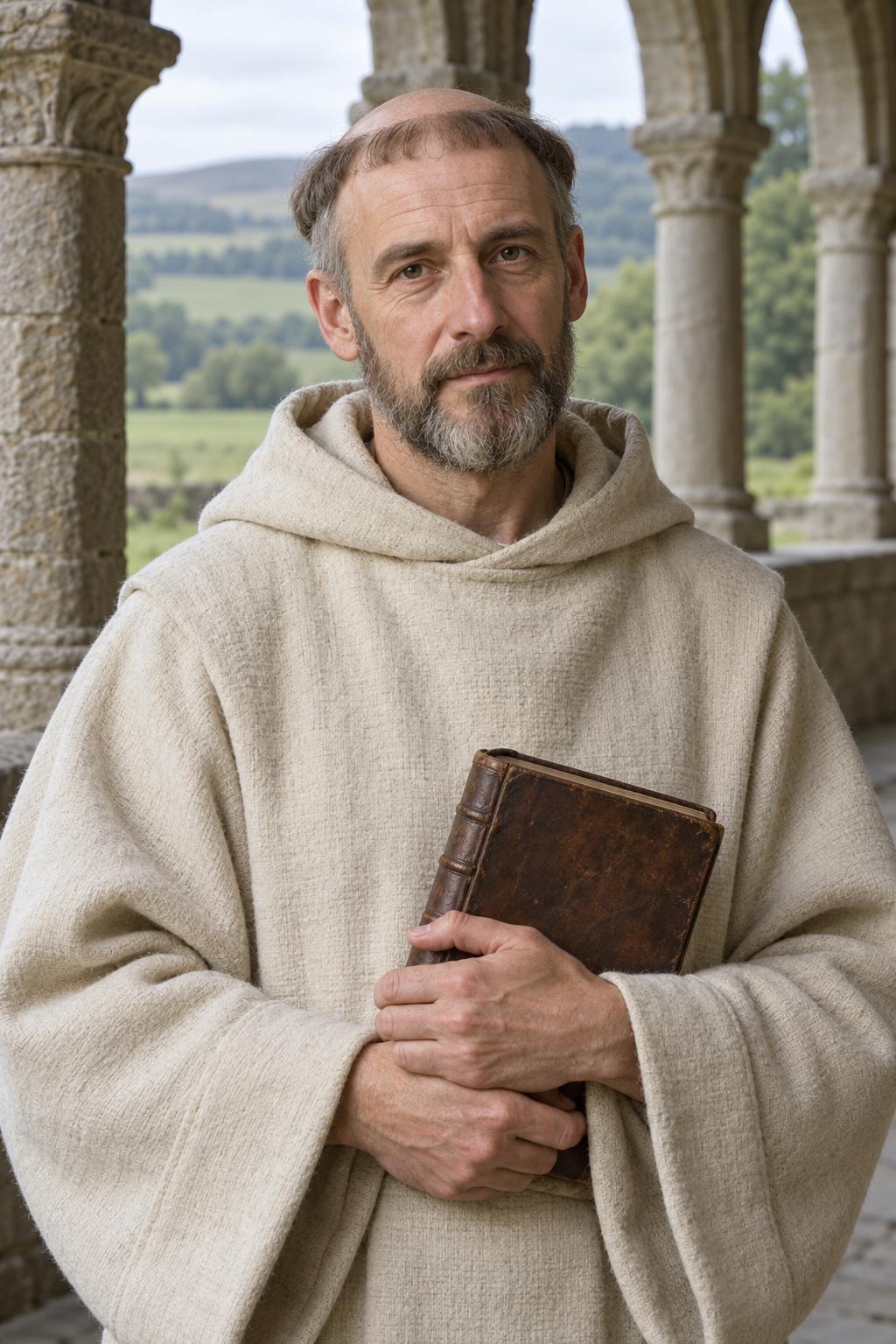
About Waltheof of Melrose
Waltheof of Melrose belonged to a family closely connected with the rulers of England and Scotland. His father was Simon de Senlis, and his mother Matilda was a daughter of Earl Waltheof. He should not be confused with that grandfather or with another Waltheof who became abbot of Crowland. His own religious life began among the Augustinian canons at Nostell in Yorkshire, and he later became prior of Kirkham.
Bernard of Clairvaux’s Life of Malachy gives a more immediate glimpse of Waltheof during his years at Kirkham. It describes him visiting the Irish bishop at York and asking for his prayers. Seeing that Malachy’s large party had only a few horses, Waltheof offered the animal he himself rode. He apologized that it was an uncomfortable packhorse, but Malachy accepted the gift warmly. Bernard then turns the encounter into a miracle story: the horse is said to have become a pleasant mount and changed from a dark color to white.
He eventually left Kirkham to enter the Cistercian community at Warden. The received account describes resistance from his former community and from his brother Simon. He subsequently moved to Rievaulx.
At Rievaulx he served as sacrist. In 1148 he became the second abbot of Melrose, a daughter house of Rievaulx. His predecessor Richard had resigned; Richard’s death followed in 1149. Waltheof was also the stepson of King David I, and his family connections placed him close to the Scottish royal household. Before the end of May 1159 he was elected bishop of St Andrews with the consent of his nephew, King Malcolm IV. He declined the office and remained abbot of Melrose.
Later tradition remembers him as demanding toward himself but gentle toward the monks he governed. It associates him with care for poor people and with a readiness to show mercy. Accounts of visions and extraordinary provisions of food belong to this devotional portrait.
A later famine story gives a fuller picture of the charity associated with his name. In Walter Bower’s account, as retold by Historic Environment Scotland, hungry people gathered around Melrose and Waltheof discussed their needs with Thomas, the monk responsible for the stores. Thomas was willing to use the abbey’s livestock but feared the grain would run out. The story says that Waltheof visited the remaining supplies, touched the grain with his staff, and that it increased enough to feed the people until harvest.
The Chronicle of Melrose records his death on 3 August 1159 and identifies him as the monastery’s second abbot. It also names William, a monk of Melrose, as his successor.
The year is not unanimous in the medieval evidence: Derek Baker notes that Jocelin’s Life gives 1160. The chronology used here follows the Chronicle, while preserving the disagreement rather than treating 1159 as uncontested.
The fuller story of his life was written by Jocelin of Furness about fifty years after his death. Helen Birkett’s study explains that Jocelin relied heavily on stories preserved by the elders of Melrose and on testimony about the miracles attributed to Waltheof after his death. Yet the work was not based only on spoken recollections: written materials also contributed to its composition.
Birkett also connects the writing of the Life with renewed interest in Waltheof’s remains in 1206. Abbot Patrick commissioned the work during his brief tenure. Claims that the body had remained intact encouraged the community’s devotion, but the evidence suggests that the shrine had attracted relatively few distant pilgrims. The Life was intended to make Waltheof’s reputation and the miracles attributed to him more widely known.
Waltheof was never formally canonized, but a local cult continued until the Reformation. The Catholic Church in Norway’s biographical account honors him as a saint and gives his commemoration as 3 August.
A fragment of Waltheof’s shrine survives among the objects from Melrose. Much of the standing church belongs to rebuilding after 1385, long after his lifetime; the surviving ruins should not be taken as a complete picture of the monastery he knew.
Wondering how to weigh the stories and sources? Learn how to read a saint biography.