Biography
Wendelin of Trier
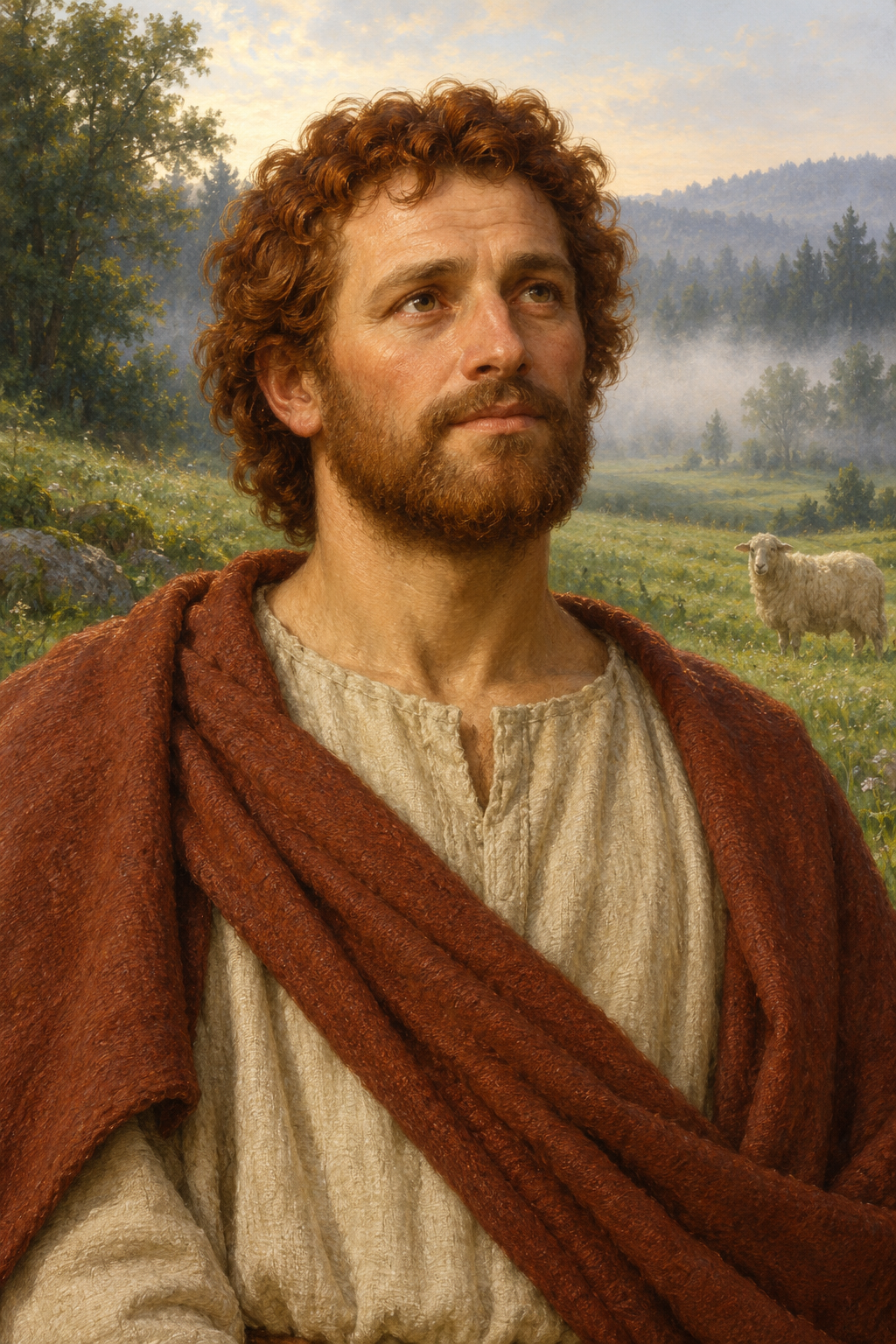
About Wendelin of Trier
Wendelin of Trier is remembered as a hermit and a patron of rural life. His veneration is much better established than the details of his biography. The New Catholic Encyclopedia describes his wide medieval popularity in the Rhineland and Switzerland, while distinguishing that devotion from the late stories about his origins and career. It treats his supposed leadership of the abbey of Tholey as probably legendary.
In the story summarized by Franz Heinrich Reusch, Wendelin was a king’s son who gave up his inheritance to seek a hidden life of poverty. After a pilgrimage, he lived as a hermit in the region of Trier and worked for a landowner, tending pigs, cattle and sheep. Reusch explicitly presents this account as legend and questions the historical foundation of the surviving late medieval biographies. The royal ancestry, journey and sequence of occupations therefore belong to his devotional story, not to an established chronology.
The Diocese of Augsburg’s account likewise identifies the shepherd story as legend. It tells of a landowner who came to recognize Wendelin’s holiness and provided a place where he could live in prayer. That account helps explain the familiar devotional image of a shepherd, although it cannot establish the details of an early medieval life. Augsburg places his birth in Ireland and his death at Tholey, but those locations belong to the received tradition rather than a securely reconstructed life.
These traditions made Wendelin a figure of particular importance to farming communities. Augsburg lists him as a patron of farmers, shepherds, livestock and fields, and records invocation against diseases affecting livestock. Its calendar gives October 20 as his commemoration. Such patronage expresses a religious tradition of intercession, rather than a promise of protection from animal disease.
In October 2021, the Diocese of Trier reported a week of pilgrimage at the basilica in St. Wendel. The shrine was displayed for veneration and then returned to its place at the close of the celebrations. The report described worship with children and other local groups, as well as prayer and collections for people affected by the Ahr valley floods.
At the closing service, Auxiliary Bishop Robert Brahm urged pilgrims to carry renewed attention to faith and daily life beyond the shrine itself. This continuing practice shows how Wendelin’s memory remains connected with the community that gathers around it.
Wondering how to weigh the stories and sources? Learn how to read a saint biography.