Biography
Wihtburh of Dereham
About Wihtburh of Dereham
Wihtburh, also called Withburga, is an Anglo-Saxon saint associated with Dereham in Norfolk and with the monastery at Ely. The New Catholic Encyclopedia describes her monastic career as obscure and notes the absence of contemporary records. Tradition remembers her either as an abbess at Dereham or as a woman living a solitary religious life. Those differing accounts do not allow a detailed reconstruction of her daily work or the community she may have led.
Her familiar place in a royal family is also uncertain. In her scholarly edition of the female saints’ lives from Ely, Rosalind Love observes that Wihtburh is not mentioned by Bede and is not attested before the late tenth century. Love finds reason to suspect that her supposed relationship to Etheldreda was created at Ely. The later presentation of these saints as a closely connected family should therefore be distinguished from independently established genealogy.
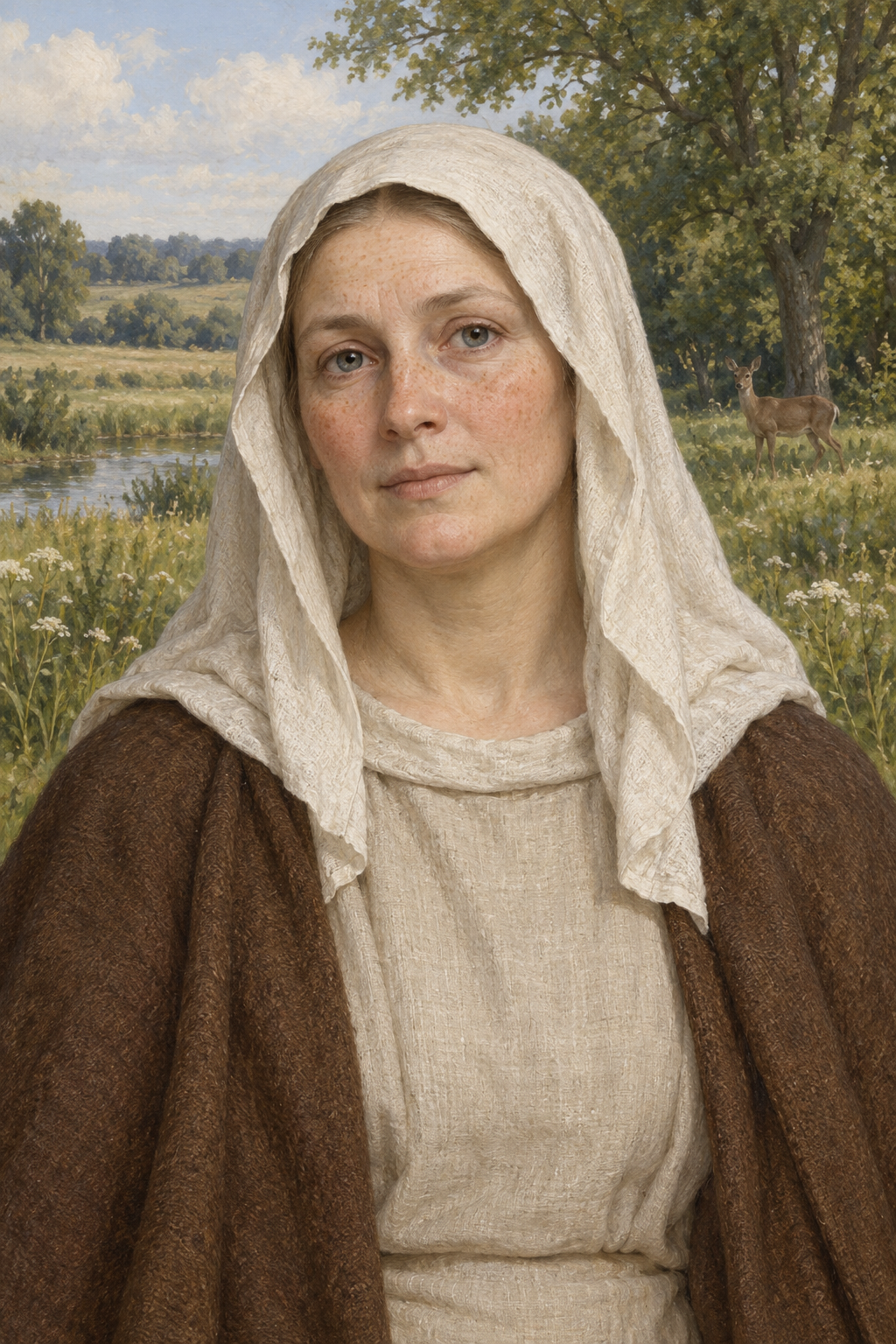
One enduring story concerns the building of her church. As summarized by Norfolk Heritage Explorer from the Liber Eliensis, a shortage of food was relieved when two deer supplied milk after Wihtburh received guidance in a vision of Mary. This is a hagiographic story of divine provision, not archaeological evidence for the foundation. The same heritage account notes how little excavated evidence supports the early nunnery’s traditional location near the present church. It also records uncertainty over the identification of the early place-name with East or West Dereham.
The transfer of her relics became an important part of Ely’s history. D. H. Farmer discusses the Liber Eliensis account of an expedition on July 8, 974, when Abbot Brithnoth and his companions removed her body from Dereham. In that narrative, the townspeople discovered the theft and attempted to intervene, but the party escaped by river and brought the remains to Ely. The chronicler defended the removal on the grounds that the relics would receive greater honor there.
Farmer cautions that the chronicle served Ely’s interests and helped assert the monastery’s antiquity and property rights. Its account preserves evidence of the importance attached to Wihtburh’s relics, but it should not be read as an impartial record of the dispute. The voices of the people who lost their local shrine do not survive alongside Ely’s version.
Her remembrance also appears in medieval calendars. Love identifies July 8 as the commemoration of the translation to Ely and March 17 as that of her burial. The Bosworth Psalter includes the July observance among the earliest surviving evidence for her cult. These calendar entries document veneration without resolving the missing details of her lifetime.
At St Nicholas’ Church in Dereham, a well outside the west door still bears her name. The parish recalls the tradition that it appeared after her remains were taken away and describes a service there on the first Sunday in July, with the blessing of water. This continuing local observance keeps her memory connected with Dereham as well as Ely.
Wondering how to weigh the stories and sources? Learn how to read a saint biography.