Biography
William Hobart Hare
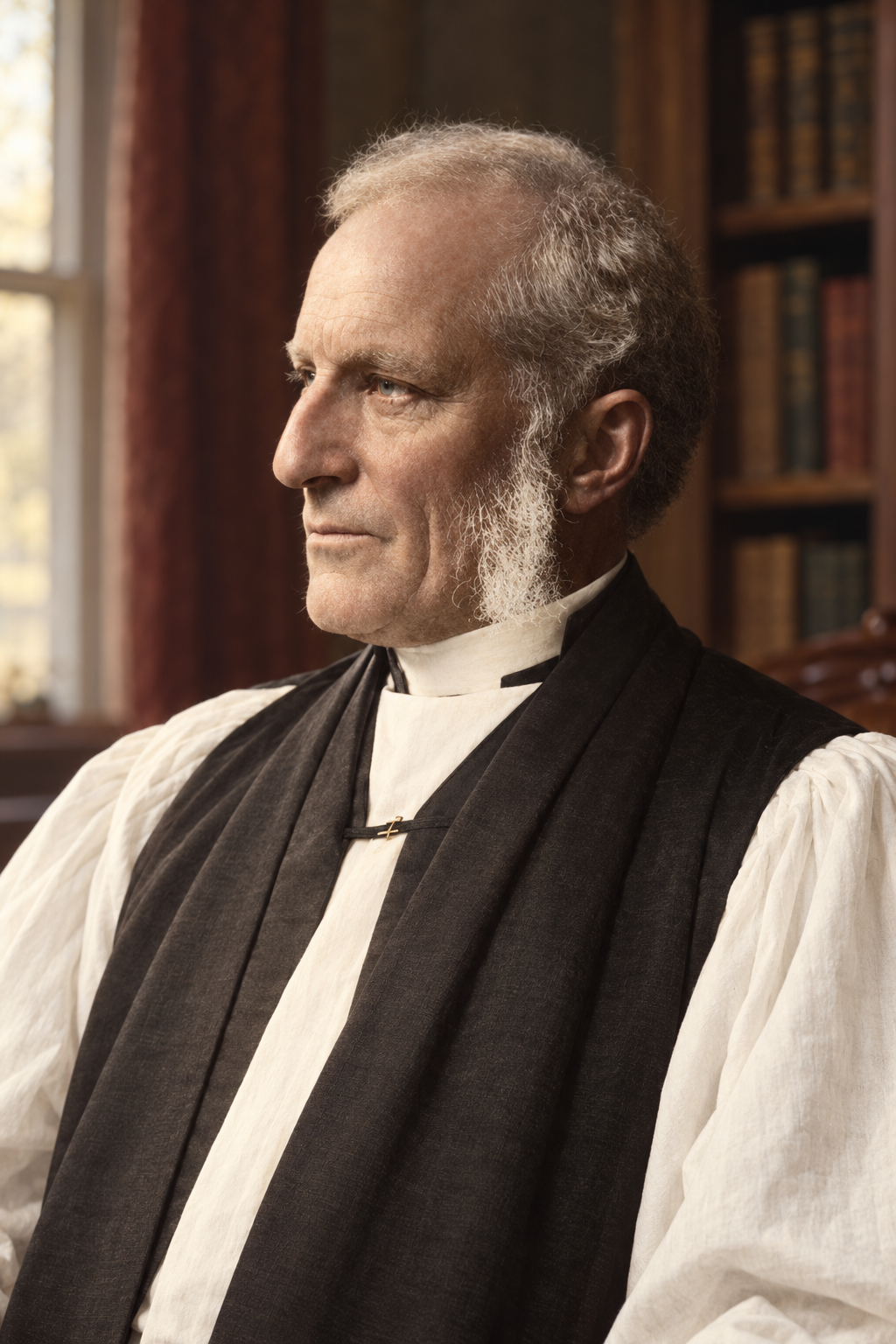
About William Hobart Hare
William Hobart Hare spent much of his ministry organizing Episcopal missions in Dakota. His work brought him into sustained contact with Indigenous communities, clergy, teachers, and settlers. He saw his task as making local ministry possible: finding workers, raising funds, and establishing churches and schools across a large territory.
Hare was born in Princeton, New Jersey, in 1838. His father was an Episcopal priest and biblical scholar, and his maternal grandfather was Bishop John Henry Hobart. Educated in Philadelphia, he attended the University of Pennsylvania but left before completing his degree. He taught while preparing for ministry and became a deacon in 1859.
He served at St. Luke’s in Philadelphia and then St. Paul’s in Chestnut Hill. In 1861 he married Mary Amory Howe, and in 1862 he was ordained priest. The following year he traveled with his wife and their young son to Michigan and Minnesota, hoping that a change of climate would help her health.
On January 9, 1873, he was consecrated missionary bishop of Niobrara at St. Luke’s, the church where his pastoral work had begun. The contemporary church magazine report describes a large gathering of bishops and clergy, with Bishop Henry Whipple preaching. It also records Communion at the Santee mission that day and prayers in New York. His appointment was understood as a shared missionary undertaking, supported by worship and contributions far beyond his new jurisdiction.
Hare’s defense of Indigenous people did not amount to acceptance of their cultural independence. Speaking in New York in 1874, he condemned the greed of white settlers and the repeated seizure of Native lands. He warned that Christian preaching could offer little protection if dispossession continued around it. In the same address, however, he used demeaning racial descriptions and called for military authority, settler institutions, and the church to work together. His criticism of exploitation remained bound to a program of control and conversion.
At that meeting he introduced the Santee Christian Henry Whipple Waumdixum. In the speech reported through an interpreter, Waumdixum described being conspicuous as an Indigenous visitor in eastern streets, homes, and churches. He nevertheless addressed the gathering as fellow Christians. The published account preserves a Native participant’s voice, while also reflecting the translation and reporting of a missionary occasion.
Hare made boarding schools a central part of his plans. In his 1888 retrospect he described schools intended to prepare pupils as teachers, catechists, and missionaries. He also stated that Native languages and separate tribal life should eventually disappear into the dominant society. He promoted English in the schools. These were explicit aims of his ministry, alongside his opposition to abuses by settlers.
The surviving school records show that this work involved many people besides the bishop. At St. Elizabeth’s Mission near Wakpala, Philip Joseph Deloria, a Dakota priest, led the congregation. Construction began in 1885 under Hare’s oversight, and an enlarged boarding school opened in 1890 with Mary E. Francis as principal. Teacher Septima Koehler later worked there after serving at St. Mary’s on the Rosebud Reservation. The Smithsonian’s collection includes student papers and photographs, preserving names and traces of lives that institutional accounts can otherwise obscure.
Historian Carole Barrett’s study of St. Elizabeth’s draws on both archival records and former students’ recollections. Her account places conversion within the pressures of reservation life, including political, economic, and spiritual duress. It also emphasizes that Lakota pupils did not simply become what the school’s leaders intended. Many retained important cultural foundations while making Christianity part of their lives. This distinction matters when assessing Hare’s legacy: institutional goals and students’ own experiences were not identical.
His responsibilities extended beyond Dakota. In 1891 the House of Bishops sent him to Japan to provide temporary oversight of the vacant missionary jurisdiction of Yedo. Addressing clergy and laity in Tokyo, he called for mutual respect between Japanese and foreign church members and greater local participation in the management of institutions. He also acknowledged the financial authority of the American missionary board. The address shows both his interest in consultation and the unequal structures within which that consultation occurred.
Another part of his legacy is the Niobrara Cross, which he designed for Indigenous Christians. A later diocesan history records its continued importance among Lakota church members. In 1975 the cross was shared with the wider Diocese of South Dakota. Its continuing use belongs to the history of the communities that received and carried the symbol, as well as to the bishop who designed it.
Hare died in Atlantic City on October 23, 1909. His body was returned to Sioux Falls for burial beside Calvary Cathedral, in accordance with his wish to rest among the people with whom he had worked.
The 2009 proposed Episcopal calendar names him on May 17.
That commemoration was included in the calendar authorized for trial use by the 2009 General Convention.
Wondering how to weigh the stories and sources? Learn how to read a saint biography.