Biography
William of Æbelholt
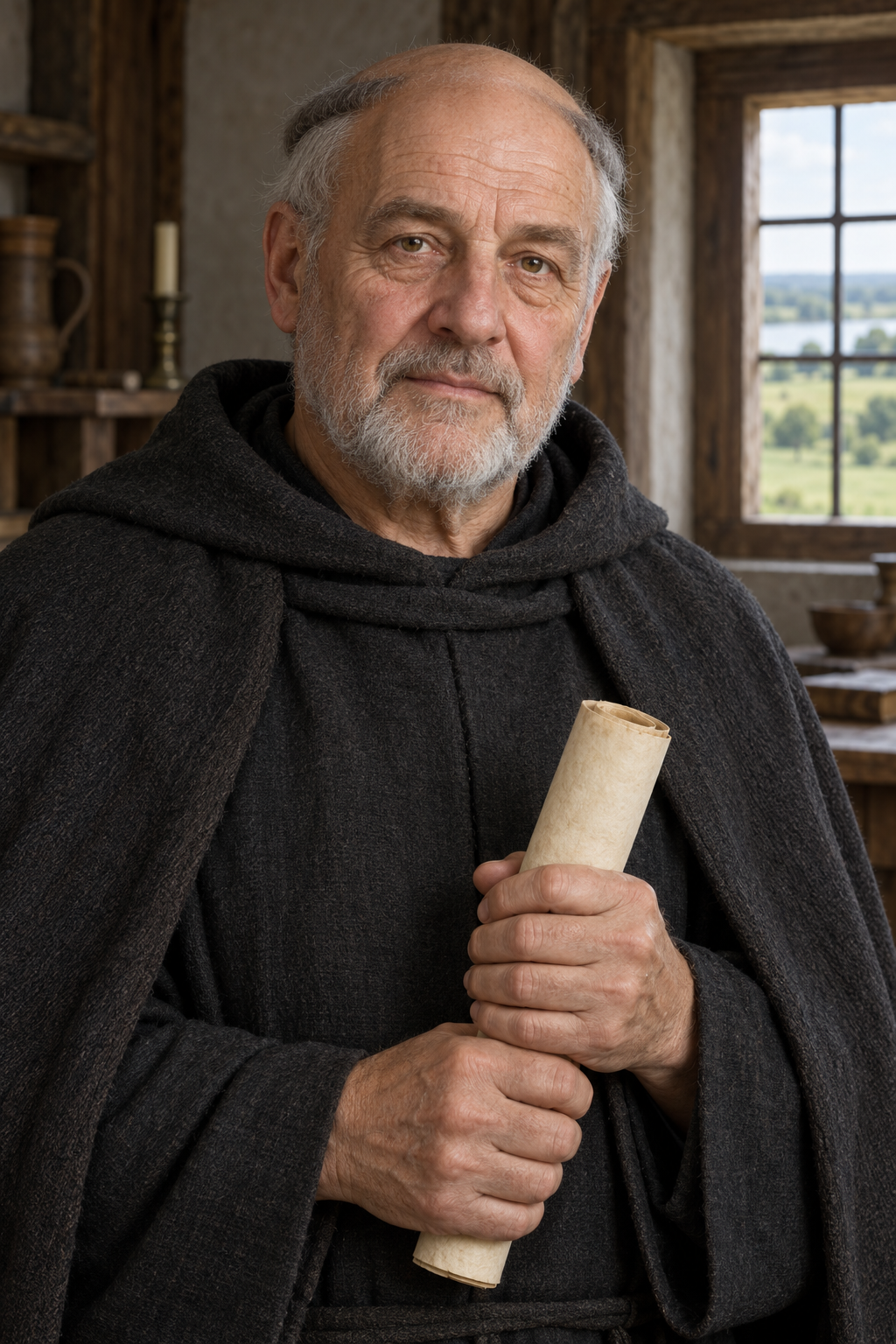
About William of Æbelholt
William of Æbelholt was a French canon who spent much of his life reforming a religious community in Denmark. Born in Paris around 1127, he accepted Bishop Absalon’s invitation to work at Eskilsø in Roskilde Fjord. The task proved difficult. His three French companions returned home, and William himself needed encouragement to remain. He became known as a demanding abbot whose strictness could provoke resistance, but also as a generous man who helped people in need.
His formation had begun in Paris under his uncle Hugh, abbot of Saint-Germain-des-Prés. He received a position among the canons of Sainte-Geneviève and later joined the community when it adopted the regular life associated with Saint-Victor. As subprior, he opposed an appointment that he considered improper. The received account describes punishment for his resistance, followed by support from Pope Alexander III.
Modern scholarship places his arrival in Denmark around 1165 and the community’s move to Æbelholt around 1175. Under his leadership the house grew in membership, buildings, and property. His responsibilities also extended beyond the abbey. He served as an adviser and envoy for King Knud VI, including efforts to prevent the French king Philip II Augustus from divorcing Knud’s sister Ingeborg.
A papal privilege addressed to William and his brothers gives a documentary view of the community he governed. Dated by its editors to 1180–81, it placed the church of Saint Thomas of the Paraclete under papal protection and confirmed its possessions. It also required the continued observance of the rule of Augustine and the customs of the brothers of Saint-Victor in Paris. The text survives through later copies, rather than as the original document.
At Æbelholt, charity could strain the house’s finances. Poor and distressed people came for help, while students sought instruction in Latin, Scripture, and canon law. William’s reputation therefore included both intellectual training and practical care. His forceful character did not disappear, but the diocesan account presents his years of difficulty as a schooling in humility and self-giving.
William’s own charter for an annual commemoration offers a more personal account of the pressures of office. He explains that pastoral responsibilities repeatedly drew him away from quiet contemplation and into worldly business. He therefore arranged for the community to pray for him after his death. The provision included meals for the brothers at Tjæreby and Freerslev and food for twelve poor people. While he lived, the observance was to honor his former abbot at Saint-Germain-des-Prés, with prayers also remembering his parents, Rudolf and Emeline. The poor were to receive bread and beer, together with meat when the season allowed it or fish instead.
His surviving letters are another important part of his legacy. The collection served as a model for letter writing and also conveyed something of its author’s life. Scholars generally consider William responsible for assembling it, while allowing that it may have been edited after his death.
William died on 6 April 1203. The anonymous Life gives a different year and a much greater age than modern scholars accept; its chronology requires correction rather than simple repetition. The work was probably written at Æbelholt after 1210 and before his canonization. It preserves the community’s memory, but its accounts of his earlier life can conflict with other evidence. Its visions and healings should be read as hagiographical claims, not as independently established supernatural events.
Devotion developed locally soon after his death. In 1218 Pope Honorius III ordered an inquiry into the reported miracles, and in 1224 he canonized William. The relics were transferred to the new stone church in 1238. His Danish feast is celebrated on 16 June. The surviving Life helped sustain this devotion, although scholars debate its precise role in the canonization process.
His cult also left a record at Gislev Church. Its large bell invokes William as the church’s patron, and the church historian identifies him specifically as the abbot of Æbelholt.
The later Danish topographical survey independently records Gislev’s dedication to William in the Catholic period and dates the inscribed bell to 1523.
Wondering how to weigh the stories and sources? Learn how to read a saint biography.