Biography
William of Bourges
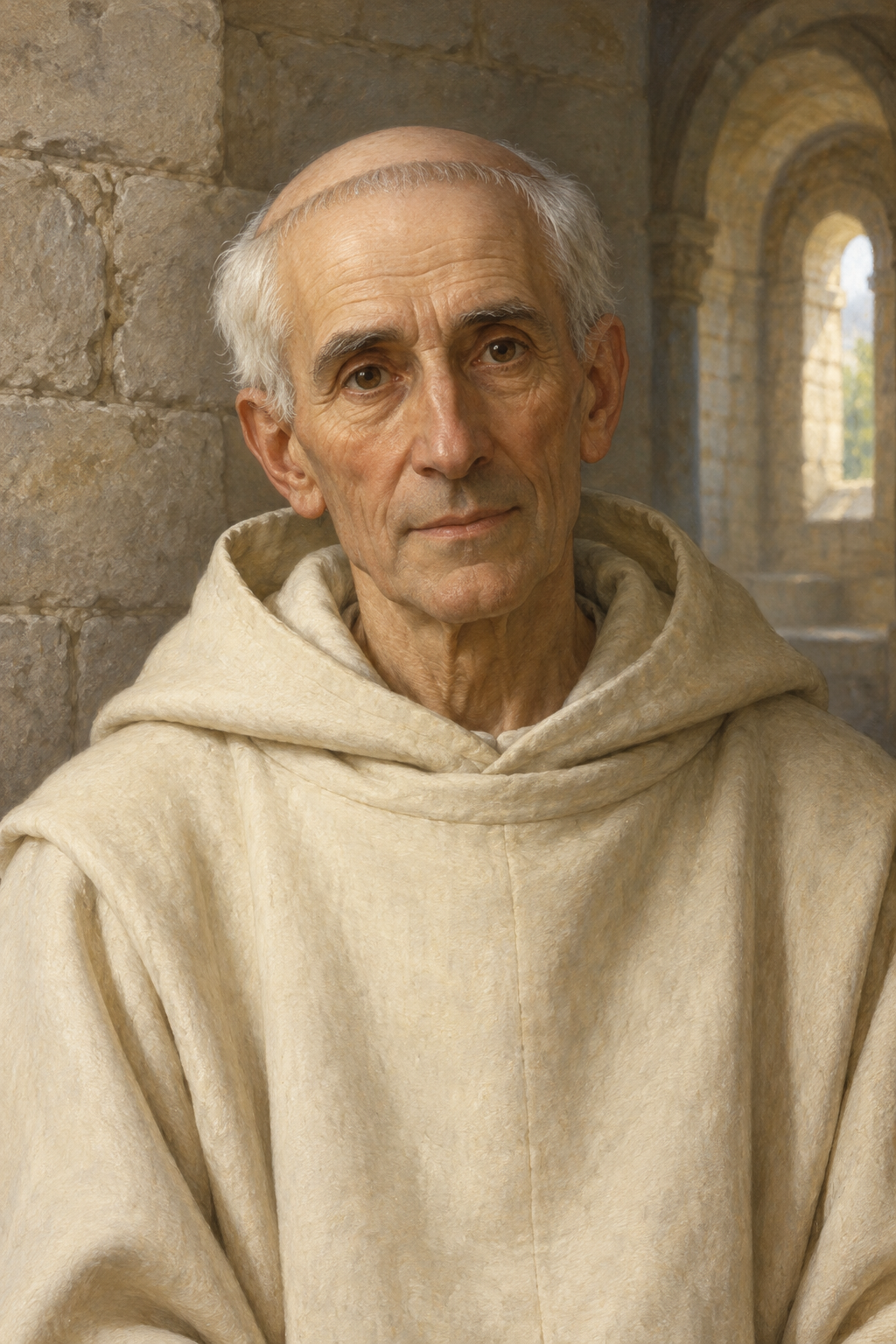
About William of Bourges
William of Bourges, or Guillaume du Donjon, became a monk before serving as archbishop. He served as a canon at Paris and Soissons before entering Grandmont. He later joined the Cistercians at Pontigny and held leadership responsibilities at Fontaine-Jean and Chaalis.
He was born at Arthel, but his birth year remains disputed. Larousse places it around 1120, while the New Catholic Encyclopedia gives 1150; neither estimate is adopted here as a settled date.
His departure from Grandmont followed a serious dispute between the community’s choir monks and lay brothers, according to the New Catholic Encyclopedia. He continued his religious life within the Cistercian order rather than returning to his earlier work as a canon. The same reference places his appointment as abbot of Fontaine-Jean in 1184 and his move to the abbacy of Chaalis in 1187.
After Henry of Sully’s death, the cathedral canons could not agree on his successor. According to Larousse, they asked Eudes of Sully, bishop of Paris, to suggest a candidate acceptable to the French king. Eudes proposed William, and Philip Augustus agreed to the choice. The account places the selection in 1200, although the diocese gives 1199.
An early anonymous life, preserved in Surius’s abridgment, presents William as reluctant to leave the monastery for episcopal office. It says that commands from his Cistercian superior and the papal legate finally overcame his resistance. As bishop, he kept monastic clothing and welcomed travelers to his table while maintaining his own abstinence. The same account describes visits to sick people and prisoners, discreet gifts of clothing, and provision for the burial of poor people and travelers. It also portrays him as patient with offenders, willing to forgive repentance but prepared to impose discipline when leniency failed.
The Diocese of Bourges remembers him particularly for his care for poor people and for the tensions this caused with members of his cathedral chapter. It also records his opposition to King Philip Augustus over the king’s repudiation and remarriage. His ministry belonged to the period when the present cathedral was being built. The diocesan account associates him with its artistic program, while acknowledging that construction had begun under his predecessor, Henry of Sully. Lazenby specifies that William angered the king by enforcing Pope Innocent III’s interdict following Philip’s repudiation of Queen Ingeburg.
His public work also included preaching against the Cathars at the request of Pope Innocent III. According to Larousse, he promoted the crusade against the Albigensians and was preparing to take part when illness intervened. He died in 1209, and his successor began seeking his canonization the following year. Further requests followed in 1212 and 1215. Larousse places the inquiry under Honorius III in 1217 and the canonization in 1218.
He died on January 10, 1209; his local feast is January 10. Nominis’s account of the Roman Martyrology emphasizes that he kept the austerity and clothing of his monastic life while serving as bishop, and remembers his generosity toward clergy, captives and people in poverty. It also identifies him as patron of Saint-Guillaume Parish in Bourges.
The early life describes a dispute over his burial. William had asked to be buried at Chaalis, but after his death the people of Bourges guarded the cathedral against removal of his body. The monks of Chaalis yielded, and he was buried at Bourges. The narrator presents this resistance as devotion to their former bishop.
After his death, people seeking healing gathered at William’s tomb in the cathedral. A medieval collection records the illnesses, journeys and offerings associated with their appeals to him. Historian Alessandra Foscati notes the writer’s unusual attention to symptoms and medical vocabulary, alongside his aim of promoting William’s holiness. These accounts preserve evidence of medieval devotion and attitudes toward illness; their reported cures are not independently established medical events. The collection circulated with his life in manuscripts from Cistercian houses, including Chaalis, Maubuisson and Clairvaux. Only fragments of William’s canonization proceedings survive, so the miracle collection cannot be treated as a complete transcript of the papal inquiry.
William was also remembered in medieval music. Thomas Payne identifies two Latin songs, Regi regum omnium and O felix Bituria, as commemorations of his death. The first has two voices and the second three. Their musical history is less certain than their subject: Payne suggests that the closing passage of O felix Bituria may have been added later, perhaps in connection with William’s canonization or the subsequent introduction of his feast at Notre-Dame in Paris. That proposed connection remains a scholarly interpretation.
His memory remains visible in the cathedral. The diocese describes a window depicting him with a donor, a portal devoted to his life, and the later cathedral bell bearing his name. At Sacred Heart Church in Bourges he is honored as a secondary patron and represented in a modern window above the high altar.
Wondering how to weigh the stories and sources? Learn how to read a saint biography.