Biography
William of York
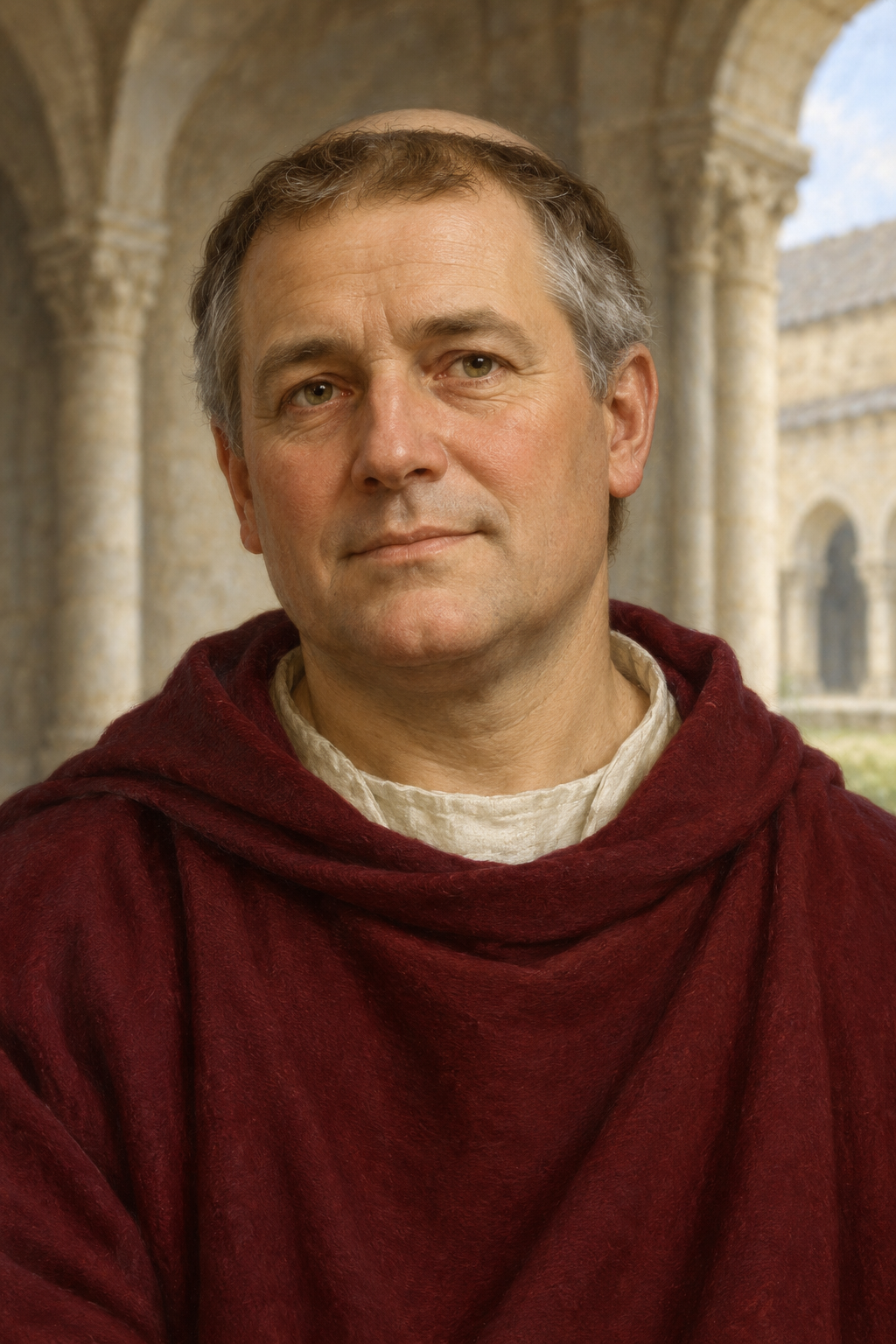
About William of York
William Fitzherbert, remembered as William of York, was born around 1100 and spent much of his career serving York Minster as its treasurer. Christopher Norton’s research traces his upbringing to Winchester and identifies his father as Herbert the Chamberlain, a senior royal official. His election as archbishop drew him into a prolonged conflict with Bernard of Clairvaux and the Yorkshire Cistercians. He was deposed in 1147 and elected again in 1153. His public life was marked by reversals rather than a steady rise through church office.
The controversy concerned the legitimacy of his election and allegations of bribery and royal pressure. Edwin Burton’s account describes appeals to Rome and opposition from Archbishop Theobald, who initially refused to consecrate him. William was eventually consecrated at Winchester in September 1143, but the dispute continued. The changing papal leadership and renewed complaints left his position insecure. His supporters’ attack on Fountains Abbey made the conflict worse; that violence should not be confused with evidence that William personally ordered it.
During his years away from York, William lived at Winchester and devoted himself to prayer. Burton emphasizes the reconciliation that followed his restoration: William treated the Cistercians who had opposed him kindly and promised restitution to Fountains Abbey. This remembered response to his opponents offers a different picture from the hostility surrounding his appointment.
William returned to York in May 1154. The cathedral preserves a tradition that Ouse Bridge collapsed under the crowd welcoming him and that his prayers saved everyone. He died on June 8, 1154, after a sudden illness. Accusations of poisoning followed, but York Minster states that no concrete proof has established murder. He is honored as York’s patron.
The medieval chronicler William of Newburgh investigated the poisoning story rather than simply repeating it. He says that he questioned an elderly monk of Rievaulx who had formerly been a York canon and had attended the archbishop. That witness denied that an enemy could have reached William unnoticed. Newburgh also consulted Symphorianus, William’s household chaplain, who had cared for him during his final illness. According to the chaplain, William accepted an antidote when his friends urged him to take one. This contradicts the story that he refused treatment out of confidence in the sacrament. Newburgh therefore preserves disagreement within the medieval evidence itself; his account cannot establish a modern medical diagnosis.
Newburgh also describes a less harmonious return than the welcoming procession alone might suggest. The dean, Robert, and the archdeacon, Osbert, met William outside York and challenged his restoration. They subsequently appealed to Canterbury. In this telling, public enthusiasm did not end the institutional dispute: William resumed his office amid continuing opposition, shortly before the illness that ended his life. Newburgh describes the final illness as a fever.
Reports of miracles at his tomb in 1177 encouraged his veneration as a saint. The University of York’s account of Norton’s research distinguishes that developing devotion from formal papal canonization in 1226. William’s reputation therefore grew through both local religious practice and later ecclesiastical recognition. His tomb and the stories told around it became an enduring part of the cathedral’s history.
A remarkable record of that devotion survives in the Saint William Window. York Glaziers Trust dates it to about 1414 and attributes it to John Thornton. The Ros family of Helmsley donated the window, whose lower panels portray its benefactors. Above them, ninety-five scenes recount William’s life and miracles. The sequence draws on a Latin life, liturgical readings and other traditions; some scenes have no surviving written counterpart. These images document medieval belief and storytelling, rather than independently proving every miracle they depict.
The window also shows how historical research can recover an obscured story. Its panels had been out of order for centuries when conservation began. Between 1997 and 2007 the glaziers repaired and releaded the glass, while Norton’s research established the original sequence. Reinstating that order made the narrative readable again. The work preserved both a fragile material object and the arrangement through which medieval worshippers encountered William’s memory.
In 2026 York Minster brought fragments of his medieval shrine back from the Yorkshire Museum for an exhibition. The display included a reproduction of his surviving archiepiscopal seal. Researchers also used scans of the surviving stones to create a digital reconstruction of the shrine. These projects continue the work of interpreting the evidence left by centuries of devotion.
The surviving tomb offers another way to encounter his memory. York Museums Trust identifies the stone coffin in the Minster’s Western Crypt as a reused Roman sarcophagus with a modern lid. The museum also records small services held there on William’s feast in June and describes the surrounding space as a place for quiet reflection. Excavated fragments of the dismantled medieval shrines are preserved in its collection, separating the surviving stonework from the lost monuments as a whole.
Wondering how to weigh the stories and sources? Learn how to read a saint biography.