Biography
William White
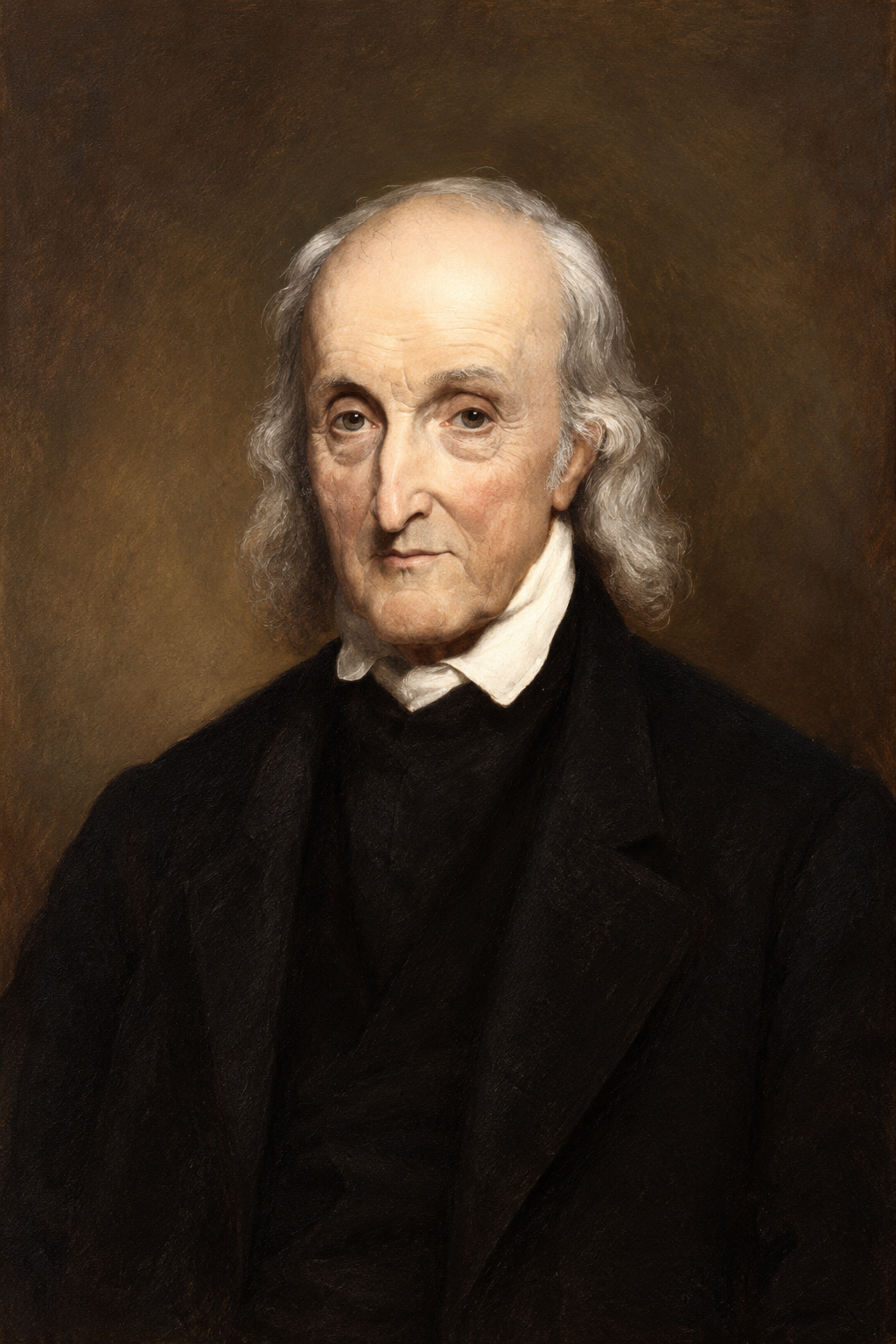
About William White
William White helped the Episcopal Church organize its life after the American Revolution while remaining rooted in the congregations of Philadelphia. He studied at the College of Philadelphia, graduating in 1765, and continued his theological education with churchmen in the city. His training led him to Britain for ordination. Returning home, he became an assistant minister and later rector of Christ Church and St. Peter’s. He married Mary Harrison in 1773, and their family grew alongside his ministry.
The contemporary account published with his funeral sermon gives his birth as April 4, 1748, in Philadelphia. It records his ordination as a deacon in 1770 and as a priest in 1772, and his election as rector in 1779. These beginnings placed his ministry across the years when political independence forced American Anglicans to reconsider their relationship with the Church of England.
White approached that problem in his 1782 pamphlet, The Case of the Episcopal Churches in the United States Considered. He argued that the Revolution had ended the former jurisdiction over the American churches. Their future therefore depended on voluntary association. He wanted a church that retained its inherited religious character while governing itself independently of foreign political authority. His concern was practical: congregations were losing regular worship and ministry while their organization remained unsettled.
The pamphlet proposed shared responsibility for clergy and laypeople, including representation in church councils and the election of ministers. It reserved local powers unless the common good required them to be delegated. White favored episcopal government, but he also proposed an interim arrangement if the episcopal succession could not yet be obtained. His argument gave priority to continuing worship and teaching rather than allowing an unresolved organizational question to suspend them. These were proposals written during a crisis, not a description of every feature eventually adopted.
The Episcopal Archives identifies several enduring elements of his contribution: an independent church, lay participation alongside clergy in governing bodies, and the right of dioceses to elect their bishops. White also worked toward obtaining bishops from England without requiring allegiance to the British monarch. His efforts joined continuity in ministry with a form of government suited to the new political circumstances. Church organization mattered because it gave separated congregations a way to act together while retaining a voice in their common affairs.
He was elected bishop of Pennsylvania in 1786 and consecrated at Lambeth on February 4, 1787, with Samuel Provoost of New York. The funeral account records that White continued his parish work after returning home. Holding episcopal office did not end his responsibility for the Philadelphia congregations that had formed the center of his ministry.
His representative ideals had serious limits in practice. Historian Jennifer Snow examines the admission of St. Thomas’s African congregation and the treatment of its leader, Absalom Jones. In 1794 White and the standing committee welcomed the application and expressed support for Jones’s proposed ordination. Their recorded discussions did not announce an exclusion from church government. In 1795, however, the diocesan convention imposed a condition barring the congregation from sending clergy or lay deputies to convention.
Snow distinguishes the convention’s decision from the earlier correspondence of White and the committee. She also rejects an explanation based simply on Jones’s education: it cannot explain why the congregation’s lay representatives were excluded. This history qualifies any claim that the new church’s representative structures offered equal participation. White’s role in organizing the church belongs alongside the racial barriers that remained within its government.
White’s service extended into civic life. He was a chaplain to the Continental Congress and maintained a long connection with the institution that became the University of Pennsylvania. As a trustee, he served through changes in the college’s organization and held responsibilities as treasurer and president of its board. Penn’s account also places him among the city’s early participants in prison ministry.
From 1795 until his death, White served as Presiding Bishop. His activities also included the Philadelphia Bible Society, the American Philosophical Society, and the General Theological Seminary. The archival account places these educational and civic interests beside his work on church government. Together they show the range of institutions with which he was involved over a long life, extending beyond the administration of a single parish or the duties of one church office.
His home provides a more local view of that long ministry. Built in 1787 on Walnut Street, it stood between Christ Church and St. Peter’s, a location he chose because he served both. He lived there until his death. The restored house preserves belongings associated with him and the setting of an upper-class Philadelphia household. It recalls that the organizer of a national church also lived within a particular neighborhood, family, and pattern of parish duties.
White died in Philadelphia on July 17, 1836.
The Episcopal Church remembers him on July 17.
Wondering how to weigh the stories and sources? Learn how to read a saint biography.