Biography
Willibald
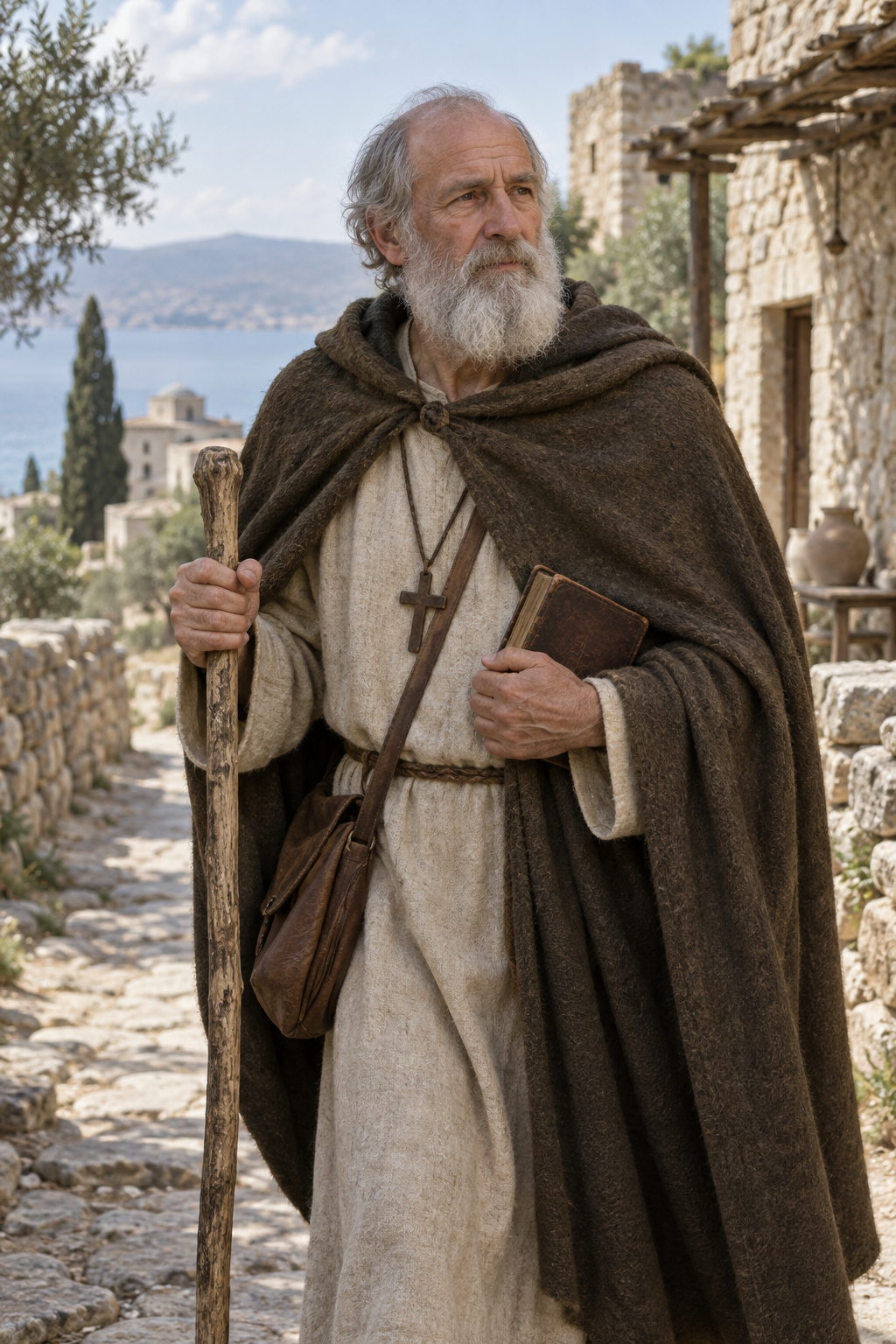
About Willibald
Huneberc's preface calls Willibald her bishop and explains that she gathered the account from his own speech before members of his community. She presents the work as a memorial to his life and travels, not as a detached itinerary. The introduction to the Fordham edition identifies Huneberc as an Anglo-Saxon nun at Heidenheim and describes the work as the only surviving narrative of an eighth-century pilgrimage to the Holy Land. Because the text was composed for a religious audience, its account of miracles and sacred places is preserved as the author's devotional testimony.According to Huneberc, Willibald was raised in Northumbria and entered monastic life as a boy. The narrative tells how he and his brother Wynnebald set out with their father, reached Rome, and later continued eastward on pilgrimage. It records a long itinerary through the Mediterranean and the eastern Christian world, including Jerusalem and other places associated with biblical history. These details are evidence for the route Huneberc attributes to Willibald and for early medieval pilgrimage memory; they are not a modern gazetteer, and some place identifications in the older translation are explicitly uncertain.Huneberc says Willibald returned to Italy and lived for years at Monte Cassino, where he held monastic duties. The narrative then describes Pope Gregory III summoning him and directing him, at Boniface's request, to travel to the Frankish territories. The account establishes how Heidenheim's community remembered Willibald's transition from pilgrim and monk to missionary bishop, though it gives events through a saint's-life perspective. The childhood story supplies no precise birth date or securely dated early events.The account is strongest when describing Willibald's pilgrimage and the way his community remembered his service. The Hodoeporicon is not a neutral modern biography: Huneberc arranges events to praise a bishop, reports religious marvels, and explicitly relies on his oral account.
Wondering how to weigh the stories and sources? Learn how to read a saint biography.