Biography
Winifred of Holywell
About Winifred of Holywell
Winifred, known in Welsh as Gwenfrewi, is remembered at Holywell and Gwytherin in north Wales. Her personal story survives in twelfth-century religious lives. The Dictionary of Welsh Biography therefore treats these traditions cautiously, while identifying her close association with Beuno’s cult and her probable later residence at Gwytherin.
The shrine’s account tells of Caradoc pursuing Winifred when she rejected his advances. He kills her as she flees toward the church; a spring rises where her severed head falls. Beuno replaces her head and prays, and she returns to life. Caradoc disappears into the ground. These are the central episodes of the legend, not independently verified events.
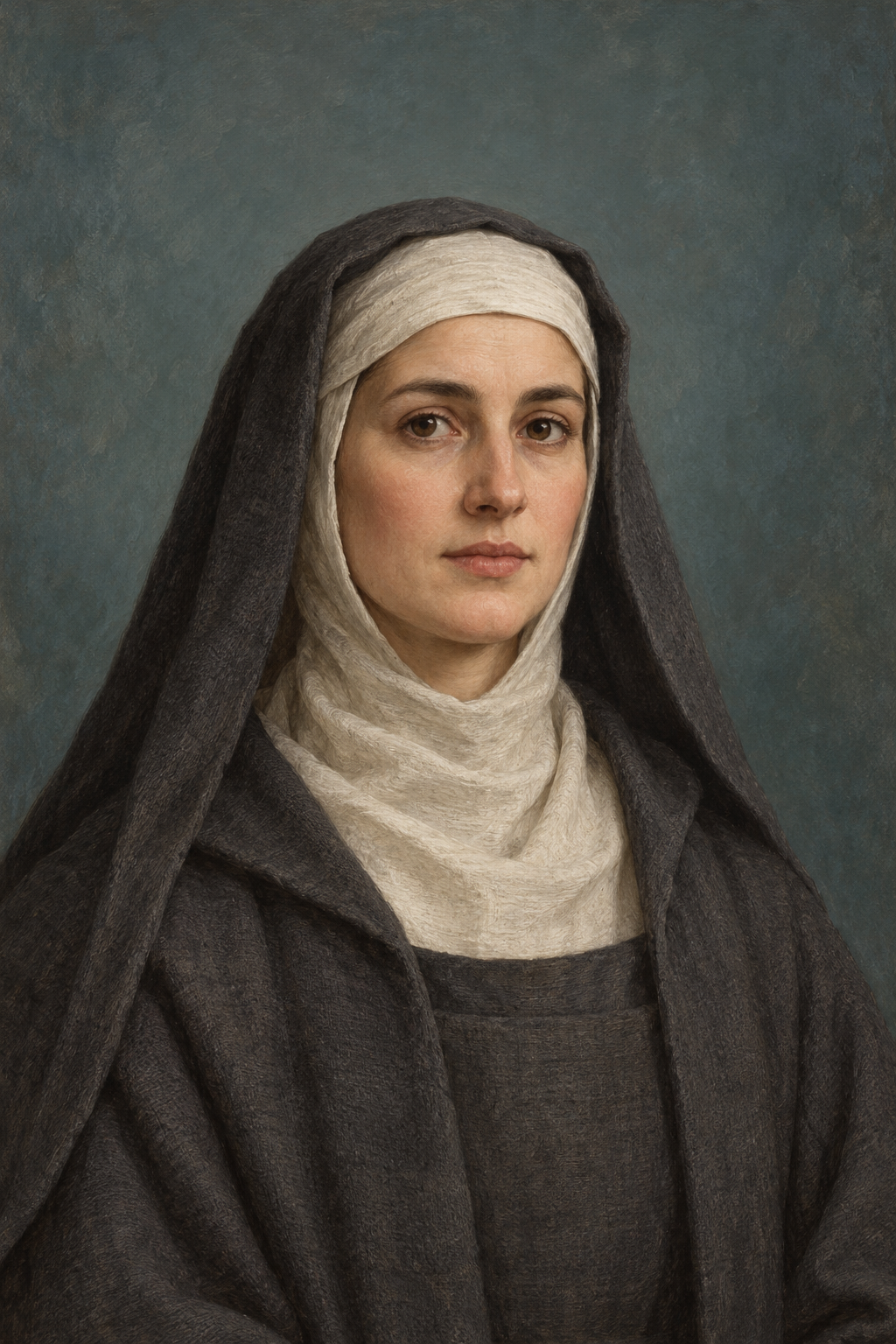
The same tradition remembers Winifred as a nun who later led a community at Gwytherin. Her religious vocation, rather than only the violent episode, is part of the story preserved at her shrine. Material objects offer a different kind of evidence for her remembrance. The shrine museum identifies a surviving portion of a wooden reliquary, the Arch Gwenfrewi, as dating to about 800. This is evidence of an early devotional tradition; it does not establish every episode of the later biographies.
The surviving well-chapel at Holywell is much later. Cadw dates its construction to the late fifteenth century and considers Margaret Beaufort its probable patron. Its elaborate vaulting, carved decoration and spring basin gave architectural form to an established place of pilgrimage. Cadw records a reference to pilgrimage there in 1115.
Winifred’s remembrance also belongs to Shrewsbury. A church bulletin identifies her as patron of its church and secondary patron of the diocese. These dedications preserve a continuing religious relationship with the Welsh saint.
Wondering how to weigh the stories and sources? Learn how to read a saint biography.