Biography
Wulfstan of Worcester
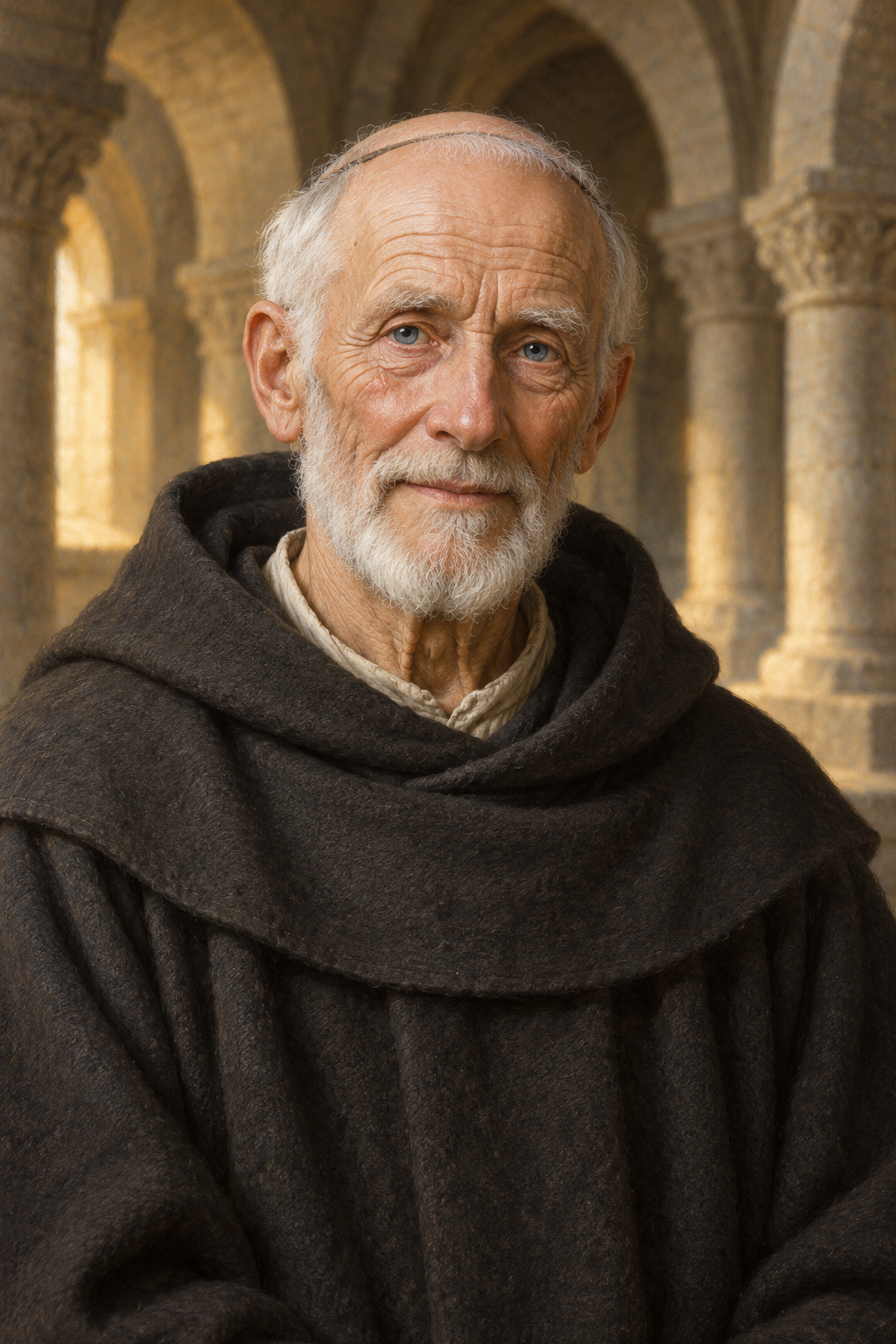
About Wulfstan of Worcester
Wulfstan of Worcester was a monk and bishop whose ministry crossed the Norman Conquest of England. Born around 1008, he held offices in Worcester’s monastic community before becoming bishop in 1062. He remained in office after 1066, and the cathedral’s account identifies him as the only English-born bishop still serving in England by 1075. His long episcopate linked the older community at Worcester with a changed political and ecclesiastical world.
Hunter-Blair and Hunt identify his birthplace as Long Itchington near Warwick, while the New Catholic Encyclopedia gives Little Itchington; the former identification is retained here as probable, with the disagreement acknowledged. His early education took place at Evesham and Peterborough. After entering the service of the bishop of Worcester and receiving ordination, he became a monk of the cathedral priory. He eventually served as prior before being chosen as bishop. The Catholic Encyclopedia describes a pastoral life marked by visiting, preaching and confirmation, together with the discipline he had learned in the monastery. It recalls him praying the psalms with his attendants while traveling on horseback. These accounts present monastic prayer and responsibility for a wider diocese as connected parts of his vocation. The same reference dates his consecration to September 8, 1062, following the recommendation of two visiting Roman cardinals.
William Hunt’s account in the Dictionary of National Biography adds a glimpse of the school in which he learned. At Peterborough his teacher was Ervenius, a scribe and illuminator associated with books made for King Canute and Queen Emma. Before becoming prior, Wulfstan served as schoolmaster, precentor and sacristan. Those offices placed teaching, the ordering of worship and care of the monastery’s sacred property within his experience before he took responsibility for the diocese.
The community he governed also grew. Colette Davies’s account for Worcester Cathedral Library describes an increase in the number of monks and points to Wulfstan’s charter as evidence of the provision of additional land. His approach to reform could be demanding: the same account records his opposition to married clergy and places it within the wider movement for clerical discipline. His work therefore involved the practical organization of the monastery and the enforcement of church expectations, as well as personal devotion. Davies gives the growth as twelve monks when he became prior and fifty during his episcopate. The charter she discusses dates from 1089. Her account connects the additional land with the enlarged community’s needs, giving a concrete example of the material provision required to sustain its common life.
Wulfstan’s survival in office after the conquest did not mean that he stood apart from politics. The New Catholic Encyclopedia describes his submission to William I, subsequent administrative service, and support for the king against the rebellion of 1075. It also records disputes with senior church leaders. He worked within the new regime while defending the responsibilities and interests of his episcopal office.
The disputes included the revenues and estates attached to Worcester. Hunt describes a prolonged effort to recover twelve manors retained by Archbishop Aldred, followed by a royal decision in Worcester’s favor in 1072. Relations with the archbishops changed over time: Wulfstan also assisted them with diocesan visitations. In 1085 he helped the commissioners undertaking the Worcestershire survey for Domesday. These administrative duties form part of the same career as his preaching and monastic observance.
He is especially remembered for opposing the trade in enslaved people from Bristol to Ireland. An excerpt from William of Malmesbury’s Life of Wulfstan describes men and women purchased in England and transported for sale. The writer’s account condemns the treatment of people as merchandise, including the sale of relatives under the pressure of poverty, and credits Wulfstan with ending the custom among Bristol’s traders. This is testimony from a saint’s life and should be identified as such. It supports the remembered campaign against a particular trade, rather than a claim that Wulfstan abolished every form of slavery throughout Britain.
His rebuilding of Worcester Cathedral left a lasting physical memorial. The cathedral dates the surviving crypt to 1084, during his episcopate. The building remains an important witness to his work even though his later shrine was destroyed during the Reformation.
Wulfstan died in January 1095 and was canonized by Pope Innocent III in 1203. He became one of the patron saints of the See of Worcester, and his patronage is also recorded for Worcester in Massachusetts. These are separate places, and the English see should not be confused with the American city.
His feast is kept locally on January 19. In a 2025 reflection, Dean Stephen Edwards invited people to visit Worcester Cathedral in thanksgiving for Wulfstan’s life. He described the crypt as a place of prayer and recalled the generations of pilgrims who had visited the shrine. Such remembrance connects the cathedral’s present worship with its medieval history while leaving the surviving building, later devotional traditions and early biographical testimony in their proper settings.
Wondering how to weigh the stories and sources? Learn how to read a saint biography.