Biography
Zachary
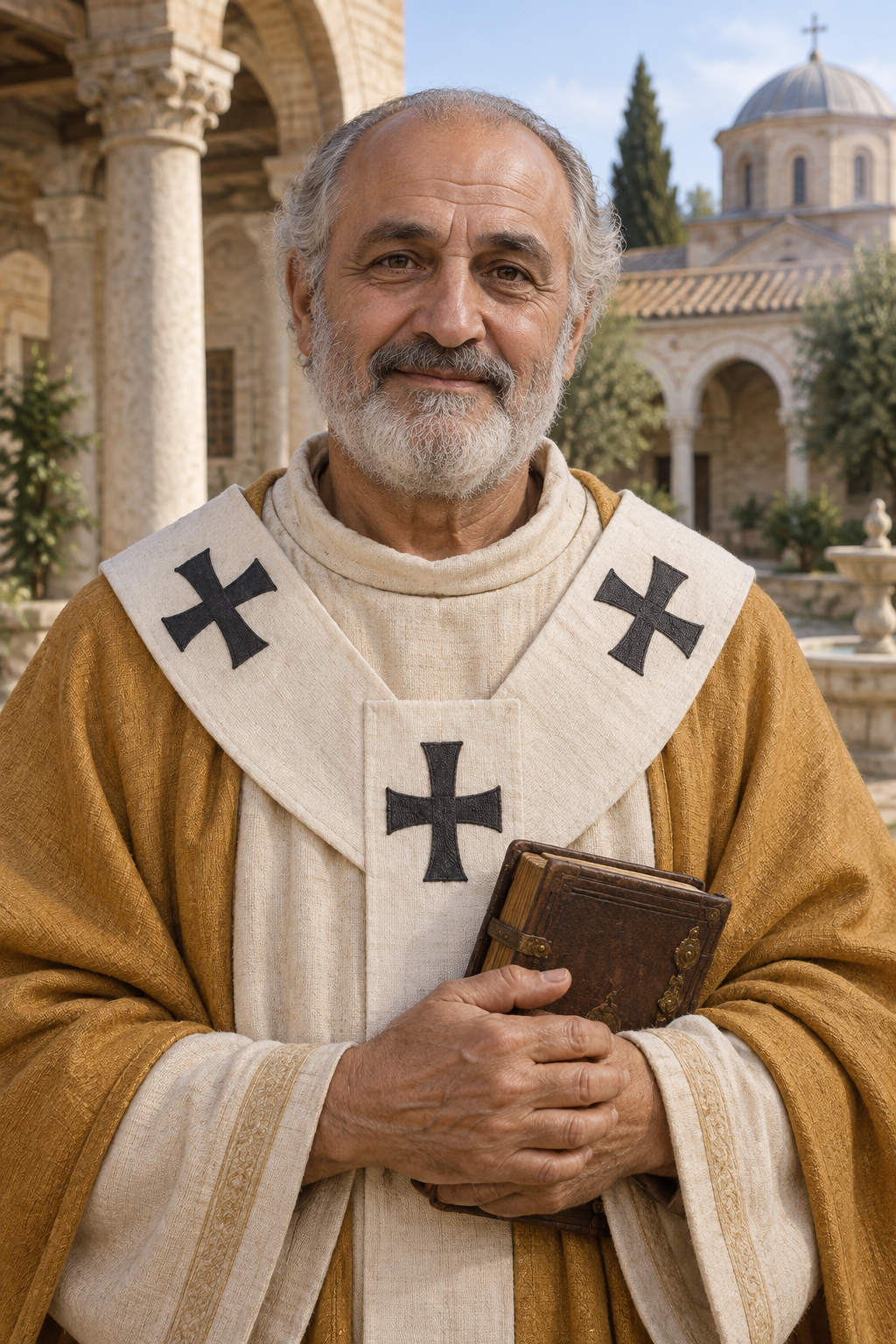
About Zachary
Zachary became pope in December 741, taking responsibility for a Church whose affairs reached well beyond Rome. The Holy See dates his pontificate from 3 December 741 to 15 March 752 and lists him as the ninety-first pope.
His early years are much less clear. Historian Paolo Delogu identifies a Greek background and a father named Polychronius, but regards both his birthplace and birth date as unknown. Once pope, Zachary had to work among competing powers: Lombard kings, the Byzantine emperor and the rulers of the Franks.
One of his first tasks was to reduce the threat of war around Rome. Rather than relying on an alliance against the Lombard king Liutprand, he went to speak with the king at Terni. The negotiations brought the return of four towns and estates belonging to the Roman Church, together with a truce lasting twenty years. When Ravenna was threatened, Zachary again intervened, travelling north to plead for the city and its territory. These were practical negotiations about communities, land and security, not simply exchanges of ceremonial greetings. His work required him to meet the ruler whose expansion had made those communities afraid, and to seek concessions that could make daily life less precarious. Kirsch also recalls him buying people whom Venetian merchants intended to sell abroad, intervening directly on behalf of those facing enslavement.
Relations with Constantinople demanded a different kind of patience. The emperor's campaign against religious images had strained relations with Rome. Émile Amann describes Zachary sending a letter that maintained the Roman defense of images while continuing communication with the imperial Church. His representatives reached Constantinople during a contest for the throne, finding Artavasdus in power. When Constantine V recovered his position, they were able to deal with him and obtain a substantial gift of land for the Roman Church. Zachary's diplomacy did not require him to abandon his religious convictions, but it did require him to communicate with people whose policies he opposed. Amann presents the relative calm of these years as an opportunity for church reform, rather than the final settlement of the disagreement about images.
Letters show him dealing with concerns closer to parish life. In July 746 he answered a report that Boniface had ordered some Christians to be baptized again because a priest had used faulty Latin. Zachary distinguished a grammatical mistake from an intention to teach error. If the report was accurate, he instructed Boniface not to repeat the baptisms. The exchange preserves a measured correction: he questioned a proposed remedy while making his judgment conditional on what had actually happened.
Zachary received Carloman into monastic life when he came to Rome. Einhard's later account describes Carloman leaving public power and going to Rome, where he exchanged secular clothing for a monk's habit. He founded a monastery on a mountain near the church of Sylvester. Important visitors from the Frankish lands repeatedly interrupted the quiet he wanted, and he eventually moved to Monte Cassino. Einhard admits that he does not know why Carloman originally withdrew. His portrait of a ruler searching for seclusion offers a human counterpoint to the contests for authority that filled these years. Carloman's brother Pippin remained in government, holding the office through which the family's power had grown while the Merovingian king retained the royal name.
Zachary's work in Rome included organizing directly managed church farms to support the city's needs and its poor. He also translated Gregory the Great's Dialogues into Greek. Near the end of his life, Pippin sought a judgment about the Frankish kingship: should its title belong to someone who did not exercise its power? Delogu stresses that the report of Zachary's favorable answer survives in Frankish sources. Pippin's accession opened a connection whose importance would grow under later popes.
There is also a surviving material setting for his time. At Santa Maria Antiqua, the chapel of Theodotus preserves a cycle depicting the martyrdom of Quiricus and Julitta, dated by the archaeological park to Zachary's pontificate. Elsewhere in the church, saints of the Greek and Latin Churches stand around Christ. The paintings place the worship of those communities before the visitor's eyes. The church was rediscovered in 1900, after centuries out of use; that rediscovery belongs to the history of its reception, not to Zachary's lifetime. The building stands below the Palatine.
The Zeri Foundation's catalogue identifies Zachary himself in a fresco in the chapel of Theodotus. Its subject brings him together with Mary and the child Jesus, Peter, Paul, Quiricus, Julitta and Theodotus. The anonymous Roman work is dated approximately between 741 and 752. This is a witness from the artistic world of his pontificate, distinct from a modern devotional portrait or an imagined scene from his childhood.
Zachary died in 752; Getty's authority record locates his death in Rome. Vatican News remembers him on 15 March.
Wondering how to weigh the stories and sources? Learn how to read a saint biography.
Explore similar vocations
Prayers for Zachary
Zachary: sourced prayer excerpt
O Master, pardon our transgressions.