Biography
Zygmunt Szczęsny Feliński
About Zygmunt Szczęsny Feliński
Zygmunt Szczęsny Feliński was born in Wojutyn, Volhynia, on November 1, 1822. The existing catalog stores that birthplace and full date, and this draft preserves both fields.
The page should make Volhynia legible without overexplaining borders. The sources themselves frame the region through changing political conditions, so the biography should keep the historical place label and avoid modern nationalist shorthand.
Feliński's early life included study, intellectual formation, and discernment before priesthood. The narrative can mention education and movement across European settings without becoming a travel list.
He entered priestly formation and was ordained for Catholic ministry. That formation matters because his later episcopal witness did not begin with public office; it grew from prayer, study, pastoral concern, and disciplined service.
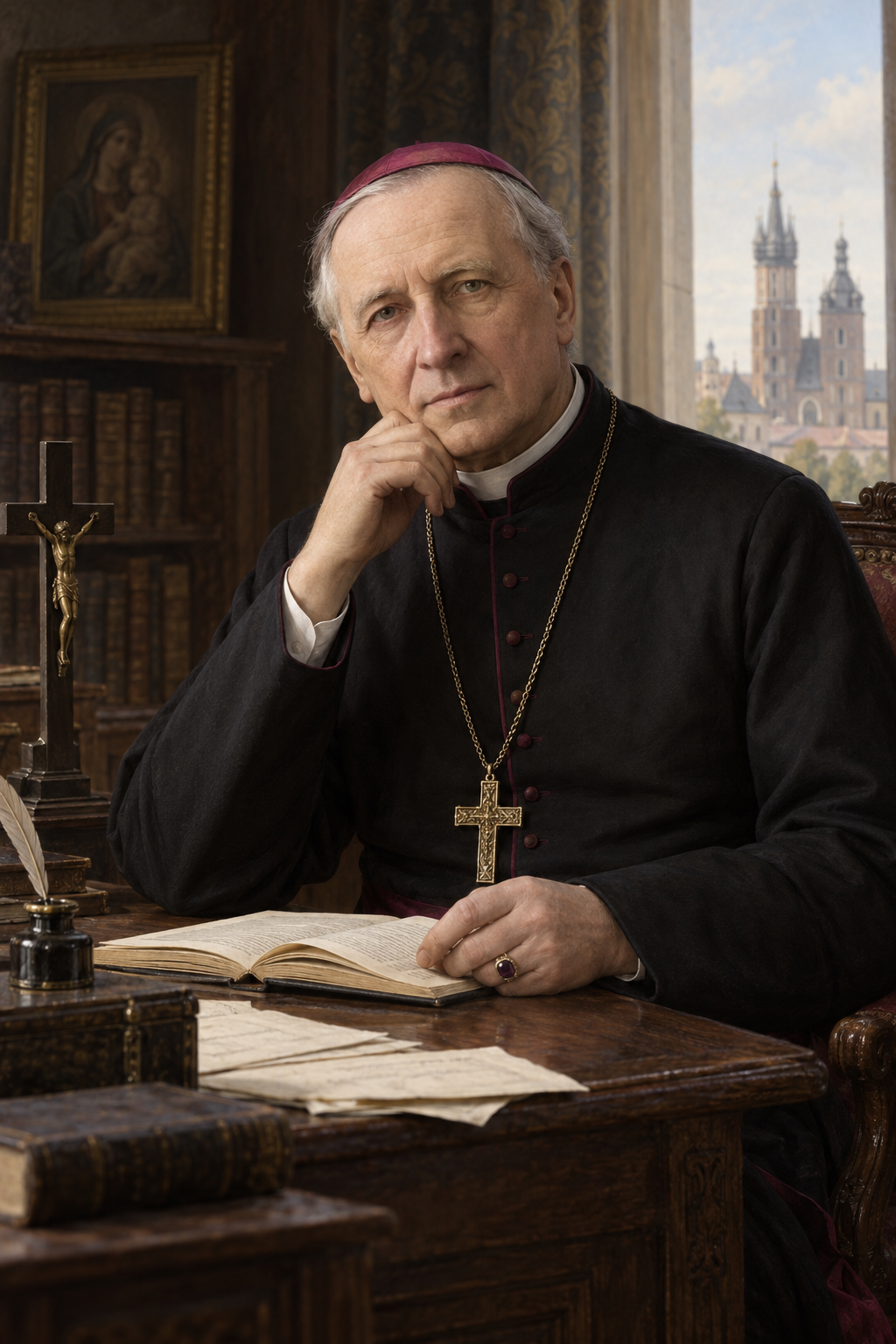
The catalog classifies him as a bishop, and this draft preserves that class. In art, he should appear with a modest episcopal cross and cassock, not in excessively ornate vestments or as a political statesman.
In 1862 Feliński became Archbishop of Warsaw. The sources describe his ministry there as brief but intense, set amid political pressure and suffering for the church and society.
The biography should tell that episode soberly. It can say that he defended the freedom of the church and the dignity of oppressed people, but it should not turn the saint page into a partisan history of the January uprising.
His archbishopric was cut short when imperial authorities removed him from Warsaw and sent him into exile. The page should treat exile as a spiritual and pastoral trial, not as a dramatic set piece.
Exile matters because it tested whether his ministry depended on office, visibility, or control. The sources remember him continuing pastoral, educational, and charitable work even when separated from his see.
That separation should not be treated as an empty pause in the story. It became another field of obedience, prayer, correspondence, and service, with fewer public tools but the same pastoral purpose.
That resilience should shape the article. Feliński's witness was not merely that he held office bravely, but that he continued to serve when office was restricted and ordinary influence was stripped away.
The foundation of the Franciscan Sisters of the Family of Mary belongs in the page because it shows his pastoral care becoming durable. The congregation expresses concern for education, family, children, and vulnerable people in a form that could outlast one bishop's direct action.
The biography should connect foundation and exile rather than isolate them. Both show a pastor trying to protect faith, family, and human dignity through structures that could survive pressure.
The artwork can use papers, a book, simple crucifix, and episcopal cross to suggest teaching and pastoral governance. It should avoid flags, military imagery, and courtroom-style conflict.
That visual restraint protects the page's spiritual focus. Feliński lived in a politically charged world, but the saint profile should foreground fidelity, mercy, and pastoral responsibility.
After years away from Warsaw, his later life continued to be marked by service and quiet perseverance. The page can describe that continuity without creating unsupported private scenes or invented dialogue.
The existing catalog records his death in Kraków on September 17, 1895, and this draft preserves both the death date and place. The feast field already matches September 17 and is preserved.
He was beatified in 2002 and canonized in 2009. Those recognitions should be included concisely, because the page's center is the shape of his life: formation, archbishopric, exile, foundation, and persevering charity.
The Dicastery profile and canonization context support the public Catholic identity of the record. This draft uses that official context without making the biography depend on homily language or long ceremonial detail.
The page should also distinguish Feliński from Zygmunt Gorazdowski, the adjacent catalog record. Both were canonized modern Polish saints, but Feliński's path is episcopal office, exile, and foundation rather than Lviv parish charity.
That distinction should appear in the packet and artwork. A bishop's cassock, pectoral cross, study, and restrained city background fit Feliński better than the diocesan-priest office and bread/blanket charity cues used for Gorazdowski.
The final article should present Feliński as a bishop whose fidelity remained pastoral under pressure. He did not serve only when history was favorable; he kept serving when obedience, conscience, and compassion became costly.
His relevance is concrete for people carrying responsibility amid conflict. He shows that leadership can resist injustice without losing gentleness, and that institutional service can still be an act of mercy.
Artwork should show a nineteenth-century Catholic bishop in simple black cassock with modest pectoral cross and episcopal ring, in a restrained study with crucifix, book, papers, and distant church architecture. Avoid flags, military or uprising scenes, ornate ceremonial vestments, readable text, halos, and exact-likeness claims.
The badge crop should keep his face, zucchetto, cross, hand, and book visible. It should read as sober episcopal fidelity rather than political drama.
Wondering how to weigh the stories and sources? Learn how to read a saint biography.