Biography
Absalom Jones
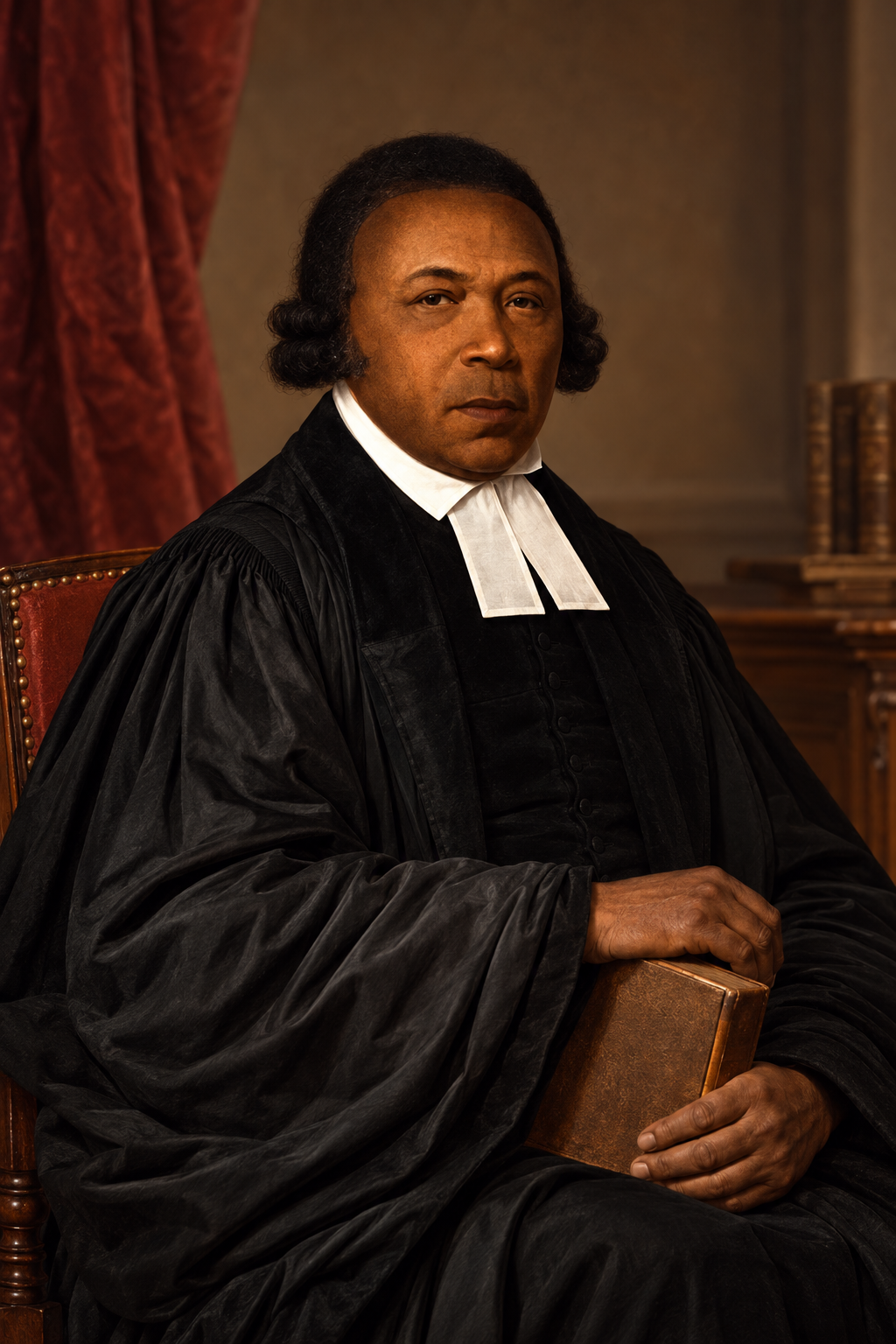
About Absalom Jones
Absalom Jones was born enslaved in Sussex, Delaware, on November 6, 1746. In his own account of his early life, he remembered saving small gifts of money to buy books and asking willing teachers for help. Reading opened a way to further learning. After he was brought to Philadelphia in 1762, he learned to write well enough to send letters to his separated family. He later attended night school to study arithmetic.
Jones dated his marriage to 1770. His wife was also enslaved, and he and his father-in-law raised money through loans and gifts to purchase her freedom. He described years of additional work to repay the borrowed money. His requests for his own freedom were initially refused. He finally received a manumission on October 1, 1784, and continued working for wages.
In Philadelphia, Jones and Richard Allen became partners in religious and community work. Both served the Black members of St. George’s Methodist Episcopal Church as lay ministers. They also established the Free African Society to support people facing poverty, bereavement, and enslavement.
The growth of the Black congregation at St. George’s brought a confrontation over segregation. Church leaders assigned Black worshippers to a separate gallery without notifying them. When ushers tried to move congregants, the group left. The new African church that followed sought admission to the Episcopal Church on specific terms: recognition as an organized congregation, authority over its own affairs, and a path for Jones to become its minister.
During Philadelphia’s yellow fever epidemic in 1793, Jones and Allen helped organize care for sick residents and the burial of the dead. Their published account describes consulting the mayor, finding nurses, and hiring additional workers as deaths increased. They also recorded the suffering of Black residents, challenging the belief that African Americans were protected from the disease. Their testimony makes clear that those providing care were themselves exposed to danger.
In 1794 they published their account to answer accusations against Black nurses and other workers. They acknowledged misconduct by some individuals but rejected the treatment of an entire community as blameworthy. They included an accounting of expenses and receipts, reporting that their own burial work had cost more than it brought in. The pamphlet preserved both a record of relief work and a public challenge to racial prejudice.
The African Church was dedicated in July 1794 and entered the Diocese of Pennsylvania later that year as the African Episcopal Church of St. Thomas. Bishop William White ordained Jones a deacon in 1795 and a priest on September 21, 1802. The church’s official commemorative account describes a growing congregation engaged in education and opposition to slavery, as well as a pastor known for visiting those in his care.
Jones’s work for freedom also reached Congress. On December 30, 1799, he and seventy other free Black men from Philadelphia and its suburbs signed a petition concerning slavery and kidnapping. They asked for protection for free people threatened with capture and sale, an end to the international slave trade, and measures leading toward emancipation. Their appeal drew on the country’s declared principles of liberty and on Christian obligations toward other people.
The petition did not demand the immediate emancipation of everyone held in slavery. Its authors instead urged action toward freedom while describing the suffering caused by the trade in human beings. Representative Robert Waln introduced it in the House on January 2, 1800. According to the National Park Service’s account, it provoked debate but did not win congressional approval.
On January 1, 1808, Jones preached a thanksgiving sermon at St. Thomas marking the beginning of the United States prohibition on importing enslaved people. He took his text from Exodus, interpreting the Israelites’ deliverance as evidence of God’s concern for the oppressed. He described the violence of the slave trade, including the separation of families, and called the congregation to thanksgiving.
His sermon also looked beyond that day’s celebration. Jones urged continuing prayer for people who remained enslaved and for changes in their treatment and opportunities for learning. He insisted that religious celebration should be accompanied by corresponding conduct. These were his stated convictions as a preacher: faith required attention to people whose freedom and dignity were still denied.
Ordination did not end the barriers facing Jones’s congregation. The Diocese of Pennsylvania’s history records that St. Thomas remained excluded from its annual convention during his lifetime. Jones nevertheless continued his pastoral and educational work, opening a day school for African American children in 1804. He died on February 13, 1818.
A portrait painted by Raphaelle Peale in 1810 survives in the Delaware Art Museum. Its preservation provides a contemporary likeness of the minister whose work connected a Philadelphia congregation with education and abolition.
The Episcopal Church commemorates Jones on February 13. Its remembrance places his ministry within the church’s history of Black leadership and the struggle against slavery: pastoral care, education, and the building of a congregation were enduring parts of the life it honors.
Wondering how to weigh the stories and sources? Learn how to read a saint biography.