Biography
Adelelmus of Burgos
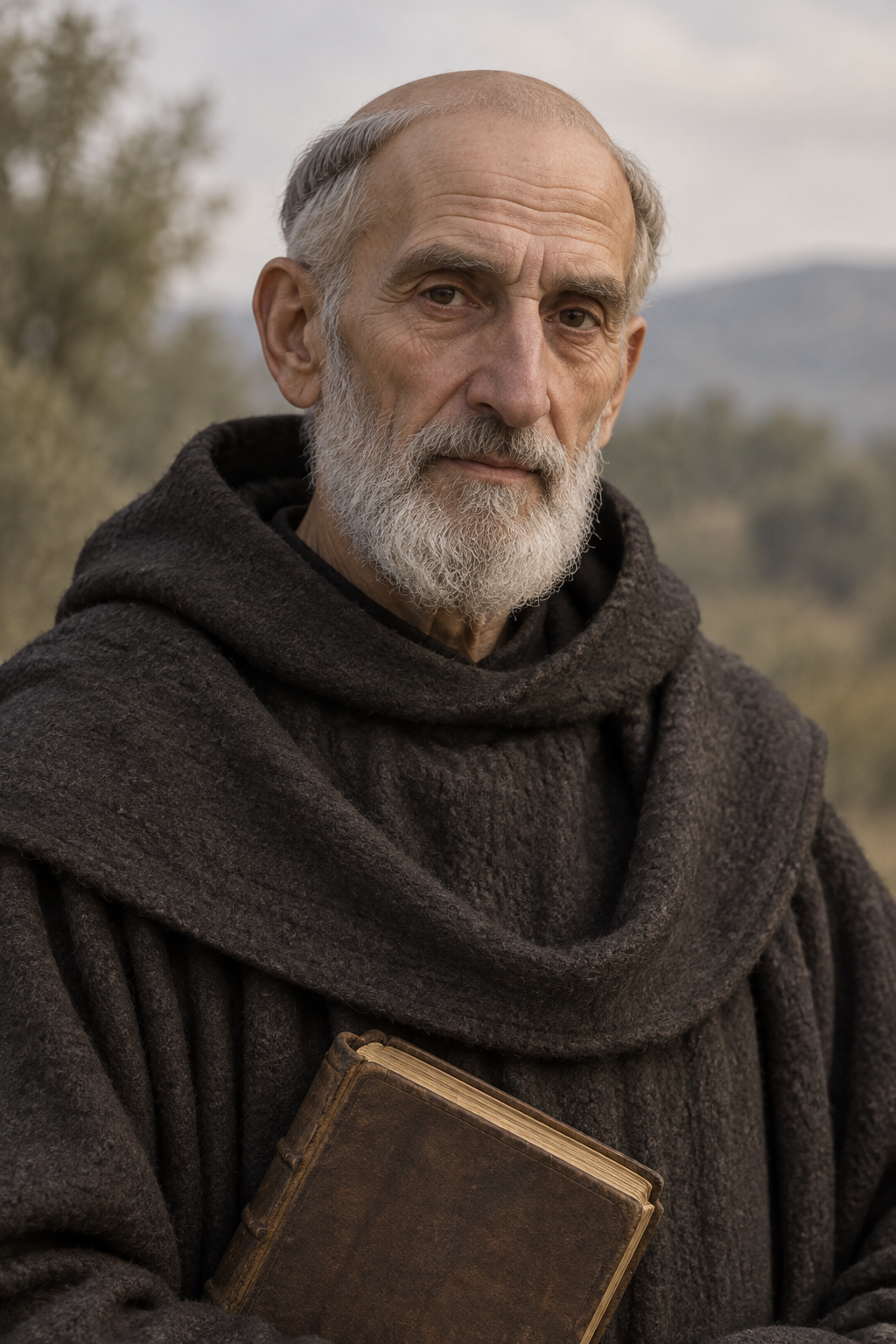
About Adelelmus of Burgos
Adelelmus, known in Spain as Lesmes, is remembered in Burgos for a life that brought together Benedictine prayer, service to travellers and attention to the needs of a growing city. The archdiocesan account places his origins at Loudun in France and presents him first as a soldier who later became a monk.
The parish biography describes a household in which his father’s military profession also shaped the son’s early choice of work. It relates that the death of his parents was followed by his decision to leave military life and devote himself to religious service. The sources do not agree on a precise birth year: the parish gives 1035, while the archbishop’s account gives 1030.
Rodulf’s Life places the beginning of his change in his disposal of inherited possessions. It describes him distributing his wealth to poor people rather than preserving it for relatives, who objected to his decision. The account frames that choice through the Christian command to give to those in need, making charity central before his departure from France.
He then set out on pilgrimage to Rome. On the journey he met Robert of Turlande at Issoire and came under the influence of the founder of La Chaise-Dieu. The Norwegian church account describes the meeting as decisive for his wish to become a monk, while preserving the distinction between his pilgrimage and his eventual entry into the community. After completing the journey, he returned to La Chaise-Dieu in Auvergne and joined its Benedictine monks.
The parish account remembers his work there as a novice master before his election to lead the monastery. His reputation in France brought an invitation to Spain. This monastic narrative connects him with the Castilian court.
Rodulf’s narrative also has him relinquish the abbacy after several years because he wished for greater freedom to pray.
Queen Constance of Burgundy, the wife of Alfonso VI, urged him to come to Burgos. The church biography dates the invitation to 1079, although the secure documentary evidence for the Burgos foundation belongs to a later stage. There Alfonso provided a church and hospital from which the community of San Juan developed.
The archdiocese connects his arrival with the reform of worship from the Hispano-Mozarabic liturgy to the Latin rite. It remembers him as an adviser called by the king and queen and associates the mission with Pope Gregory VII. That account places his monastic service within the reforming church of the eleventh century.
A royal grant dated 3 November 1091 provides a firmer point in the chronology. The Municipal Archive of Burgos identifies its surviving Latin parchment as the oldest original document in its collection. It records Alfonso VI granting San Juan Bautista to the French monastery of Casa Dei in the person of Lesmes, with an estate, oven, mill and royal rights in Cótar. The grant also declared the monastery’s immunity.
The foundation stood beside the Vena near its meeting with the Arlanzón, at the approach by which pilgrims entered Burgos. The study of the medieval city emphasizes the provision that either a Frank or a Castilian from Burgos could seek reception at the monastery. That provision gave the establishment a place within a city containing people of different origins. The study also connects San Juan with the growth of a neighbouring district, La Puebla, whose name survived in the streets of Burgos.
In the parish’s remembered account, Lesmes settled in a modest house beside the chapel and took responsibility for worship and the care of pilgrims. It describes him personally tending travellers’ wounds and welcoming poor people as well as those on their way to Santiago. Benedictine community life and hospitality were thus joined in the foundation he led.
The archive’s historical account also associates him with drainage channels in the wet ground between the Pico and Vena rivers. It connects those works with healthier ground that could be used for cultivation, pasture and urban settlement. This civic memory extends his reputation beyond the walls of the monastery.
A later story places him with Alfonso’s army at Toledo, but the modern editor warns that this need not refer to the conquest of 1085. The episode may instead reflect a royal journey in 1091, so it cannot securely establish the familiar dramatic account of his role in the conquest.
His death is generally placed in 1097. The Norwegian account describes his receiving the sacraments from Peter, bishop of Pamplona, and being buried in the church of San Juan. January 30 became his commemoration, although that account treats it as a possible death day.
The early Life survives with a complicated textual history, including passages formerly printed from a damaged witness. The modern editor’s reconstruction also proposes January 28 as the likely death day, which leaves the exact date uncertain.
The monastery continued serving Burgos long after its founder’s death. The archdiocese’s account of its legacy recalls French monks from Casa Dei, pilgrims from across Europe, townspeople and those who worked the convent’s lands meeting around the same community. The adjoining hospital remained under Benedictine care until the nineteenth-century dissolution. The surviving monastery buildings and the city’s continuing devotion to Lesmes preserve that long association of prayer with hospitality.
Wondering how to weigh the stories and sources? Learn how to read a saint biography.