Saint profile
Ælfheah of Canterbury
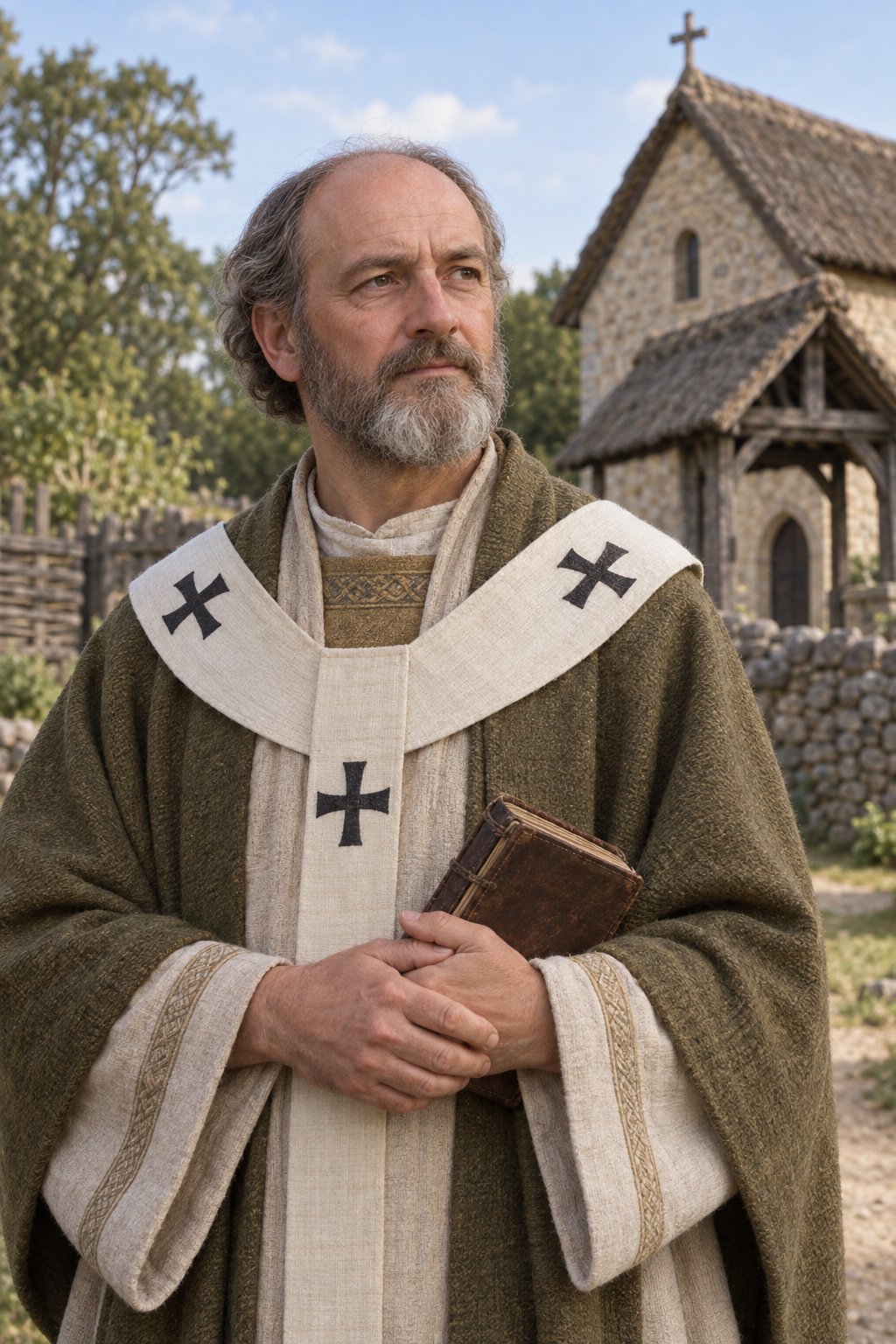
About Ælfheah of Canterbury
Ælfheah, often called Alphege in later English sources, entered the historical record as a monk and bishop in an England whose churches and kings faced repeated Scandinavian raids. The earliest stages of his life are less secure than the events of his public career. Later biographies place him at Deerhurst and Bath and describe a period of solitary religious life. They may preserve genuine memory, but they were written after his death and give no firm basis for a precise birthplace or birth year. His life is clearest where contemporary annals and later critical accounts meet.
After Bishop Æthelwold died, Ælfheah became bishop of Winchester in 984. The Anglo-Saxon Chronicle gives his consecration and installation dates, showing that his office is secure even though the later story of how he was selected is harder to verify. Winchester was an important center of the English church, and its bishop could be drawn into affairs beyond his diocese. Ælfheah's subsequent appearance in a royal embassy shows that he did not live solely within a monastery or episcopal residence.
In 994, after attacks on southern England, King Æthelred sent Ælfheah and the ealdorman Æthelward to bring the leader Anlaf to a meeting at Andover. The Chronicle says Æthelred stood as sponsor at Anlaf's confirmation and that Anlaf promised to stop attacking England. It does not establish that Ælfheah baptized the ruler or personally converted him. The episode nevertheless places a bishop in a diplomatic effort amid war and tribute. It also shows why the royal court valued a church leader who could serve in both pastoral and public roles.
Ælfheah moved from Winchester to Canterbury after Archbishop Ælfric died. The Chronicle says he succeeded in 1005 and was consecrated in 1006; later summaries sometimes use one year for the whole transition. Describing both steps avoids making a false disagreement out of the dates. Canterbury gave him leadership of the southern English archbishopric just as raids and demands for payment were straining the kingdom. The available record gives glimpses of his public role, but it does not let a modern writer reconstruct his ordinary days as archbishop.
The siege of Canterbury in 1011 brought this larger conflict directly to his city. The Chronicle places the attack between the feasts of Mary's Nativity and Michaelmas and reports that the raiders entered, took captives, and carried Ælfheah away. It names other people seized with him and laments the harm to Canterbury. This is an English ecclesial account, written with grief and moral judgment. Its capture report is strong evidence, while its interpretation of every motive or detail of the fighting requires caution. Ælfheah was a prisoner as the king and his advisers negotiated with the army.
The raiders held Ælfheah into the following spring. According to the Chronicle, they demanded money for him, and he refused to promise payment or allow others to collect it on his behalf. The account does not give a private diary or a speech in his own words. Later retellings explain his refusal as a wish to spare already burdened people, a plausible reading but one that should be attributed to those accounts rather than stated as a known inner motive. The decision made his captivity inseparable from the public cost of ransom and tribute.
On 19 April 1012, the captors assaulted Ælfheah. The Chronicle says they struck him with cattle bones and that an axe blow ended his life. Canterbury sources locate the killing at Greenwich. The annalist calls him a martyr, and later churches preserved that title. Yet a later Canterbury discussion asked how a death over ransom related to martyrdom for religious faith. It is possible to report both the violent historical event and the church's interpretation without pretending the later debate never happened. His body was taken to London and buried at St Paul's.
The Chronicle records that his remains were brought from London to Canterbury in 1023. Canterbury Cathedral explains that later accounts associated King Cnut with the translation and that the remains came to rest near the high altar. That movement gave Ælfheah a prominent place in the city's worship and memory. Medieval windows and tomb traditions kept the story visible long after the political crisis of his lifetime had passed. These are evidence of devotion to him, not eyewitness portraits or proof of every miracle told in later lives.
The Church of England remembers Alphege on April 19 as archbishop and martyr. The Catholic tradition also honors him, though the sources used here do not establish that every church keeps the same rank or calendar. His significance rests in more than the manner of his death. The surviving annals show a bishop serving in diplomacy, leading Canterbury during invasion, and refusing a ransom before his killing. They also show how the English church interpreted his loss and carried his memory into a new political age under Cnut.
Wondering how to weigh the stories and sources? Learn how to read a saint biography.