Biography
Agostino Roscelli
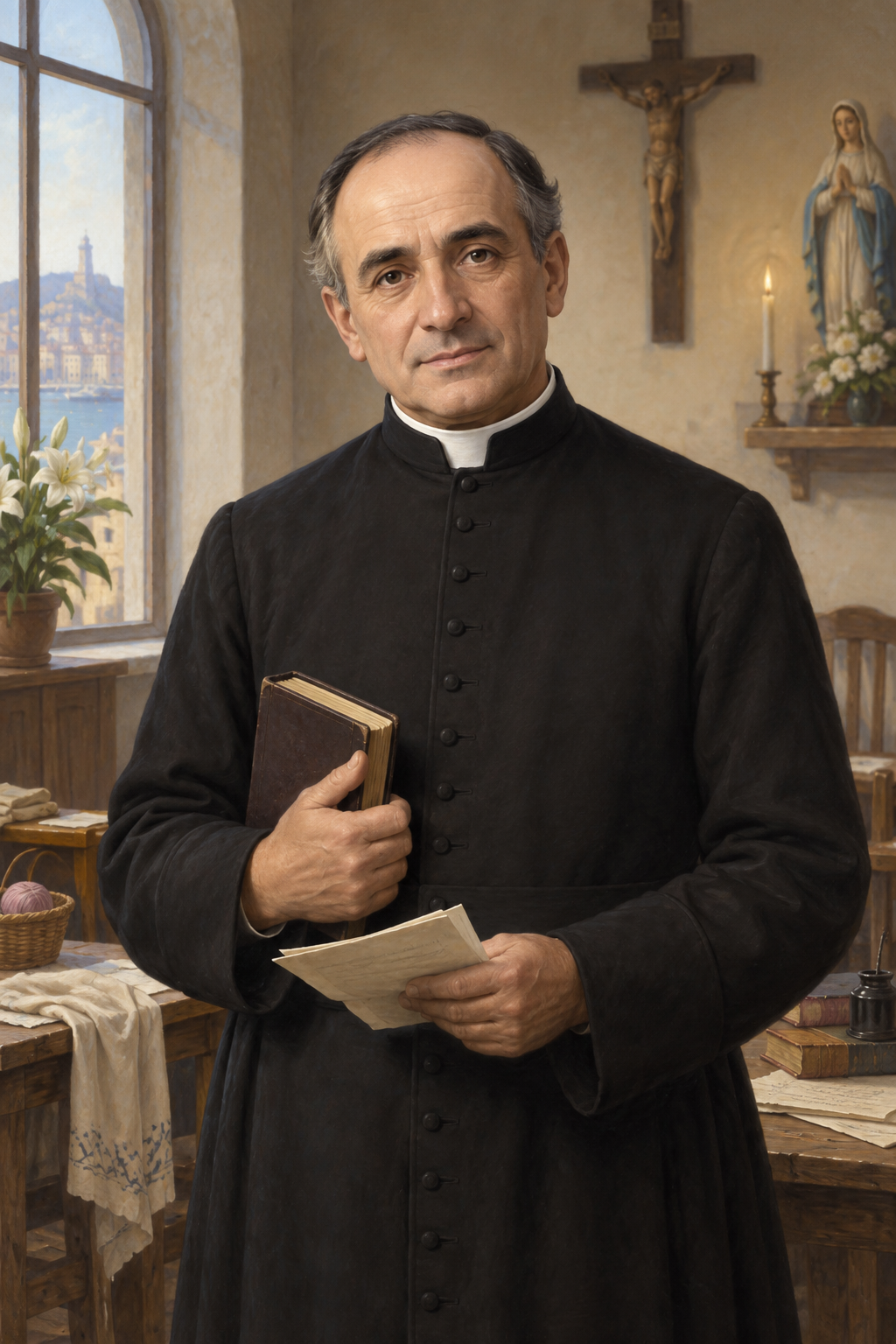
About Agostino Roscelli
Agostino Roscelli was born at Bargone di Casarza Ligure on July 27, 1818. The says he was baptized the same day because there was fear for his life. It names his parents as Domenico and Maria Gianelli and presents his family as materially poor but rooted in Christian faith.
The source describes a reserved and intelligent boy who helped his family by tending the flock. His first education came through the local parish priest, Don Andrea Garibaldi. In May 1835, during a mission preached by Antonio Maria Gianelli, Agostino discerned a decisive call to the priesthood and moved to Genoa for studies.
His formation was not easy. The Dicastery account says he faced serious economic hardship while preparing for ordination. He was helped by prayer, perseverance, and people who supported his vocation, including Gianelli, who later became Bishop of Bobbio. This early poverty should be kept in the profile because it helps explain his later attention to vulnerable young people.
Roscelli was ordained a priest on September 19, 1846, by Cardinal Placido Maria Tadini. His first assignment took him to San Martino d'Albaro, where he began parish ministry through sacramental service, preaching by example, and pastoral care. The page should describe him as a diocesan priest, not as a founder first.
This order matters for the biography. Roscelli's later institutions grew out of ordinary priestly work: listening, teaching, baptizing, visiting, and finding ways to protect people whose needs appeared in front of him. The page should let that pastoral sequence unfold rather than beginning with a foundation date as if the congregation were his only accomplishment.
The confessional became one of his most important pastoral places. The official profile says that through confession he came to know the dangers faced by many young women who came to the city for work and were left alone or exploited. This claim should be handled with respect: it is not a generic moral warning, but a specific pastoral problem named by the source.
His concern for women and girls was paired with broader city ministry. The source shows him attentive not only to young women but also to young men, prisoners, infants, and mothers in difficulty. This breadth prevents a narrow portrait. Roscelli was not a social reformer detached from priestly ministry; he was a priest whose sacramental and pastoral work kept opening onto practical charity.
In 1858 Roscelli collaborated with Don Francesco Montebruno at the Artigianelli. In 1872 his apostolate widened further, including young people and prisoners in the Sant'Andrea jail. In 1874 he became chaplain of the new provincial foundling home in the Fieschine area, where the source says he baptized many infants over twenty-two years.
The foundling-home detail gives the profile a concrete measure of his hidden ministry. The official account reports thousands of baptisms, but the final page does not need to turn that number into spectacle. It is enough to say that he served abandoned or vulnerable infants for many years and that this ministry sat beside his work with families, young workers, and those in prison.
His work with young mothers and working girls led toward a new foundation. The Dicastery profile says he accepted the proposal of spiritually mature penitents who wished to collaborate in helping young women receive moral guidance, Christian formation, and practical preparation for honest work. This makes the foundation a pastoral response rather than an abstract institution.
Those workshop houses should be described as formative communities, not merely as vocational training sites. The source says the girls received moral, religious, human, and Christian formation so they could defend themselves from city dangers and earn an honest living. That language can be paraphrased with care, avoiding both euphemism and melodrama.
On October 15, 1876, Roscelli realized the project, and on October 22 he gave the religious habit to the first daughters, calling them Sisters of the Immaculate Conception. The public profile can name the congregation and its educational mission because the official source states both clearly. It should avoid unsupported modern claims about current ministries or global reach.
The Dicastery page records that Roscelli's "poor priest" life ended on May 7, 1902. It also gives May 7 as his liturgical memorial. The existing date of death is therefore well supported, but the packet should not add a death place until a source gives it directly. Genoa is the ministry context, not automatically a catalog-grade death-place field.
Beatification and canonization provide ecclesial recognition. The profile records beatification by Pope John Paul II on May 7, 1995, and canonization in Saint Peter's Square on June 10, 2001. These details belong near the end of the biography, after the life and foundation have been explained.
Roscelli's profile should therefore show a priest whose charity became institutional without losing its personal shape. He listened in confession, served poor young people, baptized abandoned infants, visited prisoners, and founded a congregation for formation. The unifying theme is not organization for its own sake, but pastoral attention translated into durable help.
Artwork should reflect this restraint. A mature priest in a black cassock with a book or papers, placed in a simple Genoese chapel-school or workshop setting, expresses his ministry without inventing a dramatic classroom scene. The badge should preserve the priestly face and book/papers cue, not a crowd or modern institutional imagery.
Wondering how to weigh the stories and sources? Learn how to read a saint biography.