Biography
Alain Dieulangard
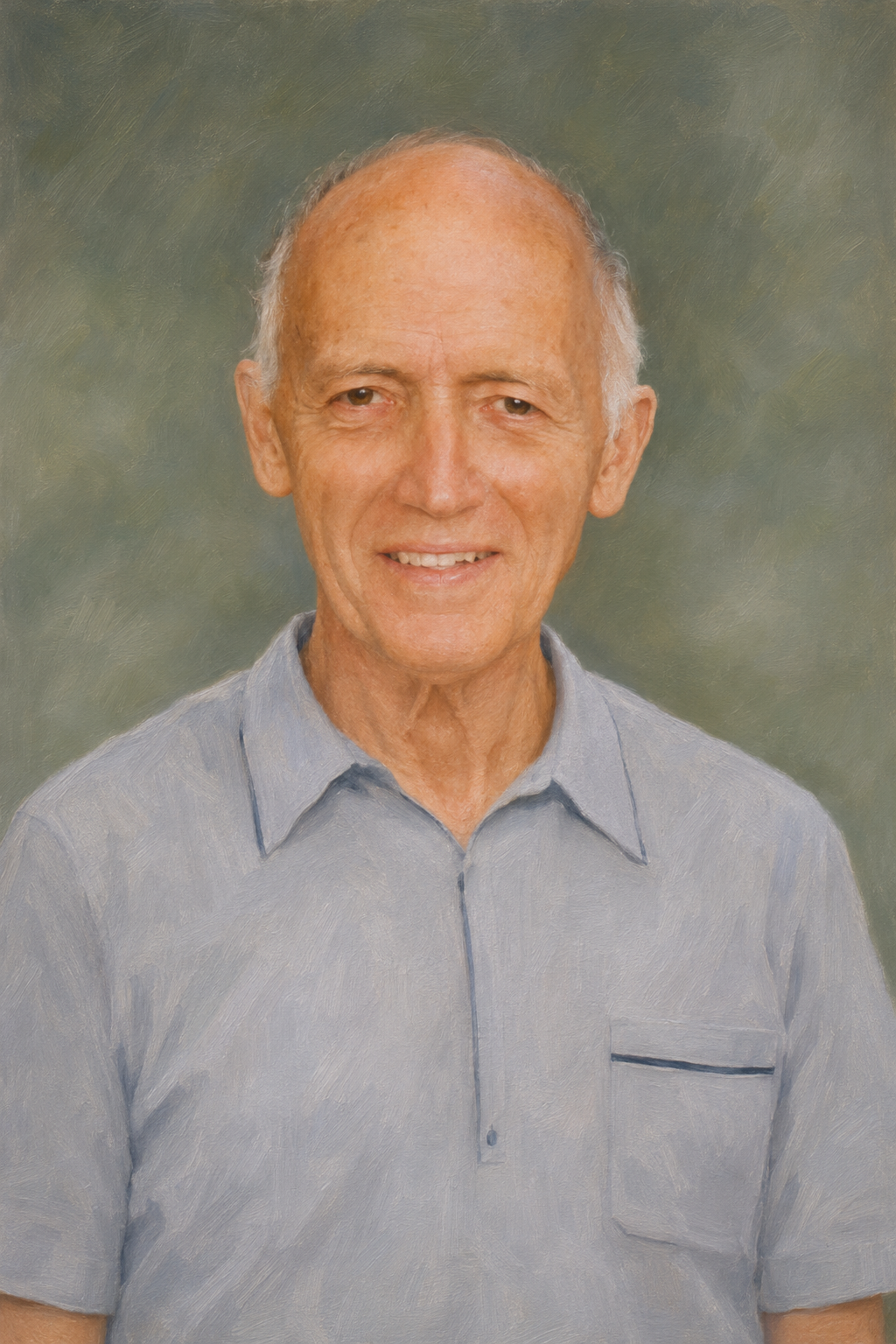
About Alain Dieulangard
Alain Dieulangard was born at Saint-Brieuc in 1919 and trained in law before becoming a Missionary of Africa. He completed his legal studies in 1943 and entered the congregation that year. He made his missionary oath at Thibar in 1949 and was ordained a priest on 1 February 1950. His subsequent work in Algeria centered on teaching and administration, especially in Kabylie.
The Diocese of Vannes preserves details of his childhood and education supplied by his family. He grew up among ten children; five eventually entered religious life. The family moved to Lorient in 1929. His schooling took him to several places before he began law studies at Rennes. War interrupted those studies in 1939, but he completed his degree in 1943. His decision to become a missionary disappointed his father. After ordination in Tunisia, he returned to Lorient to celebrate his first solemn Mass at Sainte-Anne-d’Arvor.
Learning languages was part of his preparation for work in North Africa. He studied Arabic at Manouba in Tunisia before assignments among the Berber population of Algeria. The congregation’s account names several places where he served, including Djemaa Saharidj and Azazga. His tasks could combine teaching, developing a vocational center and overseeing building work. The nationalization of education in 1976 changed the pattern of those responsibilities. It also allowed more room for the contemplative side of his vocation, which had drawn him repeatedly toward a quieter life of prayer. In 1978 he moved to Tizi-Ouzou, his final missionary posting.
Bernard Plisson, who met him in 1969 while working at a vocational training center in Boghni, remembered his fluency in Berber and his closeness to the people around him. Plisson was then a young seminarian. Alain’s readiness to serve poorer neighbors left a strong impression on him. He recalled a personality that was energetic and direct, yet humble. In his account, prayer and practical kindness were both visible aspects of the older missionary’s life. The memory comes from someone who encountered him at work rather than only through later commemoration.
Within the community at Tizi-Ouzou, his service included ordinary domestic and administrative tasks. In a later portrait for La Croix, Henri Teissier remembered him as someone who welcomed people, listened, kept the accounts and cooked. That account also describes his attraction to both missionary and contemplative life. These were not simply contrasting labels: the same person who sought time for prayer also attended to the daily needs of the house. His place in the community was expressed through work that might otherwise have remained unnoticed.
His pastoral work included teaching Christian children, accompanying individuals spiritually, and visiting families and elderly people. The Missionaries of Africa describe a reserved man whose care for relationships was deeply valued. On 27 December 1994 he was killed in the courtyard of the community house at Tizi-Ouzou with three fellow missionaries. He was buried in the town where he had spent his final years.
Jean Fisset, another Missionary of Africa who had spent many years in Algeria, remembered the funeral as a profound moment in his own life. Shops closed as the procession passed, and a Muslim crowd accompanied the Christians to the cemetery. Fisset recalled the public expression of grief and solidarity as evidence of relationships formed over years. He also remembered Teissier speaking about the Church’s mission in terms of discovering and forming bonds of brotherhood. His account is a witness’s interpretation of the gathering, grounded in what he saw there.
A decade later, families and friends returned for a shared remembrance at Tizi-Ouzou. Reporting on the January 2005 gathering, Apic described Christians and Muslims visiting the cemetery together. A service took place in the unfinished library because the chapel was too small for those attending. The gathering allowed relatives to hear expressions of friendship that had been difficult to communicate when travel was unsafe after the murders.
Alain was beatified at Oran on 8 December 2018.
Claude Rault, a former Maghreb provincial, who had known the Tizi-Ouzou missionaries, later explained that he had initially questioned the beatification process. He remembered ordinary personalities and real difficulties in community life, rather than people without faults. As the inquiry developed, he came to understand its focus as the meaning of a Church remaining alongside a suffering people. His recollection offers a corrective to an idealized portrait: recognition as a martyr did not erase the human limitations of those he had known. Rault also described the choice to present the nineteen together, as members of one Church, rather than through separate causes organized by their congregations. In preparing the celebration, the bishops wished to acknowledge Muslims who had also died because they refused violence. The recognition of the Christian martyrs was therefore situated within the suffering of the wider Algerian population, not presented as an account of Christian loss alone.
Wondering how to weigh the stories and sources? Learn how to read a saint biography.