Biography
André Grasset
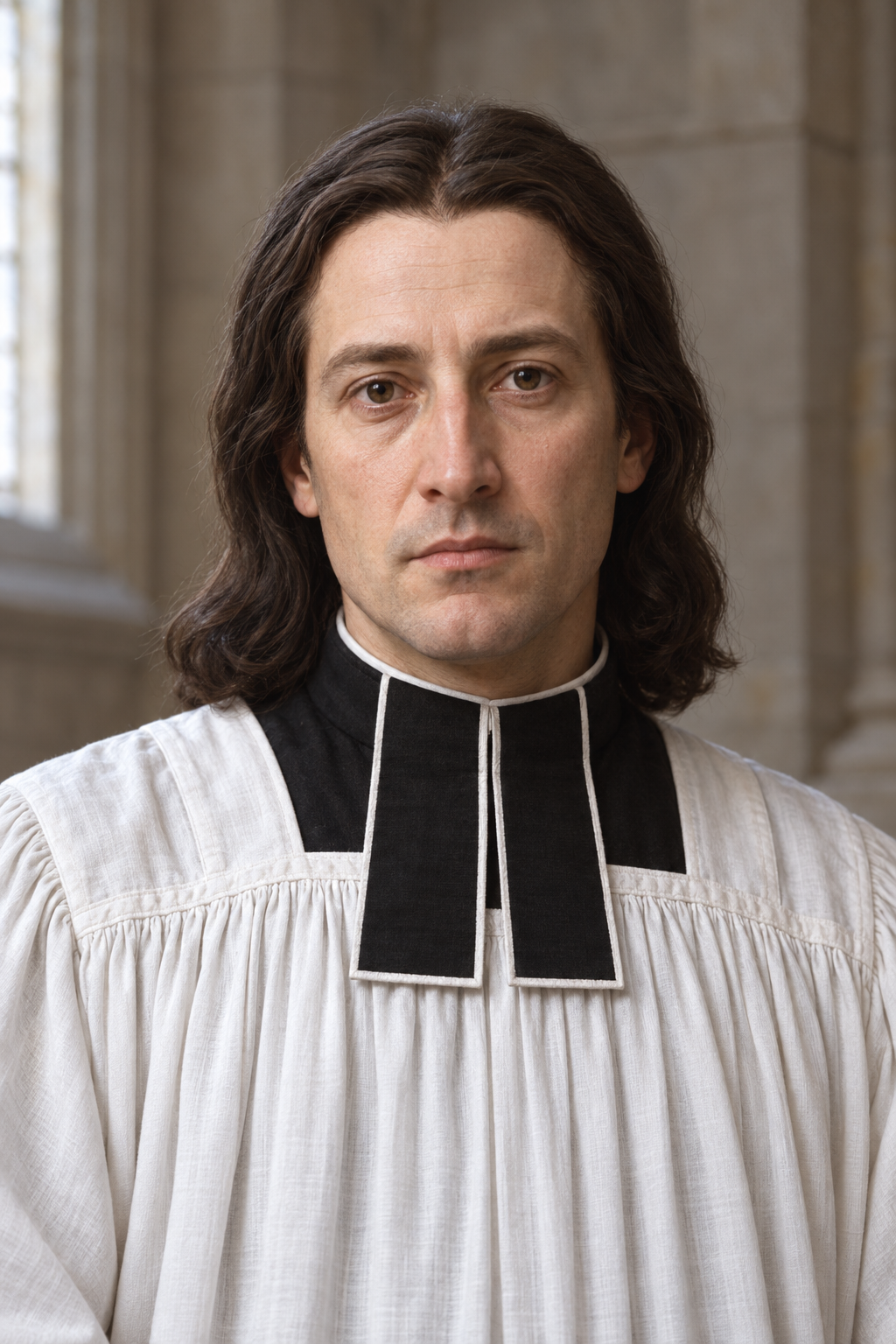
About André Grasset
André Grasset was born in Montréal and left for France with his family as a child. He studied at the Collège Sainte-Barbe in Paris and became a priest associated with the cathedral at Sens.
His parents belonged to Montréal’s merchant community. Historian André Lachance identifies his father, also named André, as a merchant and secretary to the governor of New France. His mother, Marie-Joseph Quesnel Fonblanche, came from a Montréal merchant family and had business experience of her own. They sailed for France with their five young children in November 1764. By 1772, the father’s finances had deteriorated so far that he placed his family in the care of a religious community. This is family history, not evidence of a particular religious experience for the young André.
The chronology of his early ministry remains uncertain. Maurice da Silva dates his ordination to 1783, while a later heritage catalogue describes a cathedral appointment in 1779 after ordination. These accounts agree on his connection to Sens but do not establish a consistent sequence of appointments.
During the French Revolution, he took refuge with the Eudists in Paris. He was arrested in August 1792 and imprisoned at the Carmelite convent. He died there on September 2 among clergy who refused the oath to the Civil Constitution of the Clergy. Pope Pius XI beatified him with other September martyrs in 1926.
The later inquiry into the September deaths considered the victims collectively. The association preserving their memory dates the opening of the cause to 1901 and its formal introduction under Benedict XV to January 1916. Its reproduction of the 1926 decree distinguishes the people whose martyrdom was recognized from others whose cases required stronger evidence. Its list of those beatified includes André Grasset among the priests. That recognition does not provide a transcript of his individual interrogation or establish words spoken by him at his death.
His name returned to public life in Montréal when the Sulpicians named their new college after him in 1927.
Two years later, the Sulpician Olivier Maurault commissioned an image of Grasset from Ozias Leduc. The artist placed him within Gothic architectural forms, linking Montréal, Sens, Paris, and Rome through buildings and dates. A stained-glass window based on the drawing was made by Guillaume-Ernest Pellus for the college. This later devotional artwork records how Grasset was remembered; it is not a portrait made during his lifetime.
During his visit to Montréal in 1984, Pope John Paul II included Grasset among the Canadian Church’s recognized blesseds. The pope named him specifically as a priest while recalling the people whose faith had shaped the Church in Canada.
The proper liturgical calendar for Canadian dioceses, approved in 2016, lists Blessed André Grasset as a priest and martyr on September 2. Its notation makes this an optional memorial. His Canadian remembrance thus has a specific liturgical place alongside the college and artwork that preserve his name.
Wondering how to weigh the stories and sources? Learn how to read a saint biography.