Biography
Annibale Maria di Francia
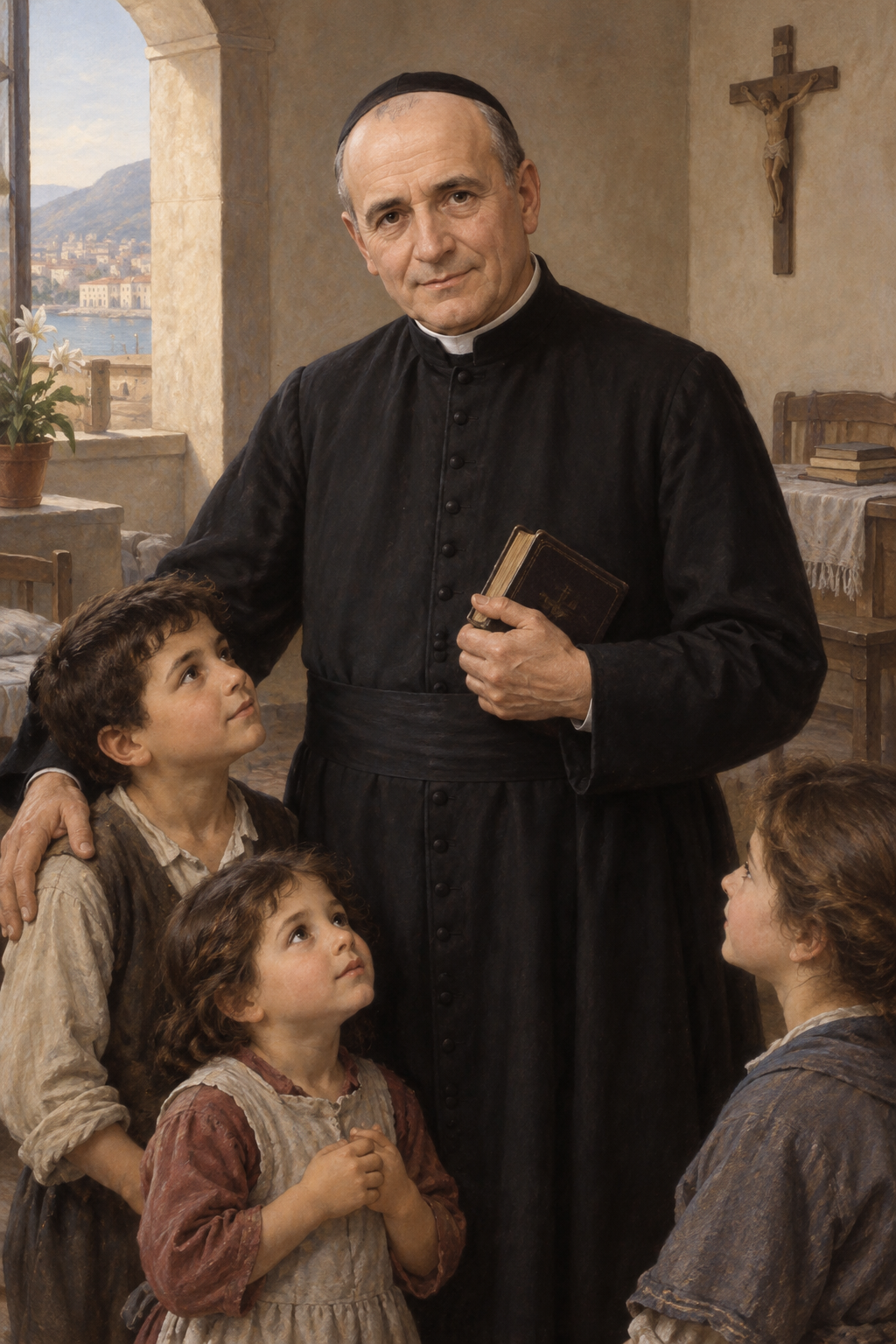
About Annibale Maria di Francia
Annibale Maria di Francia was born in Messina, Sicily, on July 5, 1851. The identifies his parents as Anna Toscano and Francesco, marquis of Santa Caterina dello Ionio, pontifical vice consul, and honorary naval captain. He was the third of four children.
His father's death came when Annibale was only fifteen months old. The official profile connects that early orphanhood with the tenderness and love for orphans that later marked his educational work. The page should preserve that connection without turning it into a psychological certainty beyond the source.
As a young man, Annibale developed an unusually strong Eucharistic devotion. The same profile says he received permission, exceptional for that period, to receive Holy Communion daily. In prayer before the Blessed Sacrament, he came to understand the need to pray for vocations.
That insight later found biblical expression in Christ's words about asking the Lord of the harvest to send workers. The profile calls this prayer, often named with the Latin word Rogate, the fundamental intuition to which Annibale devoted his existence. The page should explain the idea plainly as prayer for vocations.
Annibale completed his studies and was ordained a priest on March 16, 1878. A few months before ordination, an encounter with a nearly blind beggar brought him into contact with the Case Avignone, described by the source as the poorest peripheral quarter of Messina.
With his bishop's consent, Annibale went to live in that quarter. The official profile describes hostility, misunderstanding, and hardship there, but it also shows the pastoral focus of his ministry: he saw poor and marginalized neighbors through the Gospel image of sheep without a shepherd.
He named the work a double charity: evangelization and aid for poor people. That phrase matters because it keeps the profile balanced. Annibale's work should not be reduced to either social service alone or preaching alone; the source presents both movements together in one pastoral mission.
In 1882 he began orphanages placed under the protection of Saint Anthony of Padua, so they were called Antonian. The source says he wanted not only to give bread and work, but to form the whole person through moral and religious education in a family atmosphere.
The orphanages should be described with care. The official source speaks of orphans and poor people, but the page should avoid sentimental scenes or poverty spectacle. The reliable claim is that Annibale organized enduring institutions for vulnerable children and connected practical care with Christian formation.
The same spiritual center led to religious foundations. In 1887 Annibale founded the Daughters of Divine Zeal. Ten years later he founded the Rogationists of the Heart of Jesus. The official profile says the two congregations received canonical approval on August 6, 1926.
That approval date should be used as a sober institutional marker. It shows that Annibale lived to see the two foundations recognized, but it does not need to become a full administrative history. The profile can let the foundations stand as the public form of his prayer and service.
Members of those institutes were to live the prayer for vocations as part of their identity. The source says Annibale also promoted this concern through the periodical Dio e il Prossimo and through prayer associations for clergy and lay faithful. Current institutional statistics are not needed for this packet.
His concern for vocations widened rather than displaced his concern for poor children. The source presents the Rogate insight as a way to ask God for workers who could serve needs larger than one priest could reach. That is why the profile should not separate prayer from organization, or organization from the poor families and orphaned children who first drew his pastoral attention.
The Case Avignone material also needs modest language. The Dicastery profile uses strong terms for the quarter's poverty and social isolation, but the final page should not make the people of the neighborhood into scenery for a saintly hero. Annibale's own action is the safe focus: he went there, stayed there with episcopal consent, and organized evangelization, education, work, and relief.
Annibale Maria di Francia died in 1927; the existing catalog row gives Messina and June 1, which also appears as his liturgical memorial in the official profile. The Dicastery page records his beatification by John Paul II on October 7, 1990, and canonization by the same pope in Saint Peter's Square on May 16, 2004.
His profile should therefore emphasize a priestly vocation shaped by early orphanhood, Eucharistic prayer, and concrete service among poor and orphaned people in Messina. It should present the Daughters of Divine Zeal and the Rogationists as fruits of the same prayer for vocations, not as separate administrative achievements.
Artwork should show a Sicilian priest and founder in a plain black cassock with a book or papers, in a modest Messina charitable setting. Children may appear as a visual reference to the orphanages, but the image should avoid rendered text, modern objects, crowd scenes, and any claim to a historical portrait likeness.
Wondering how to weigh the stories and sources? Learn how to read a saint biography.