Biography
Anthony of St. Ann Galvão
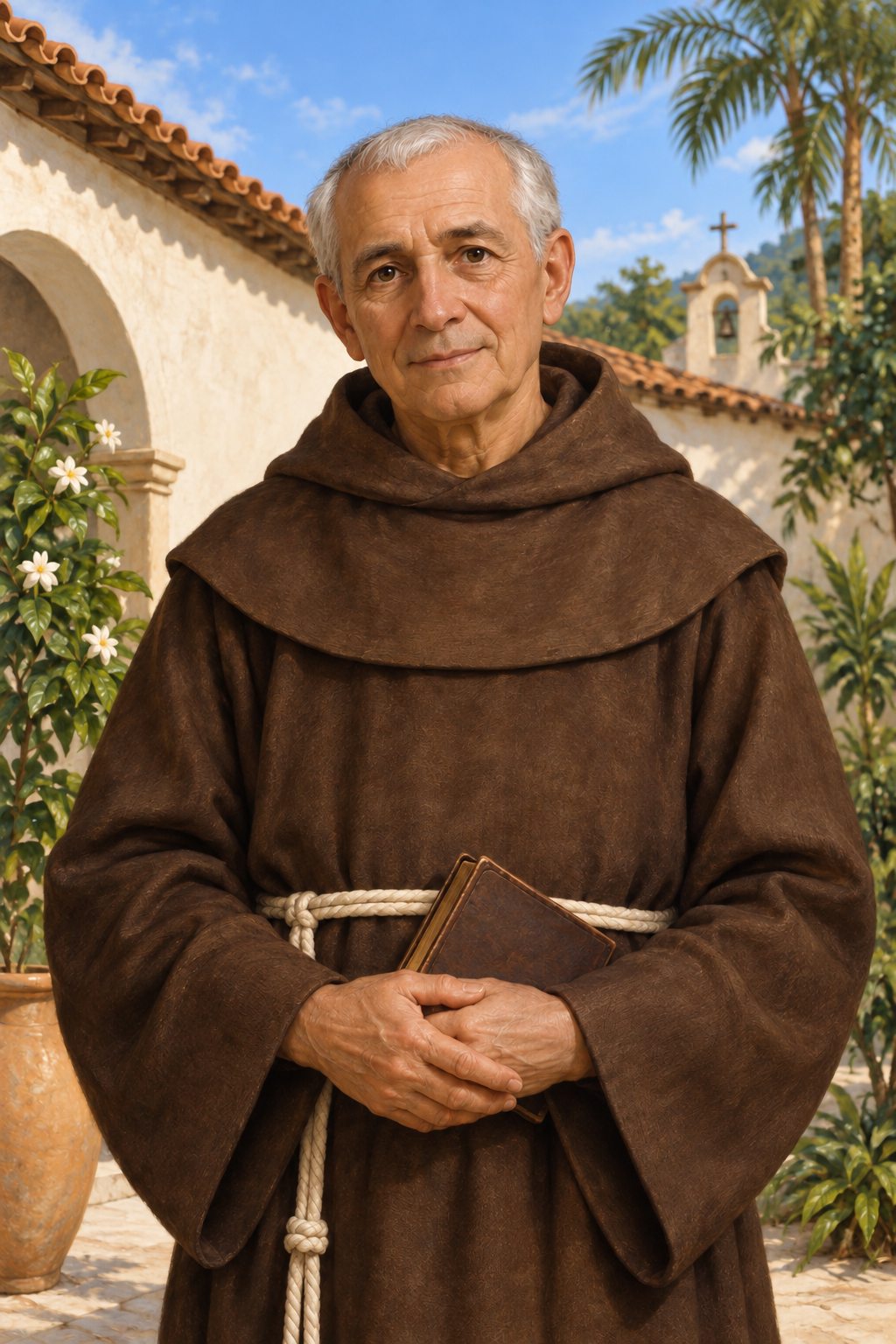
About Anthony of St. Ann Galvão
Anthony of St. Ann Galvão was a Franciscan priest whose ministry took root in São Paulo. Born in Guaratinguetá in 1739, he studied with the Jesuits before entering the Franciscans. He became a priest in 1762 and served as a preacher and confessor. His work also included welcoming people at the convent door. His Franciscan responsibilities eventually included leadership of the São Francisco convent. He remained involved with the women’s community while carrying those duties, rather than leaving its care entirely to others.
In 1774 he helped establish a community of religious women with Helena Maria do Espírito Santo. After her death, he continued supporting the community through its difficulties and building work. The church was inaugurated in 1802. He later assisted a foundation in Sorocaba and died in São Paulo on 23 December 1822.
The museum’s history also explains why the community began in houses around an existing chapel. Restrictions on opening convents made its legal form important. The women lived together as a religious retreat rather than establishing a formally recognized convent. Their first accommodation was inadequate, with an unsafe chapel and unsuitable houses, so the project required a new building as well as continuing spiritual direction.
Galvão’s own account, quoted in an architectural study, describes an unsafe old church and cramped sleeping quarters. He explains the new construction as providing more space for a growing community. His description of cells facing open ground also connects the building’s arrangement with the residents’ need for air and room.
The surviving monastery carries a more complicated history than a story of one friar building alone. The Museu de Arte Sacra de São Paulo describes construction by skilled earth-wall workers and enslaved people lent by the women’s families, with Galvão and the sisters also contributing labor. It also records an unfinished plan for two church towers. This institutional account preserves the work of people who can disappear behind a founder’s name.
Architectural historian Benedito Lima de Toledo examines the building as evidence of Galvão’s practical skill. He describes the octagonal church plan and a changed entrance that faced the route now called Avenida Tiradentes. The arrangement allowed the church to address a different approach while preserving its central space. Toledo also praises the convent’s broad corridors and openings towards planted courtyards. His study distinguishes what the building supports from questions still unresolved. Similarities with the nearby Third Order church suggest a possible connection, but he does not establish Galvão as its designer. A surviving design scratched into a wall is another rare trace of his work; Toledo leaves its intended destination uncertain. The familiar account of an unfinished two-tower plan should therefore be read with that qualification.
His later recognition drew on a long and uneven record. Historian António de Sousa Araújo distinguishes earlier devotional biographies from later historical research and describes lost manuscripts and recovered documents. He also notes that witnesses interviewed more than a century after Galvão’s death relied on what they had heard. These distinctions matter: a remembered reputation, an original document and a later retelling offer different kinds of evidence. Araújo’s survey identifies a particular loss: the early manuscript biography by Galvão’s confrère and successor, Lucas José da Purificação, disappeared after circulating among readers. Later publications sometimes preserved documents even when their overall purpose was devotional. The historian also distinguishes the twentieth-century edition of Galvão’s spiritual writings from biographies that chiefly repeated earlier narratives. These are different routes into his life: his surviving words, documents about his work and the developing memory of those who honoured him. Araújo explains that the 1993 critical biography grew from research for the canonization cause, giving its collection of documents a specific institutional purpose.
John Paul II beatified Galvão on 25 October 1998. In the homily, the pope remembered his service to people suffering hardship, including enslaved people, and his care for the poor. He linked Galvão’s spiritual direction and community foundations with Eucharistic and Marian devotion. This was a retrospective Catholic assessment of his life. Read alongside the museum’s account of construction labor, it should not be turned into an unsupported claim that Galvão was an abolitionist.
Benedict XVI canonized him in São Paulo on 11 May 2007. The pope’s homily emphasized patient counsel, confession, service to people in need and prayer. It presented Galvão’s devotion as something expressed through daily relationships and responsibilities. The ceremony gave public recognition to a legacy that had endured in the communities associated with him.
That remembrance continues in Guaratinguetá. The shrine’s announced 2026 feast program combines worship with collections of food and hygiene supplies and activities supporting social housing. Its feast is 25 October. Galvão’s legacy remains connected to places of prayer, the communities he helped sustain and practical service, while the history of their construction asks that the other people involved also be remembered.
Wondering how to weigh the stories and sources? Learn how to read a saint biography.